8 Financial Fundamentals — Do I know the basics?
Even before coins jingled in pockets or credit cards were swiped at checkout counters, people needed ways to manage their resources — trading goods, saving for difficult times, and making sure their families had what they needed. In early societies, wealth was often stored in livestock, grain, or precious metals, while trusted leaders or merchants helped protect those assets. Over time, formal banking systems and financial advisors emerged, and many people relied on bankers, accountants, or community leaders to help manage their finances.
Today, the financial landscape looks very different. While financial professionals still provide valuable guidance, most people are responsible for managing their own day-to-day financial decisions. From budgeting paychecks to saving for retirement, modern life requires a basic understanding of personal finance. That’s where financial fundamentals come in — the essential building blocks that help individuals take control of their money, reduce stress, and create a stable financial future.
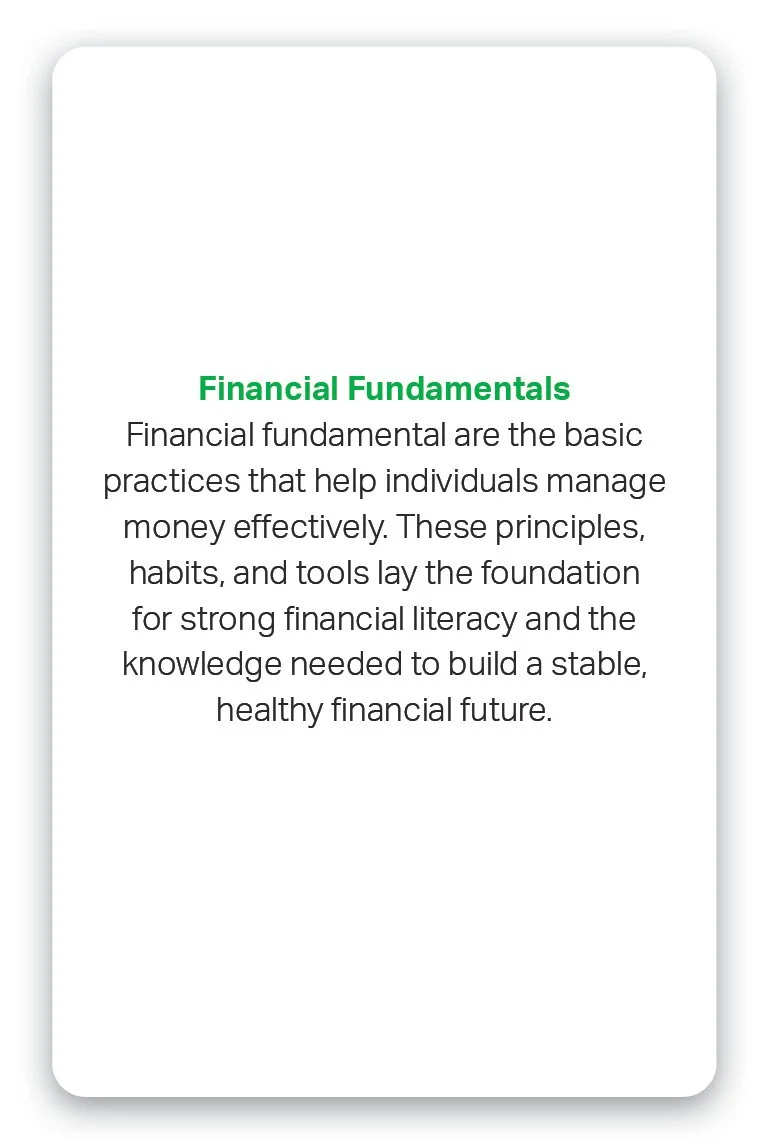
What are financial fundamentals? Financial fundamental are the basic practices that help individuals manage money effectively. These principles, habits, and tools lay the foundation for strong financial literacy and the knowledge needed to build a stable, healthy financial future.
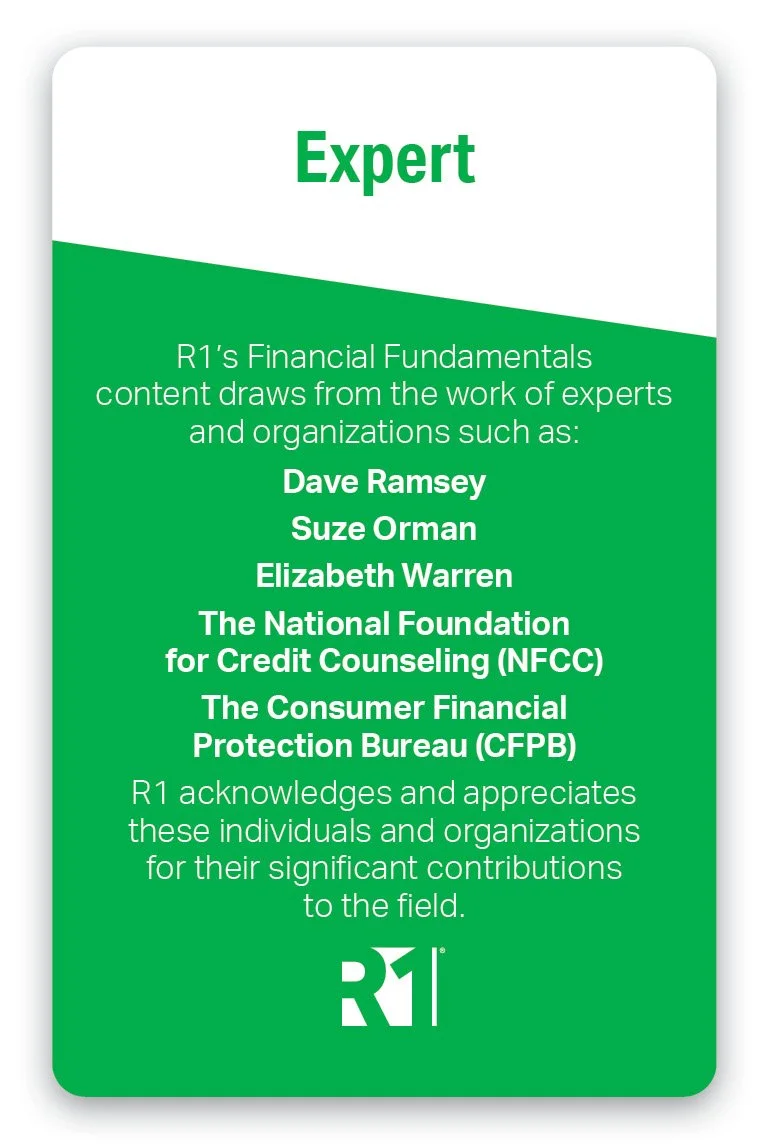
Financial fundamentals do not require advanced math or complicated financial jargon. Instead, they focus on developing simple, sustainable habits: setting realistic goals, staying organized, spending wisely, and making informed decisions based on individual needs and circumstances. As personal finance expert Dave Ramsey says, “A budget is telling your money where to go instead of wondering where it went.” Others, like Suze Orman and Ramit Sethi, encourage building financial plans that balance discipline with the freedom to enjoy life along the way.
Developing financial literacy and healthy financial habits empowers individuals to make confident decisions. Whether saving for a home, paying off debt, preparing for retirement, or simply gaining peace of mind knowing the bills are covered, the basics of personal finance provide a strong foundation for long-term financial well-being. Strong financial habits help individuals make informed choices, reduce stress, and achieve personal goals — one smart decision at a time.
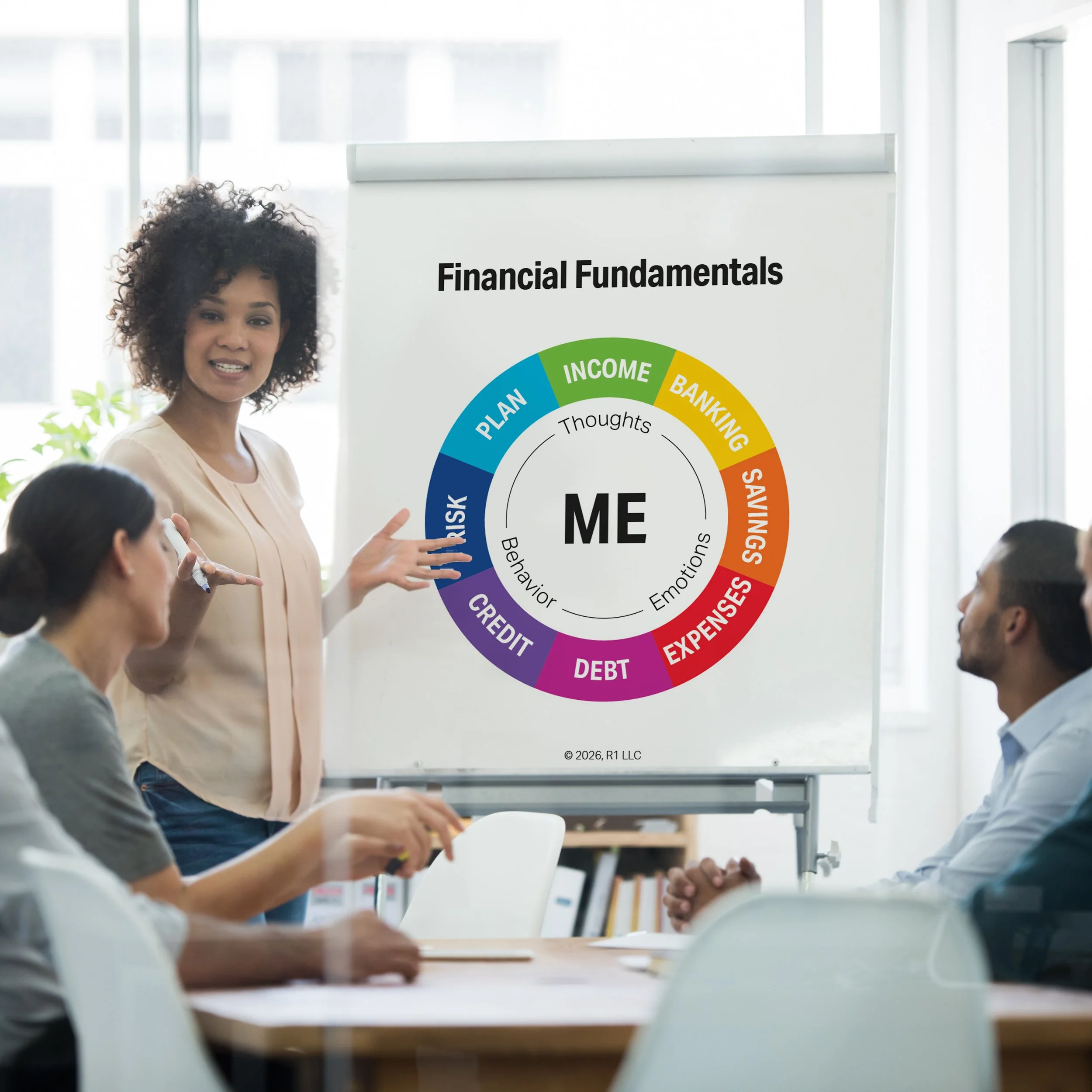
My Financial Beliefs: Beliefs, thoughts, emotions, and behaviors are central components of financial health and well-being. Together, they influence how individuals perceive money, make financial decisions, and respond to financial challenges and opportunities. By increasing awareness of these interconnected areas, individuals can better understand the underlying drivers of their financial choices and develop healthier, more intentional financial habits.
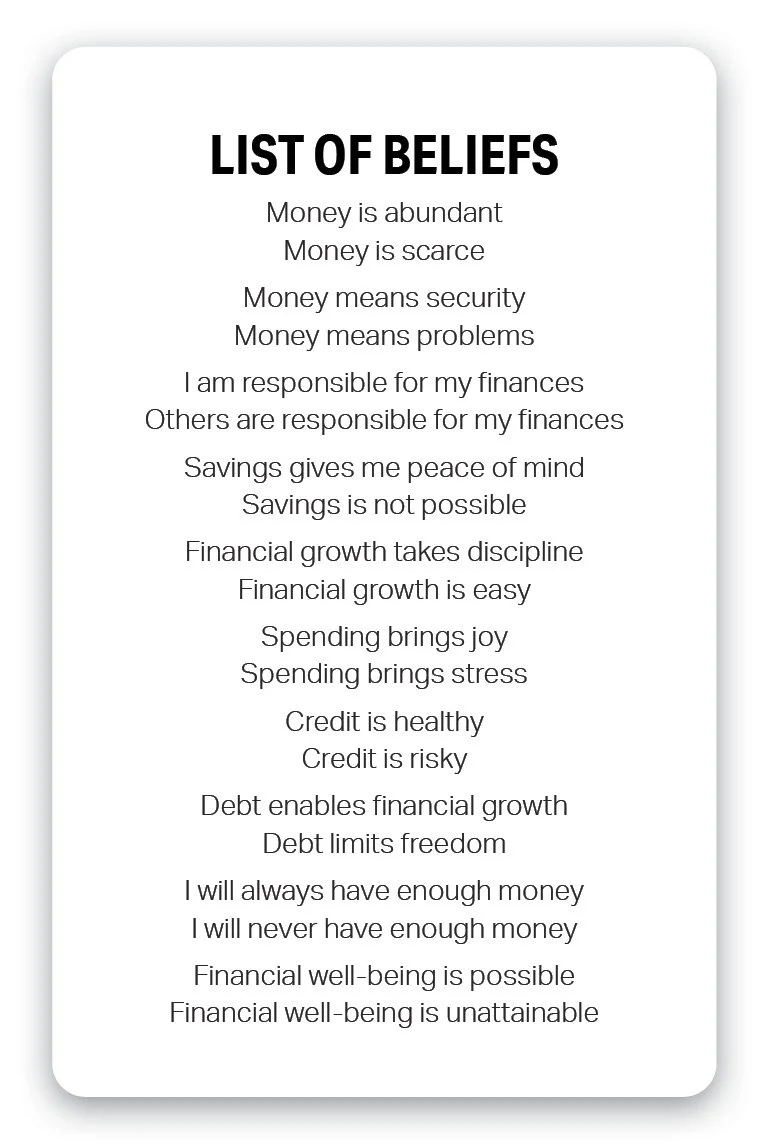
Question to Explore: Think about your thoughts and beliefs about money. Read through the pairs of beliefs on the List of Beliefs card below and see which one most resonates with you.
The purpose of today’s post is to share the basics of our new Financial Fundamentals topic so you can explore how best to use it with individuals in your setting. Take a moment to review the definitions and examples for each of the 8 Financial Fundamentals below. Then read through the Questions to Explore for yourself or with others in your organization. The R1 Financial Fundamentals Group Kit and R1 Discover App provide tools for engagement, education, and empowerment for individuals you work with or support. Implementing these tools often through practice is one of the best ways to learn. It’s all about practice… practice, practice, practice.
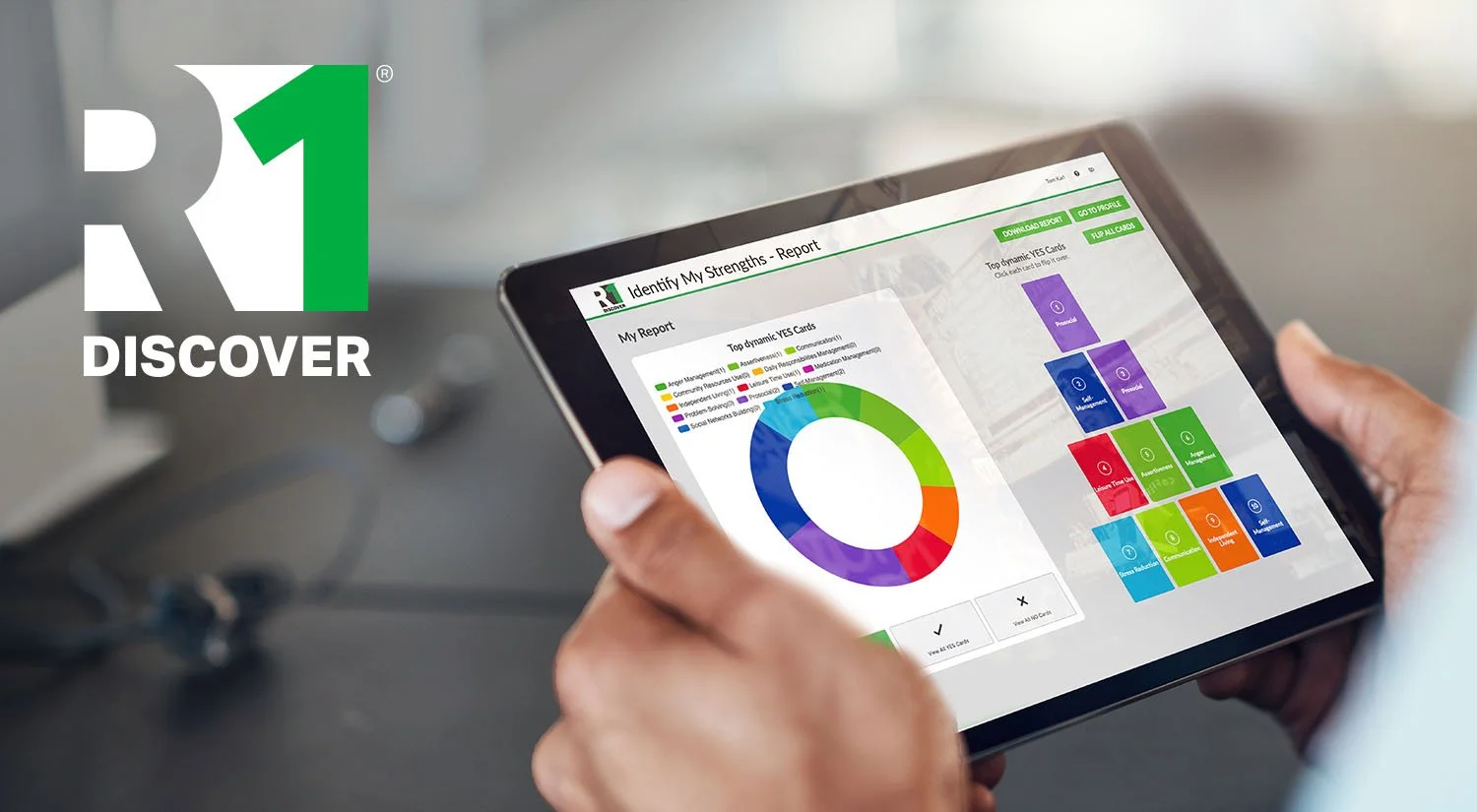
Explore R1 Discover — Interactive Engagement Tools
Financial Fundamentals Defined
What are financial fundamentals? Financial fundamental are the basic practices that help individuals manage money effectively. These principles, habits, and tools lay the foundation for strong financial literacy and the knowledge needed to build a stable, healthy financial future.
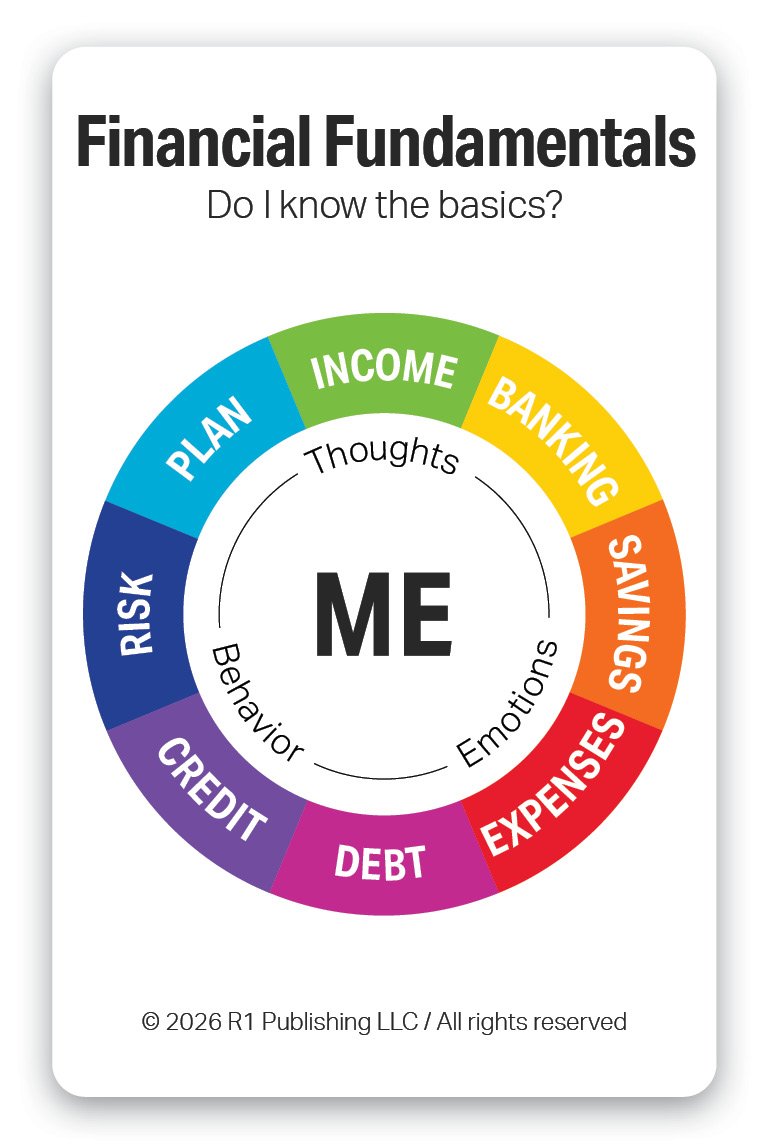
Financial Fundamental — Do I know the basics?
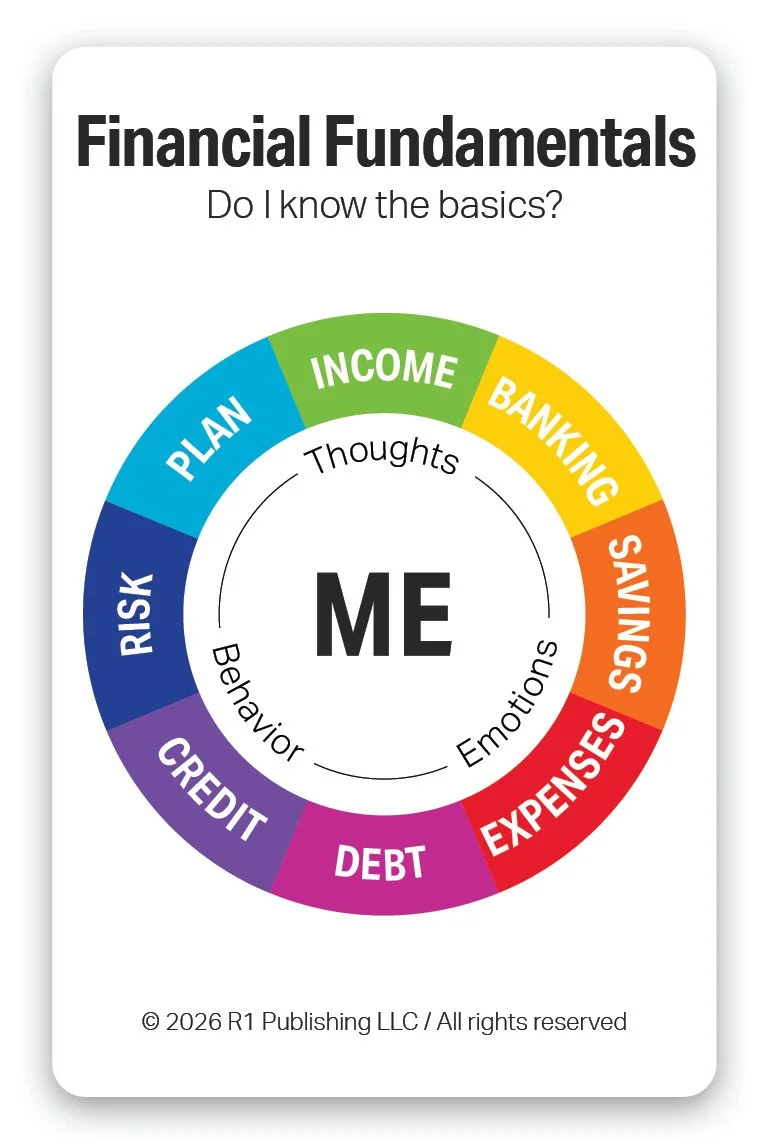
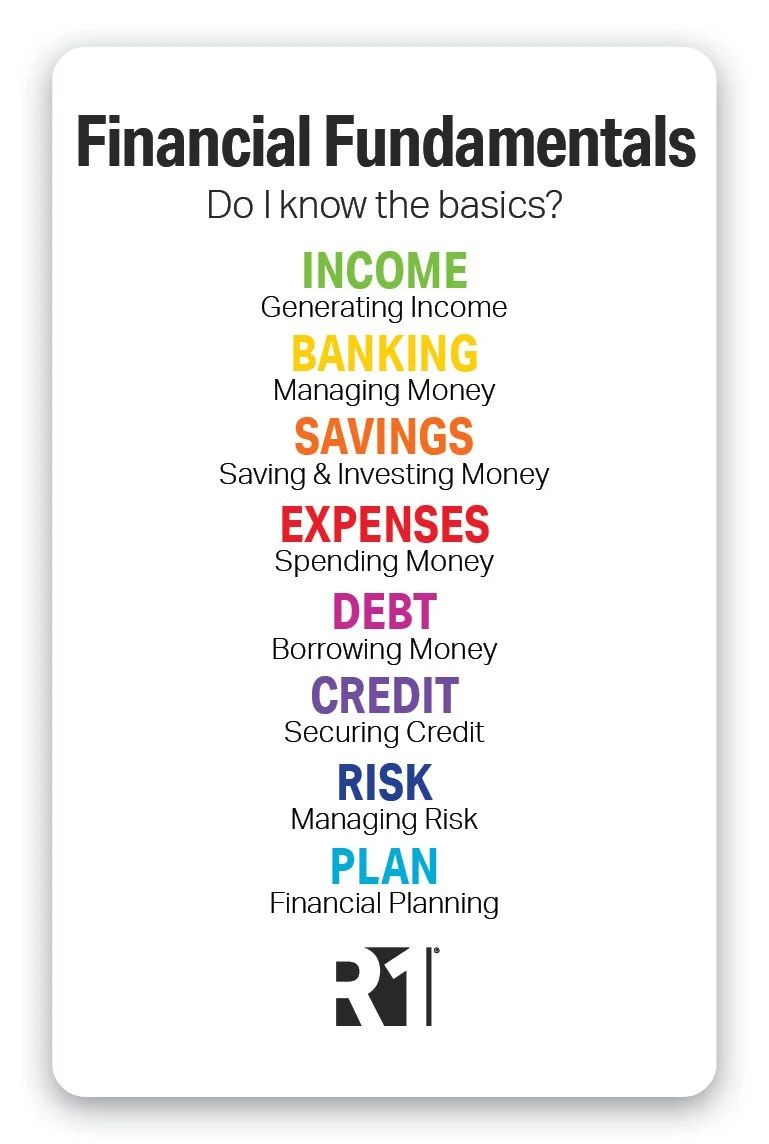
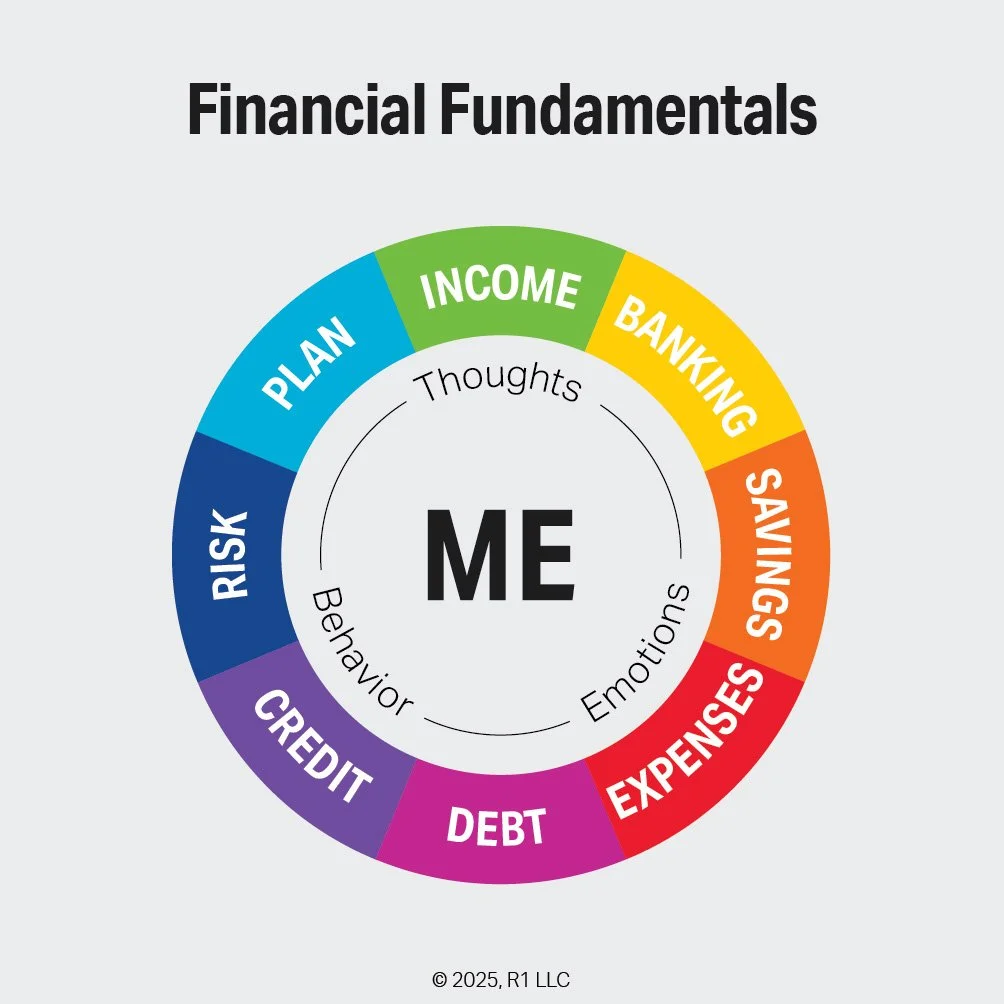
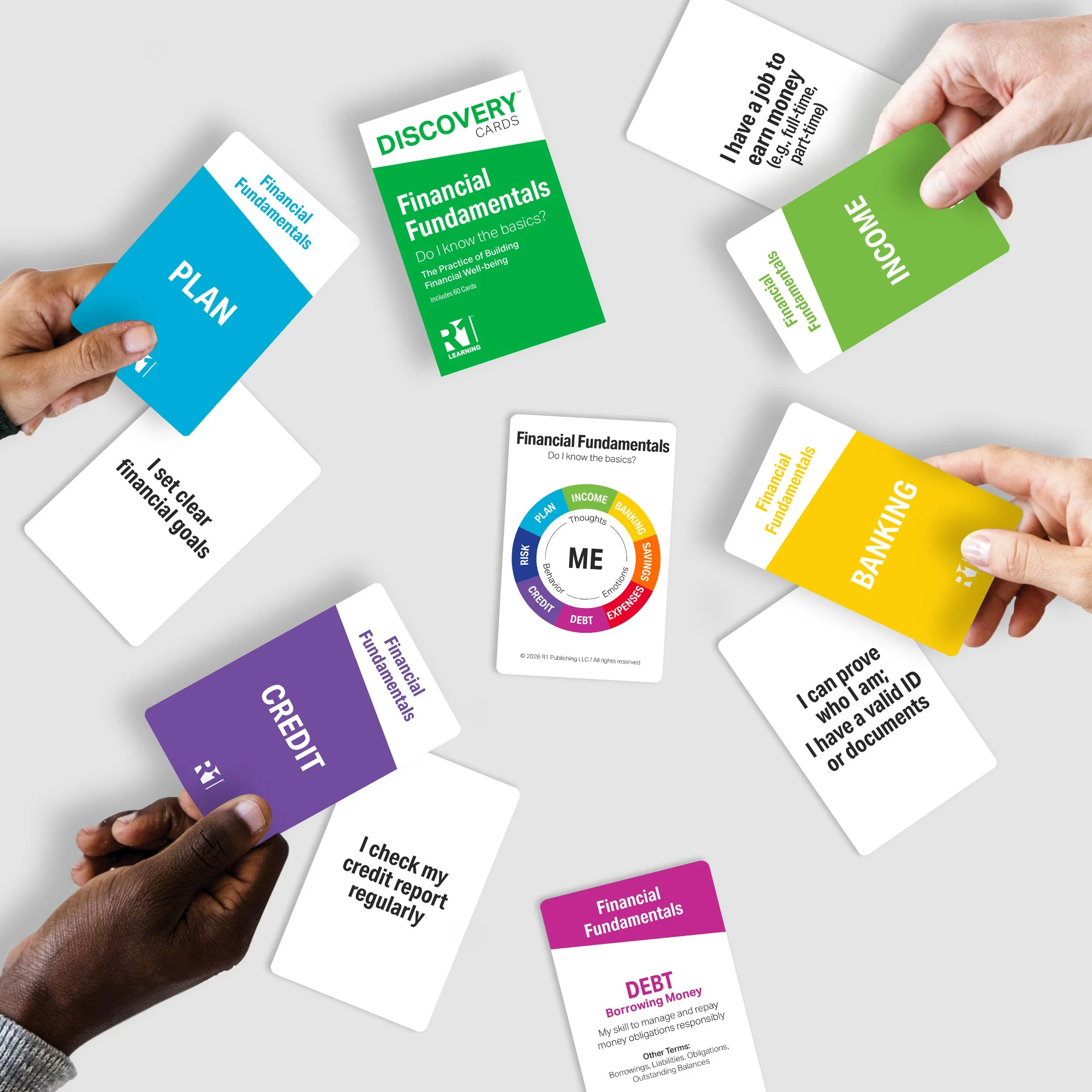
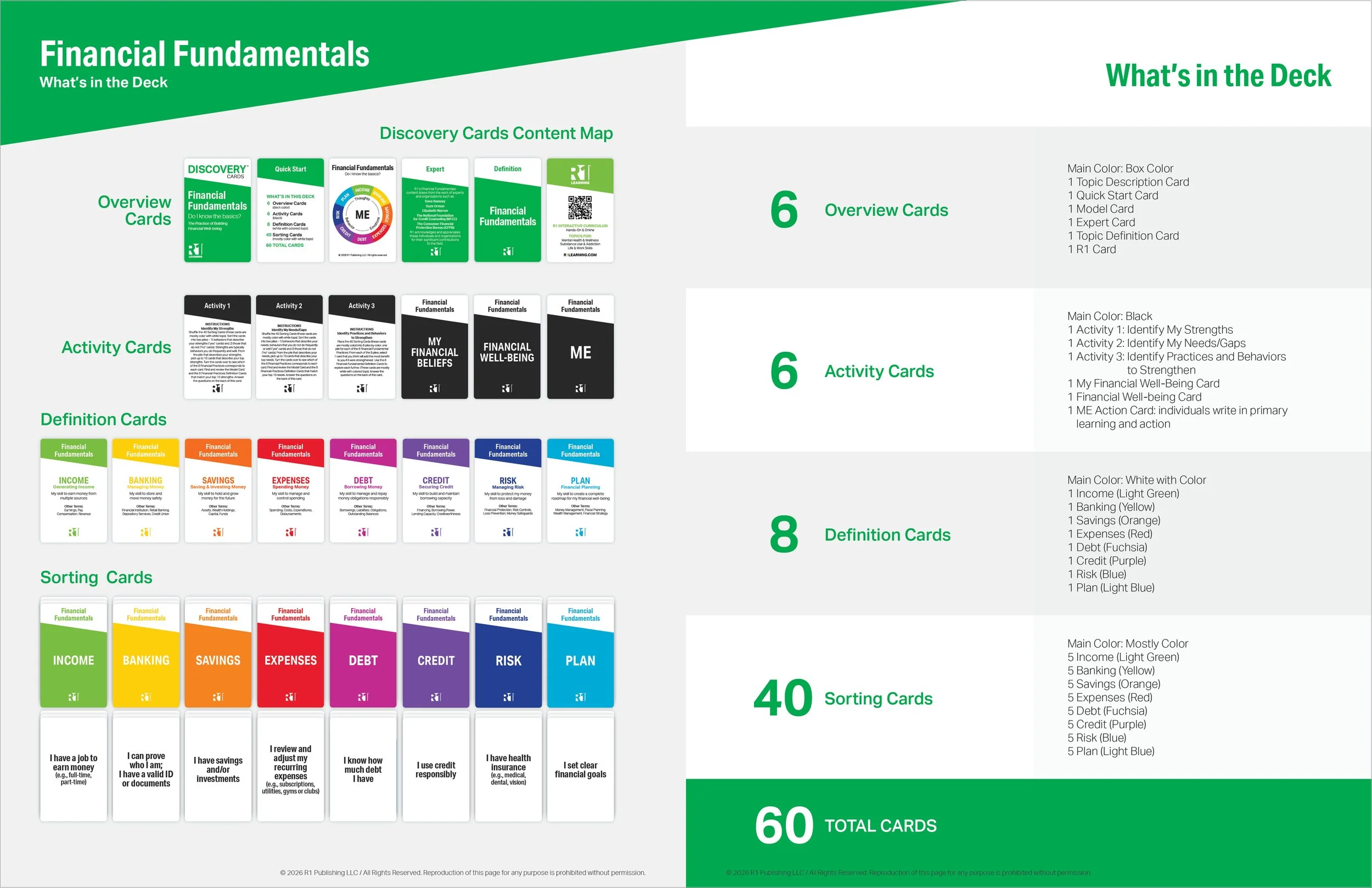
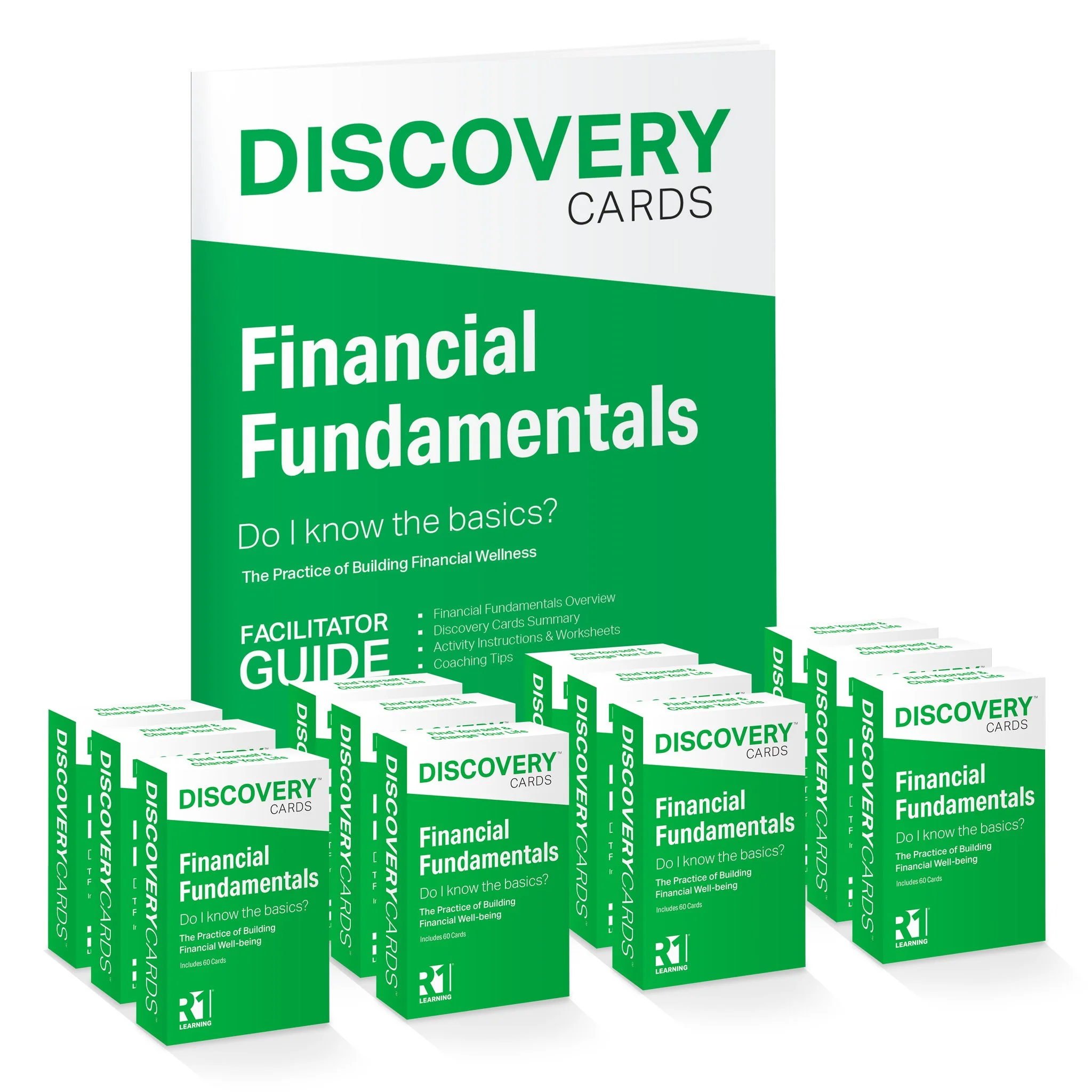
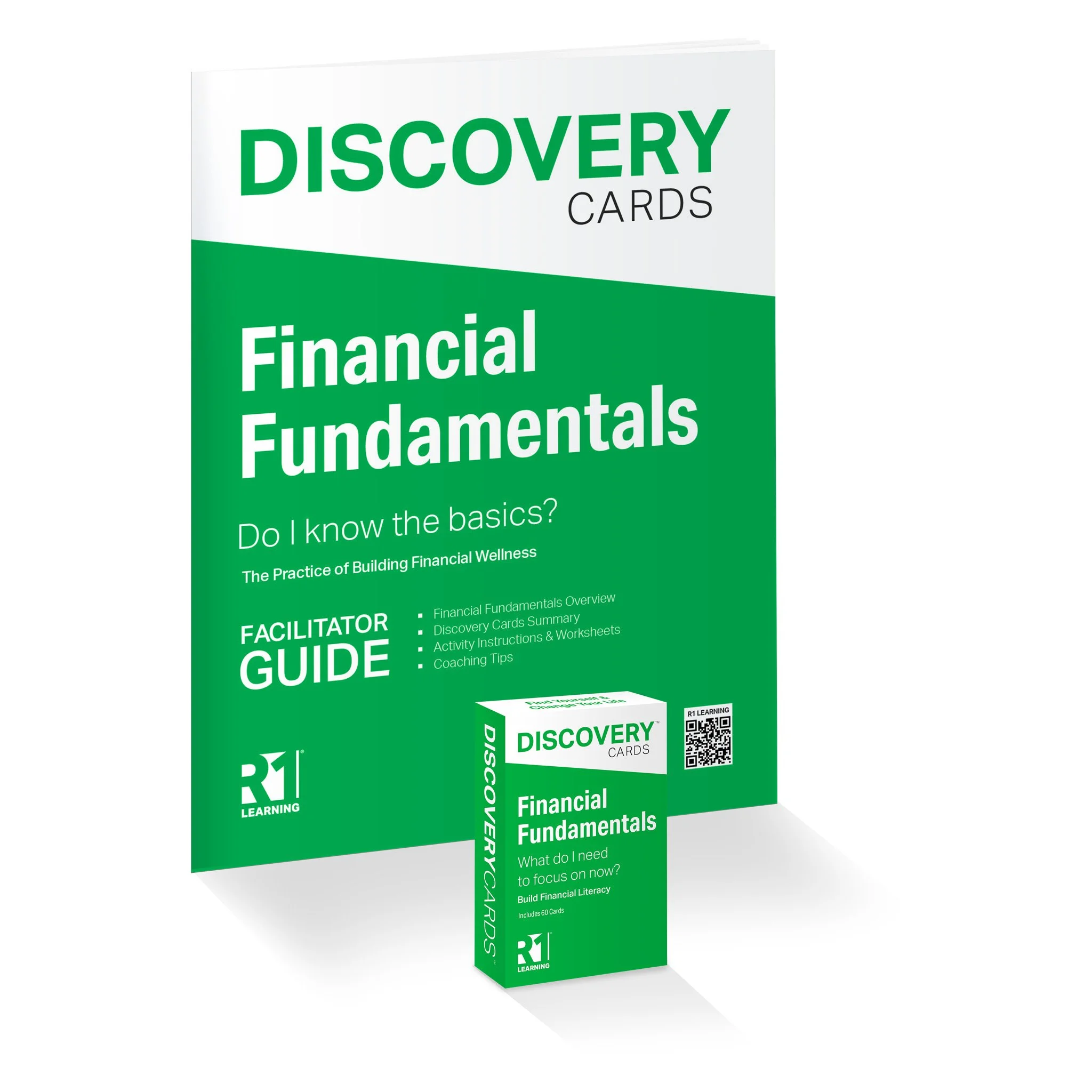
The 8 Financial Fundamentals are listed below. For each, you will find a brief definition, examples of the Discovery Card’s behavioral statements, and Questions to Explore. Please note that all of this information, and more, is listed in the Financial Fundamentals Topic Kit (which includes 1 Discovery Cards deck, 1 Facilitator Guide, and 1 R1 Discover Seat License) located on the R1 Store.
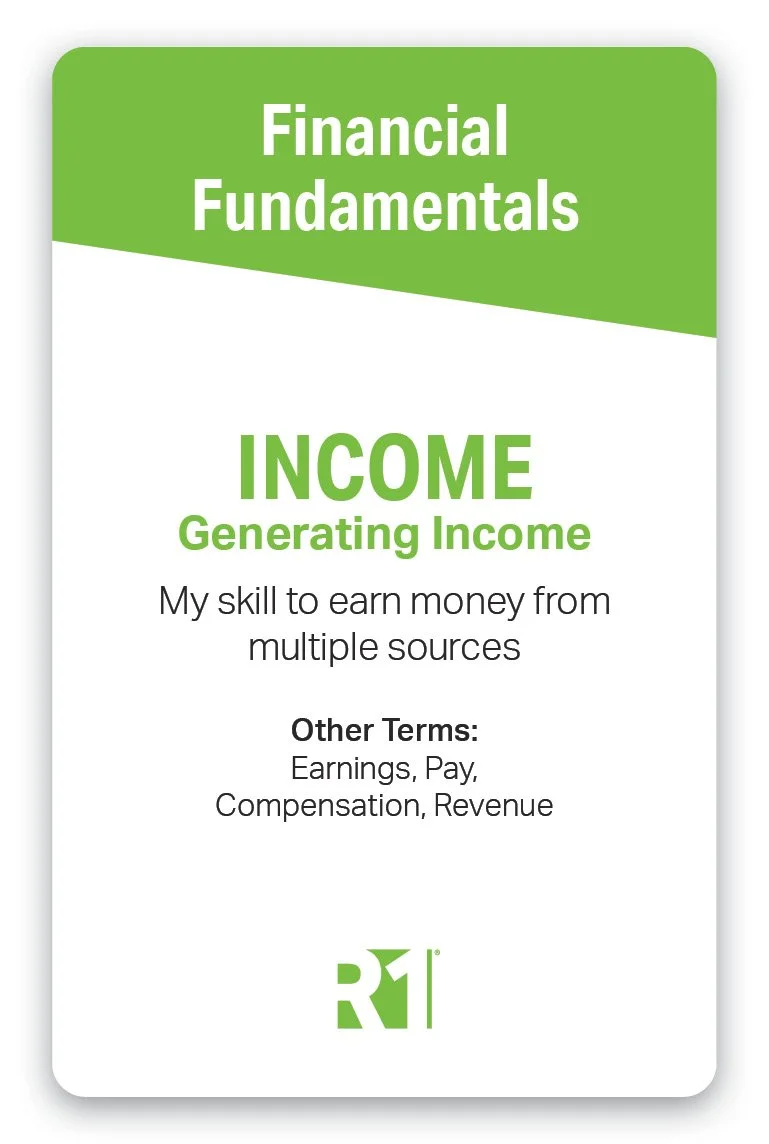
Income — Generating Income: My skill to earn money from multiple sources
Other Terms: Earnings, Pay, Compensation, Revenue
3 of 8 Discovery Cards Examples:
I have a job to earn money (e.g., full-time, part-time)
I understand my paycheck, including how taxes effect my income
I earn more through a second job, overtime, bonuses, commissions, or incentives
2 of 8 Questions to Explore Examples:
What sources of income do you have other than from a job?
What certificates or degrees have you earned? How can you further your career growth in your job or occupation?
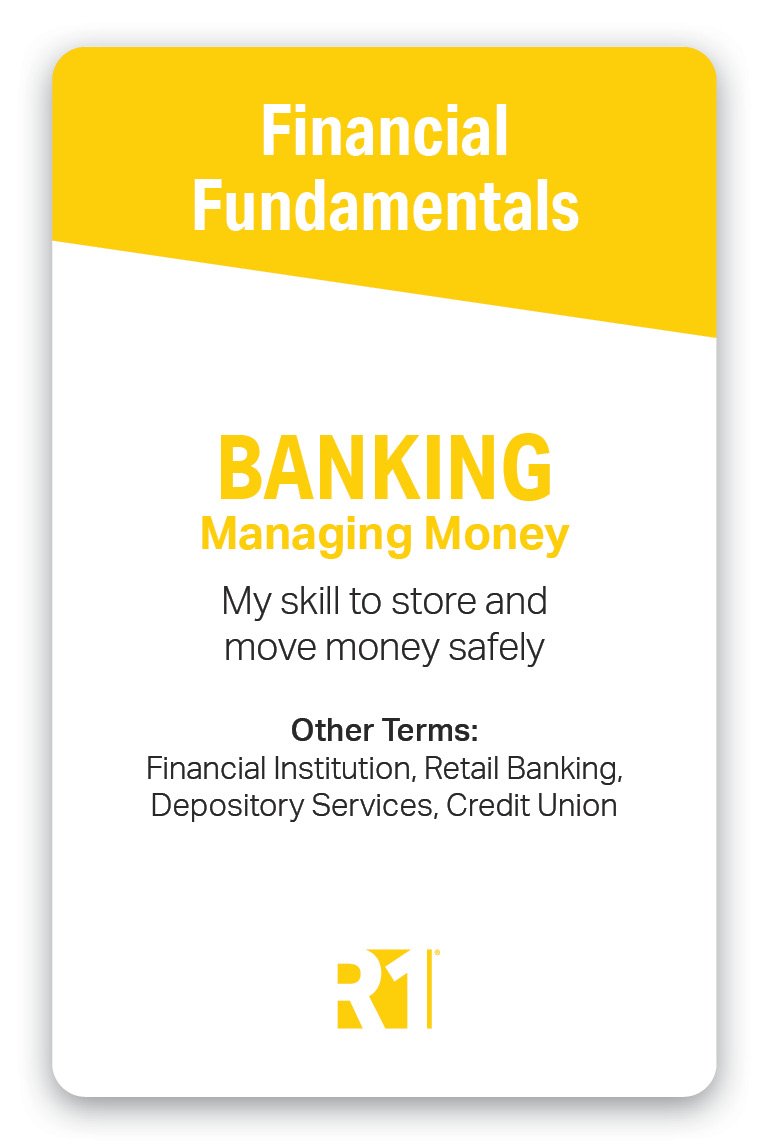
Banking — Managing Money: My skill to store and move money safely
Other Terms: Financial Institution, Retail Banking, Depository Services, Credit Union
3 of 8 Discovery Cards Examples:
I can prove who I am; I have a valid ID or documents
I understand my bank statements
I use a bank account to keep my money safe
2 of 8 Questions to Explore Examples:
What banking tools help you access and manage your money?
How often do you review your bank account statements?

Savings — Savings & Investing Money: My skill to hold and grow money for the future
Other Terms: Assets, Wealth Holdings, Capital, Funds
3 of 8 Discovery Cards Examples:
I have savings and/or investments
I know the balances and interest rates for all of my savings and investments
I automatically save money on a regular basis
2 of 8 Questions to Explore Examples:
How much do you automatically withdraw from your paycheck?
What is your savings goal for this year?
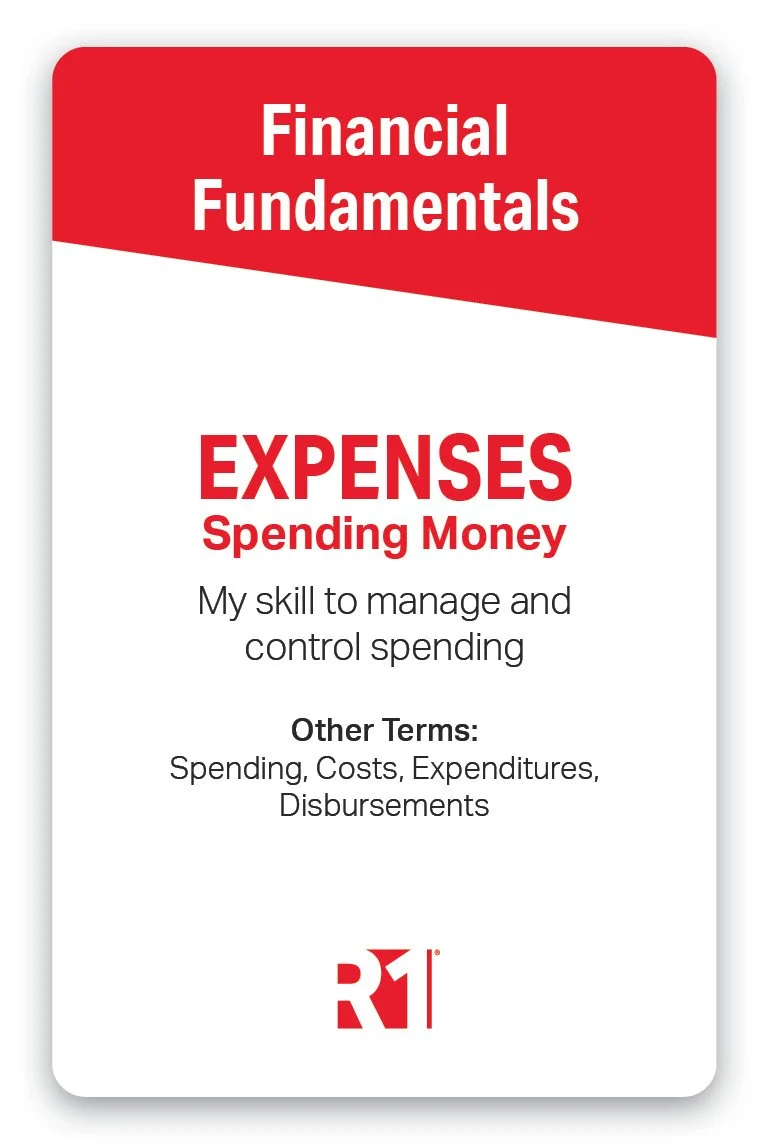
Expenses — Spending Money: My skill to manage and control spending
Other Terms: Spending, Costs, Expenditures, Disbursements
3 of 8 Discovery Cards Examples:
I review and adjust my recurring expenses (e.g., subscriptions, utilities, gyms or clubs)
I have a budget for my basics expenses (e.g., housing, transportation, food, clothes)
I cut back on non-essential spending
2 of 8 Questions to Explore Examples:
What are some of your regular expenses in your budget?
How do you decide which expenses to cut?
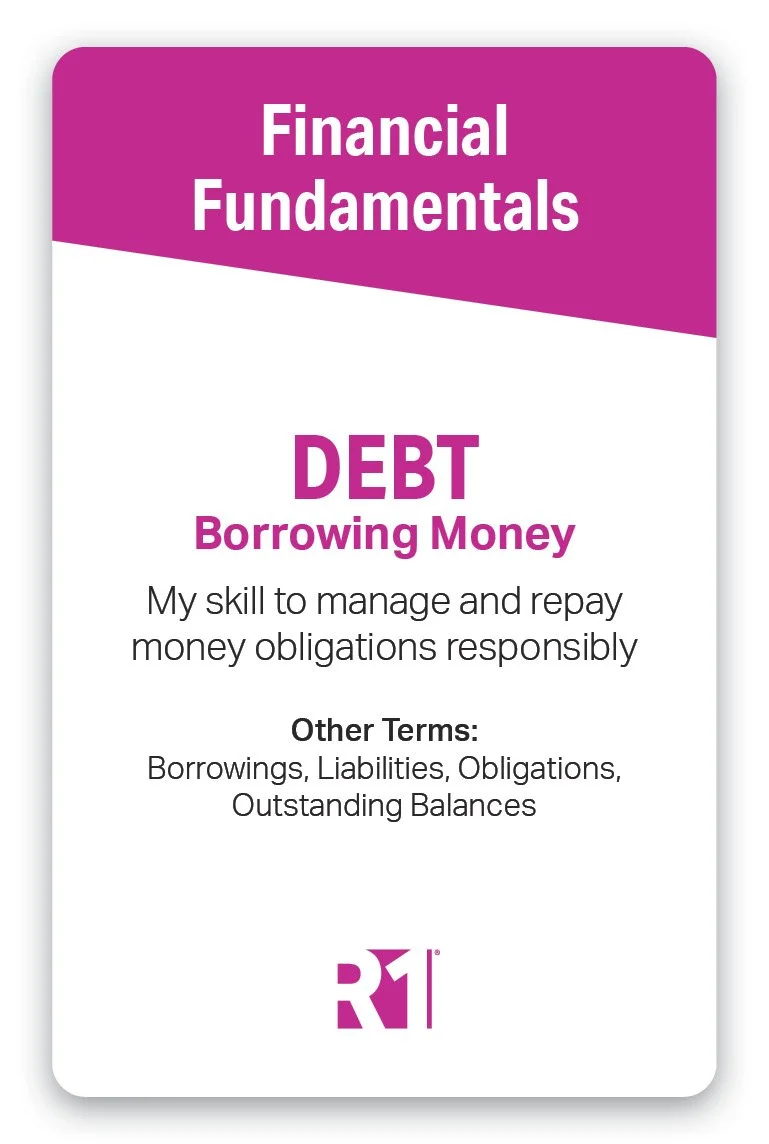
Debt — Borrowing Money: My skill to manage and repay money obligations responsibly
Other Terms: Borrowings, Liabilities, Obligations, Outstanding Balances
3 of 8 Discovery Cards Examples:
I know how much debt I have
I pay my bills on time
I avoid unnecessary debt
2 of 8 Questions to Explore Examples:
How often do you review your debt?
What motivates you to pay off debt?
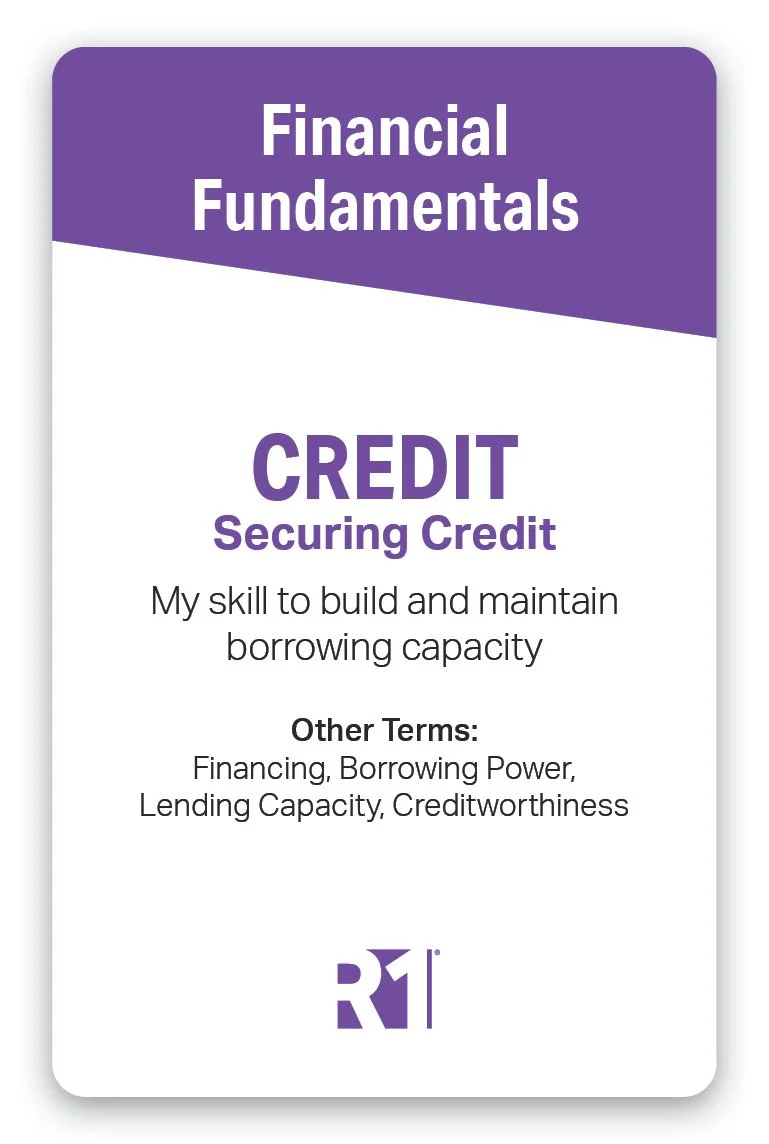
Credit — Securing Credit: My skill to build and maintain borrowing capacity
Other Terms: Financing, Borrowing Power, Lending Capacity, Creditworthiness
3 of 8 Discovery Cards Examples:
I check my credit report regularly
I use credit responsibly
I keep my credit spending low
2 of 8 Questions to Explore Examples:
What helps you to limit your credit spending?
What are the benefits of having a good credit score?
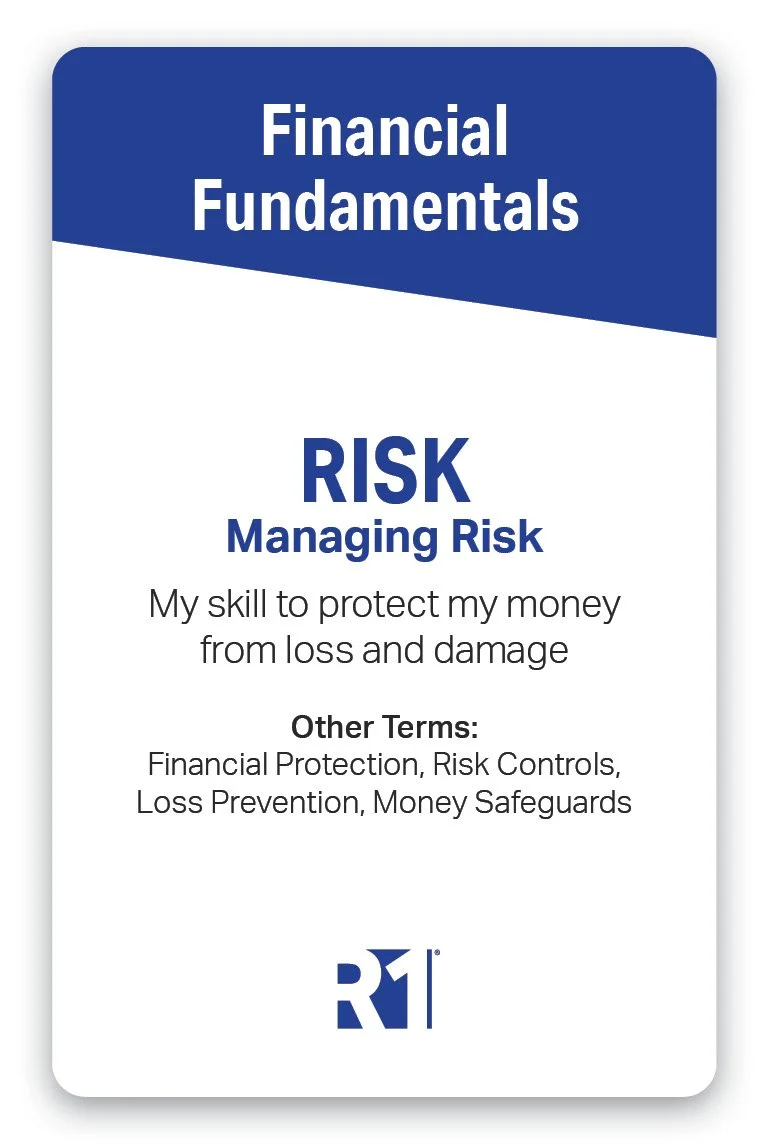
Risk — Managing Risk: My skill to protect my money from loss and damage
Other Terms: Financial Protection, Risk Controls, Loss Prevention, Money Safeguards
3 of 8 Discovery Cards Examples:
I have health insurance (e.g., medical, dental, vision)
I have renters or homeowners insurance
I have auto insurance (e.g., car, vehicle)
2 of 8 Questions to Explore Examples:
What is covered by your current policies? What is not?
What are the limits and deductibles on your current insurance?
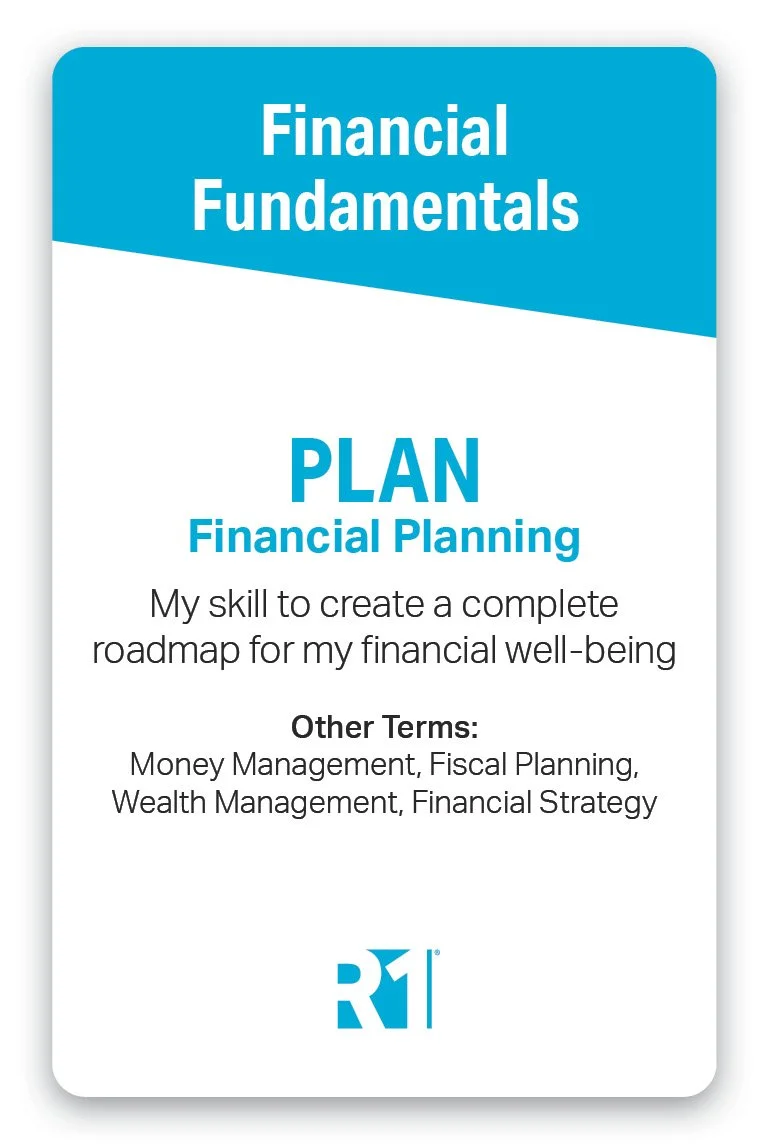
Plan — Financial Planning: My skill to create a complete roadmap for my financial well-being
Other Terms: Money Management, Fiscal Planning, Wealth Management, Financial Strategy
3 of 8 Discovery Cards Examples:
I set clear financial goals
I plan ahead for taxes owed or refunds (e.g., adjust withholding, save for tax payments)
I review my finances regularly
2 of 8 Questions to Explore Examples:
What are your top financial goals right now?
Who do you turn to for money advice?
A Toolkit For Engagement — What’s In the Deck
Questions to Explore
Answer the following questions for yourself or with your team:
What do you find helpful about the Financial Fundamentals Model?
How will the Financial Fundamentals Model be most useful for you and your team? Explain.
How does your knowledge of the 8 Financial Fundamentals help you to better understand the strengths and needs of the individuals you serve?
How can you and your team use this information to engage and support individuals in your program?
What are some areas in your program where you can incorporate Financial Fundamental activities?
What will be the benefit for you and others as you use this tool?
What is your major learning or takeaway from this post? Explain.
Thank you for reading this post and participating in this activity. Contact us if you would like to learn more about our Financial Fundamentals solutions and the R1 Learning System. We look forward to hearing from you.
References
Consumer Financial Protection Bureau. (2024). Your money, your goals: A financial empowerment toolkit. U.S. Consumer Financial Protection Bureau. https://www.consumerfinance.gov
National Foundation for Credit Counseling. (2024). Financial literacy and education resources. https://www.nfcc.org
Orman, S. (2020). The ultimate retirement guide for 50+: Winning strategies to make your money last a lifetime. Hay House.
Ramsey, D. (2013). The total money makeover: Classic edition: A proven plan for financial fitness. Thomas Nelson.
Warren, E., & Tyagi, A. W. (2005). All your worth: The ultimate lifetime money plan. Free Press.
Copyright 2026 R1 Publishing LLC / All Rights Reserved. Use of this article for any purpose is prohibited without permission.
Engagement Tools
Integrating Discovery Card activities into your groups and one-on-ones will allow individuals to think concretely, increase self-awareness, build vocabulary, express themselves more effectively, and put insights into action. Visit the R1 Store to learn more about these evidence-based topics and models.

Here are a few ideas to help you learn more about R1 and engage others on this topic:
Share this blog post with others. (Thank you!)
Start a conversation with your team. Bring this information to your next team meeting or share it with your supervisor. Change starts in conversations. Good luck! Let us know how it goes.
Visit www.R1LEARNING.com to learn more about R1, the Discovery Cards, and how we’re creating engaging learning experiences through self-discovery.