From Engagement to Engagements — Connecting Curriculum to Measurable Outcomes
When Tom wrote the very first post on this blog, he started with a simple idea: “if learners aren't engaged, they can't learn. And if they are not learning, they can't progress and change.”
That idea became the foundation for everything we've built at R1— the R1 Learning System, the Discovery Cards, the structured evidence-based models and taxonomies, and eventually the R1 Discover platform itself.
Engagement has always been our north star. We've defined it, studied it, designed for it, and measured it. We've talked about how engagement refers to the degree of participation, attention, curiosity, interest, optimism, and passion that people show when they are being taught and are learning. We've built tools to reach visual, auditory, verbal, kinesthetic, and logical learners. We've structured our curriculum around the R1 Learning Process for self-discovery because we believe that when individuals connect emotionally and intellectually to the curriculum, when they see themselves in it, that's when real change begins.
But along the way, we've learned something important: engagement as a philosophy is only as powerful as your ability to put it into practice consistently across every counselor, every caseload, every session, every day.
And that is where things have historically broken down.
Not because practitioners don't care, but because the operational side of delivering structured curriculum at scale has never had the tools it deserves.
That changes now.
From a Philosophy to a Workflow
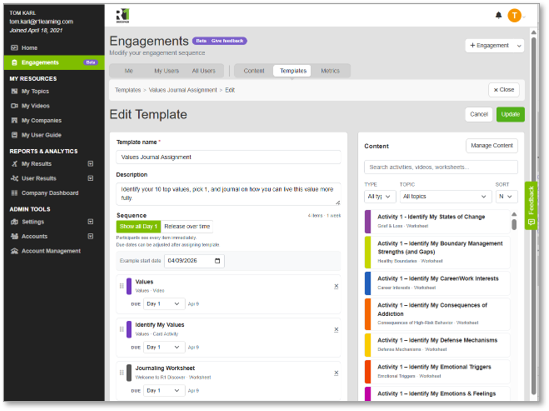
Build templates with content sequences and assign to users.
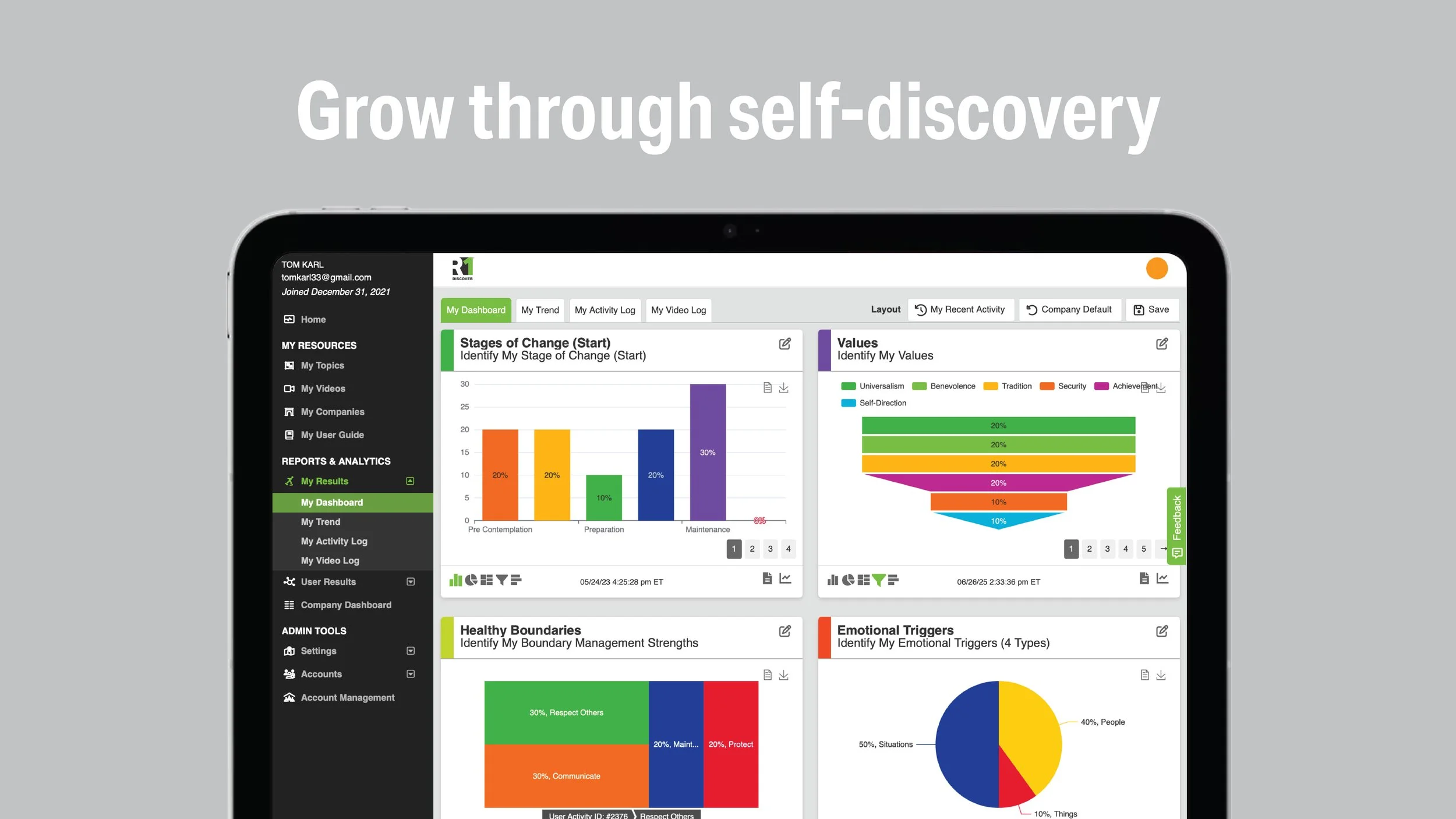
With the launch of Engagements in R1 Discover, we've taken the concept of engagement, that intellectual and emotional connection we've been writing about since day one, and turned it into a concrete, schedulable, trackable, and measurable unit of work.
We call them engagements, and they represent the bridge between what you teach and your ability to prove it's working.
An engagement is a facilitated learning session, a specific piece of content assigned to specific individuals with a clear timeline and trackable outcomes. It can be for a group session, a one-on-one, or a self-paced assignment. It can contain a card-sorting activity, a topic video, a knowledge-check, a worksheet, or even content your organization has purchased or created on its own.
The point is that every learning interaction now has structure, visibility, and data behind it.
For clinical staff managing caseloads of 15 to 20 individuals with 30-to-90-day rotations, this is a fundamental shift. You're no longer handing out worksheets and hoping for the best. You're assigning, tracking, and reporting on every learning asset of curriculum your program delivers.
Five Things That Change for Your Program
Here's what the Engagements feature brings to your day-to-day work:
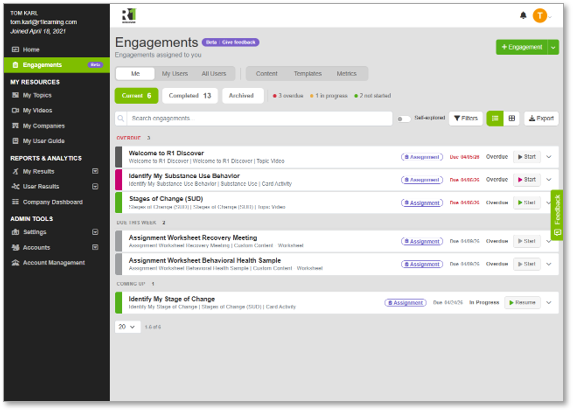
View and track user assignments.
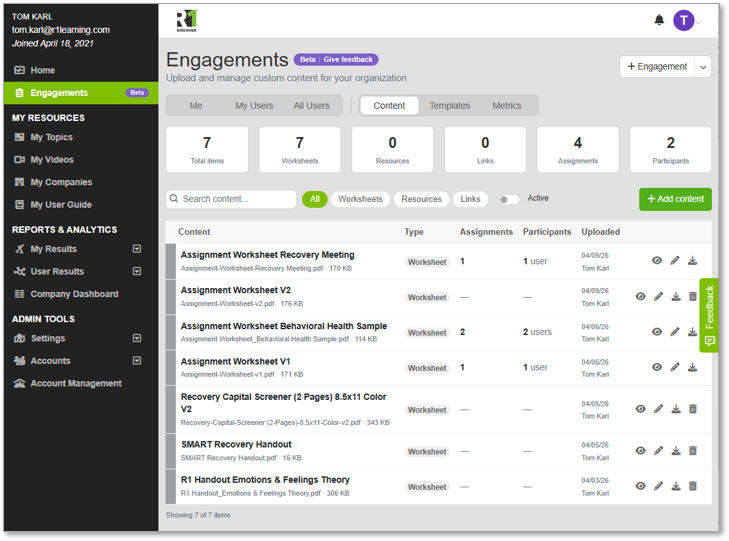
Upload and assign your existing content.
One place to see everything. The engagements list gives facilitators a single view into what's assigned, what's overdue, what's coming up, and what's been completed, across their own assignments, their caseload, or their entire program.
Your content, alongside ours. R1 Discover already offers over 200 learning assets including interactive activities, videos, and worksheets. But we know your program has its own materials: worksheets, PDFs, articles, videos, blog posts, and more that are central to how you work. The Engagements Content Library lets organizations upload and manage their own resources right alongside R1's library, so practitioners can assign from one unified set of content.
Care plan templates that save hours. Clinical directors, counselors and practitioners at every level can build reusable sequences, like a 6-week onboarding curriculum or a relapse prevention track, with content items mapped to relative timing. Assign the template to a group in one click, and the system automatically creates staggered engagements with the right due dates.
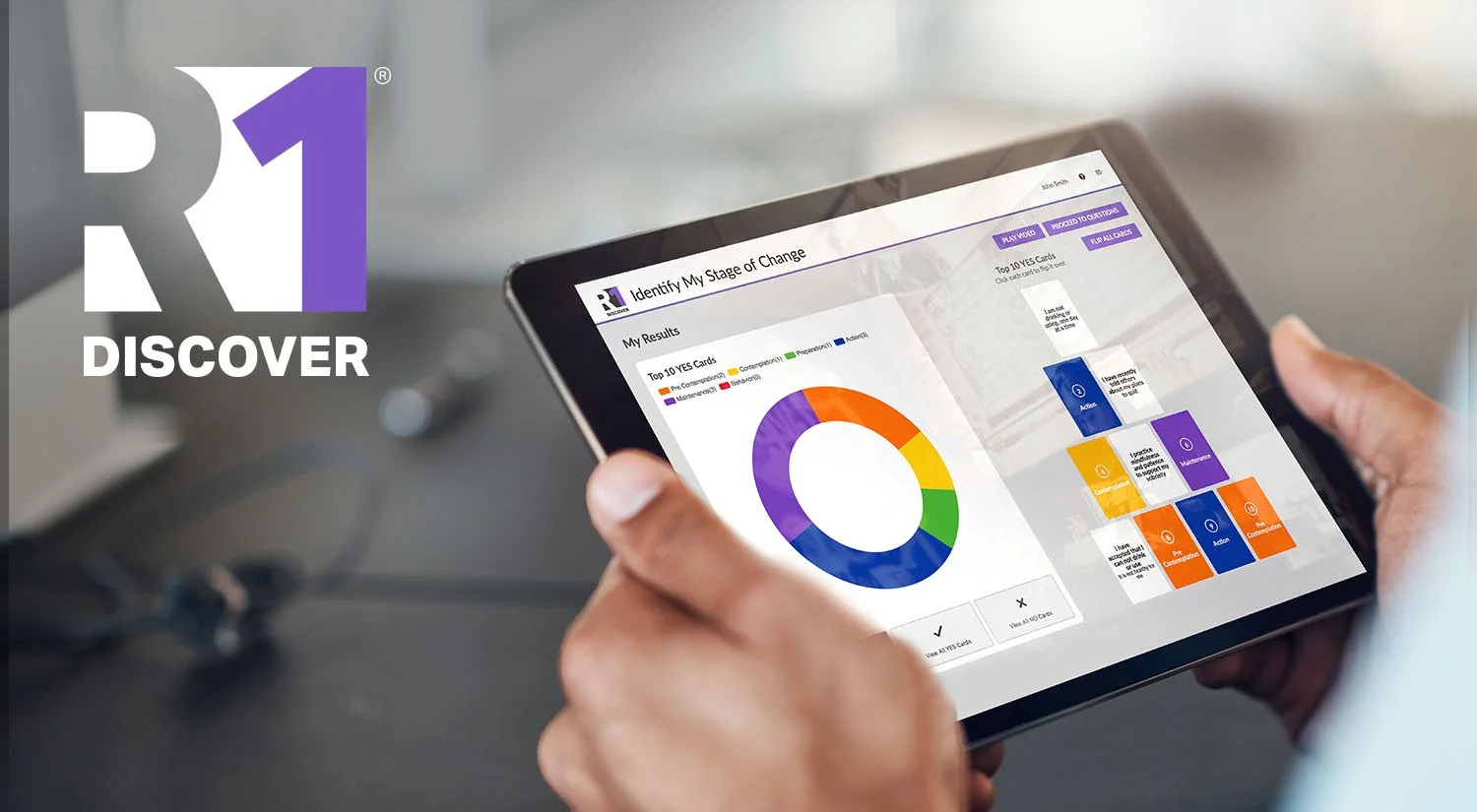
Reports that actually tell you something. Not all content is the same, and the reporting shouldn't be either. Card sort activities show what individuals selected and how those selections compare across a group. Videos show watch progress. Knowledge checks break down performance by question. Worksheets show the completed document with a clinician review workflow built in. You can look at one participant's progress across a care plan or zoom out to see completion trends across your program.
A smarter assignment workflow. Creating an individual engagement is simple: choose the content, select participants, set the dates, and assign. Need to assign a full care plan? Switch to template mode and do it in one step. The system handles reminders automatically, and facilitators can also send manual reminders when needed.
Why This Matters
Tom started R1 Learning because he believed that the behavioral health field deserved better high-quality learning tools, tools designed around how people actually learn, not just what they need to learn. He believed that technology could operationalize and optimize a highly structured set of evidence-based learning resources to serve individuals, families, practitioners, and providers.
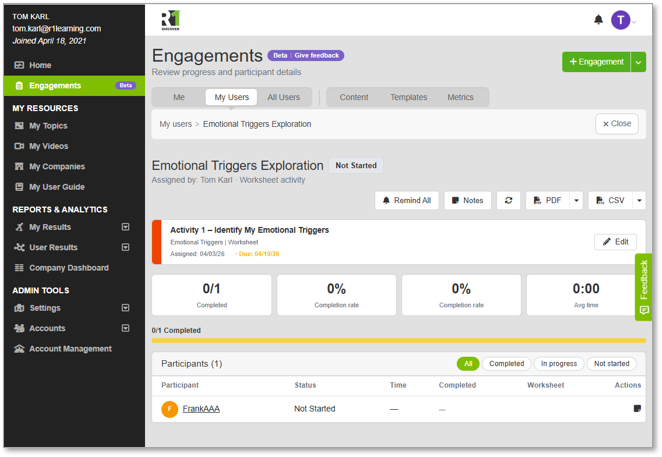
View details for each of user.
That belief led us to the R1 Learning System and to a self-discovery learning process that helps individuals find the words for what they're thinking and feeling in the context of evidence-based models and theories, and motivates them to change and grow.
Engagements is the next step in that journey.
It's what happens when you take a philosophy of engagement and give it operational infrastructure.
It means that every group session, every one-on-one, every self-paced assignment is no longer just an interaction. It's a trackable part of an individual's progress and a measurable part of your program's effectiveness.
The behavioral health industry is moving toward measurement-based care, and programs are under increasing pressure from accreditors, funders, and corporate leadership to demonstrate that their programming is working, specifically on key metrics like retention, length of stay, craving reduction, quality-of-life improvements, substance-free rates, medication adherence, and discharge reasons. See the Metrics Matters – Which Ones Are Your Tracking post. Most are trying to do this with tools that were never designed for it, EHRs that track attendance but not learning, or printed worksheets that generate no data at all. Engagements gives programs the layer that's been missing: a direct connection between the curriculum you deliver and the data you need to measure its real impact on important outcomes.
For practitioners, it means less time for logistics and more time doing the work that matters, facilitating, connecting, and guiding individuals through self-discovery.
For program directors (including clinical and non-clinical supervisors), it means visibility into what's happening with your teams, in your groups, and with your caseloads.
For organizations, it means the ability to standardize curriculum delivery across locations and demonstrate measurable outcomes.
You no longer just deliver curriculum. You can show it’s working.
Questions to Explore
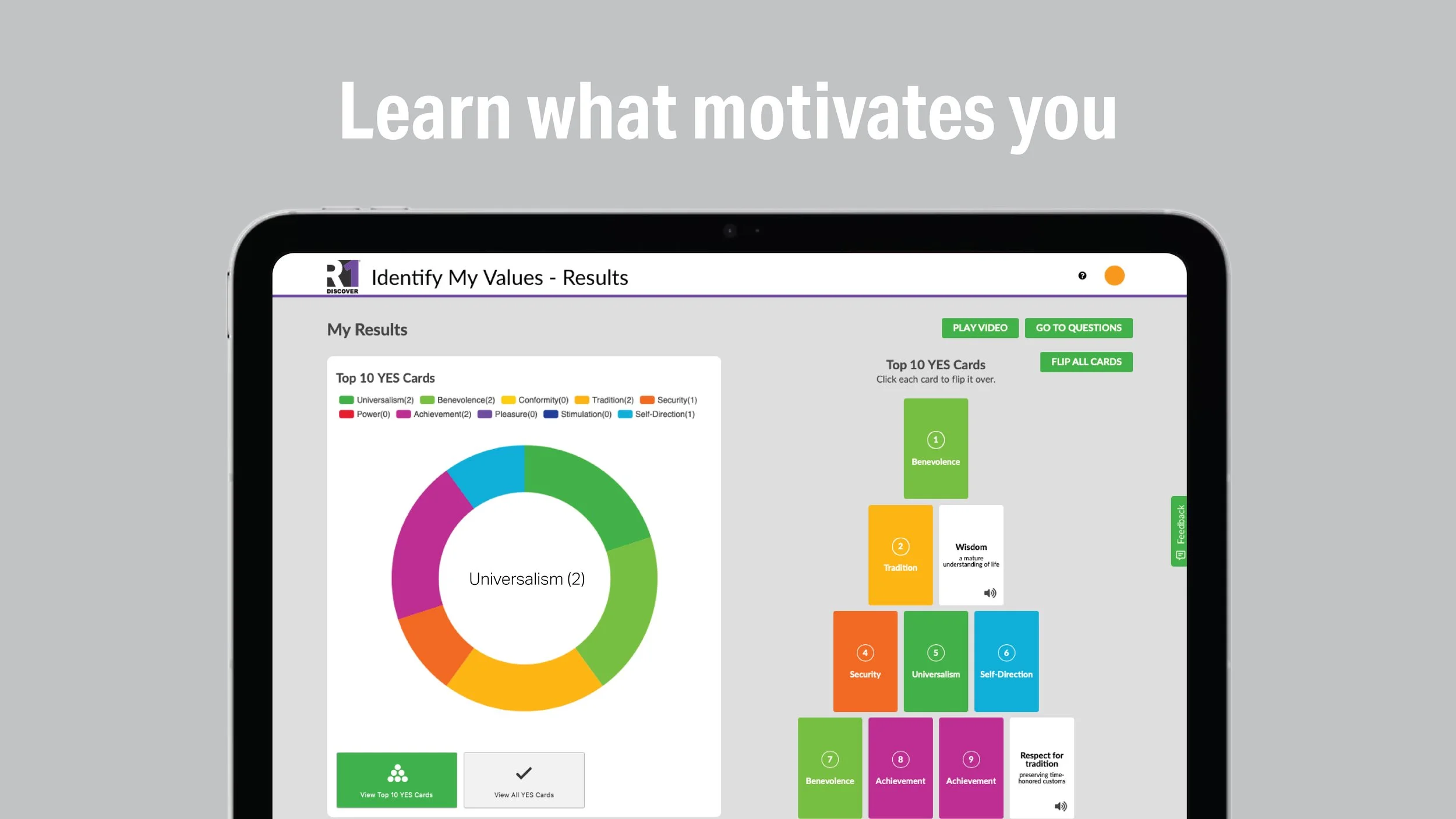
Answer these questions for yourself or with your team:
How much time does your clinical staff currently spend on the logistics of assigning, tracking, and following up on curriculum activities? Where are the biggest bottlenecks?
If you could see completion rates, engagement levels, and content performance across every counselor and every location in your program, how would that change your decision-making?
Do you have existing curriculum materials (e.g., worksheets, resources, external content) — that could benefit from being organized in a shared, assignable library?
How would reusable care plan templates change the onboarding experience for new individuals entering your program?
What would it mean for your program if every learning interaction generated trackable, reportable data?
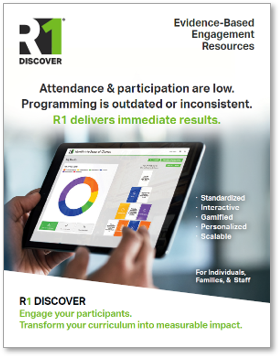
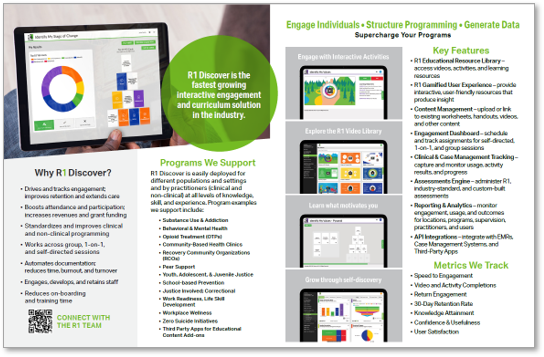
Download R1 Discover Brochure — Transform your existing curriculum into measurable impact
Thank you for reading this post and participating in this activity. Contact us if you would like to learn more about the R1 Learning System and our solutions. We look forward to hearing from you.
Copyright 2026 R1 Publishing LLC / All Rights Reserved. Use of this article for any purpose is prohibited without permission.
Here are a few ideas to help you learn more about R1 and engage others on this topic:
Share this blog post with others. (Thank you!)
Start a conversation with your team. Bring this information to your next team meeting or share it with your supervisor. Change starts in conversations. Good luck! Let us know how it goes.
Visit www.R1LEARNING.com to learn more about R1, the Discovery Cards, and how we’re creating engaging learning experiences through self-discovery.