8 Problem-Solving Skills — What Are My Strengths?
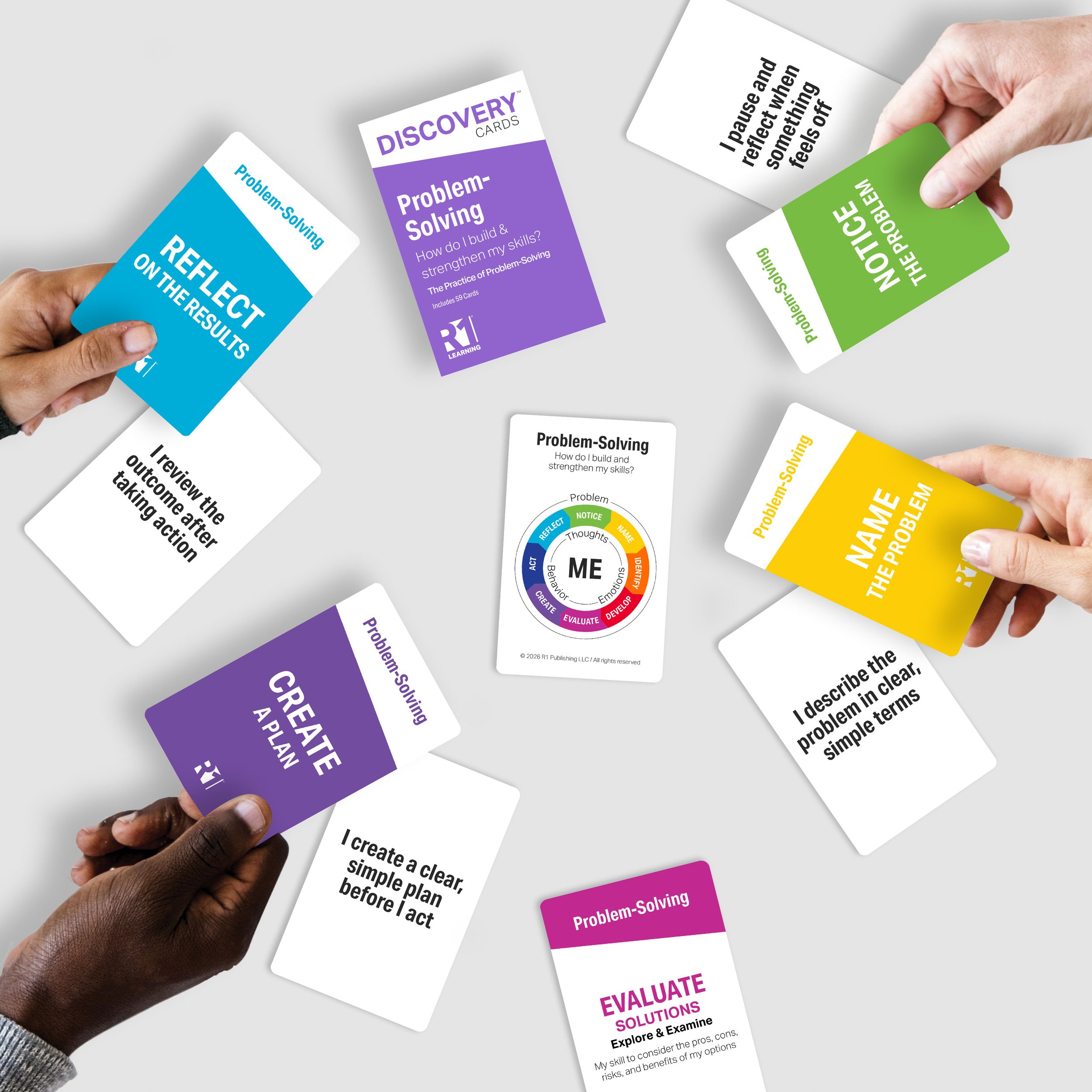
As time progresses on our R1 journey, we continue to add more topics. We’ve taken a side-step to increase topics on the life and work skills side of the equation with recent topics for Communication Skills and Financial Fundamentals. The ecosystem of our behavioral health, corrections/justice, and our schools’ communities calls for a wider birth of topic to support individuals on their path of mental health and wellness. Problem-Solving proves to be another topic with much potential to teach basic life skills to individuals and families seeking to reach their full potential. This is one that our customers have been asking for and we’re exciting to be releasing it today.
Problem-solving is an essential life skill that helps people navigate challenges, make thoughtful decisions, and respond effectively to everyday situations. From managing responsibilities at home, school, or work to resolving conflicts, achieving goals, and adapting to unexpected changes, problem-solving gives individuals the tools to move forward with confidence and purpose. It is not simply about finding the “right” answer; it is about learning how to think clearly, consider possibilities, and take meaningful action.
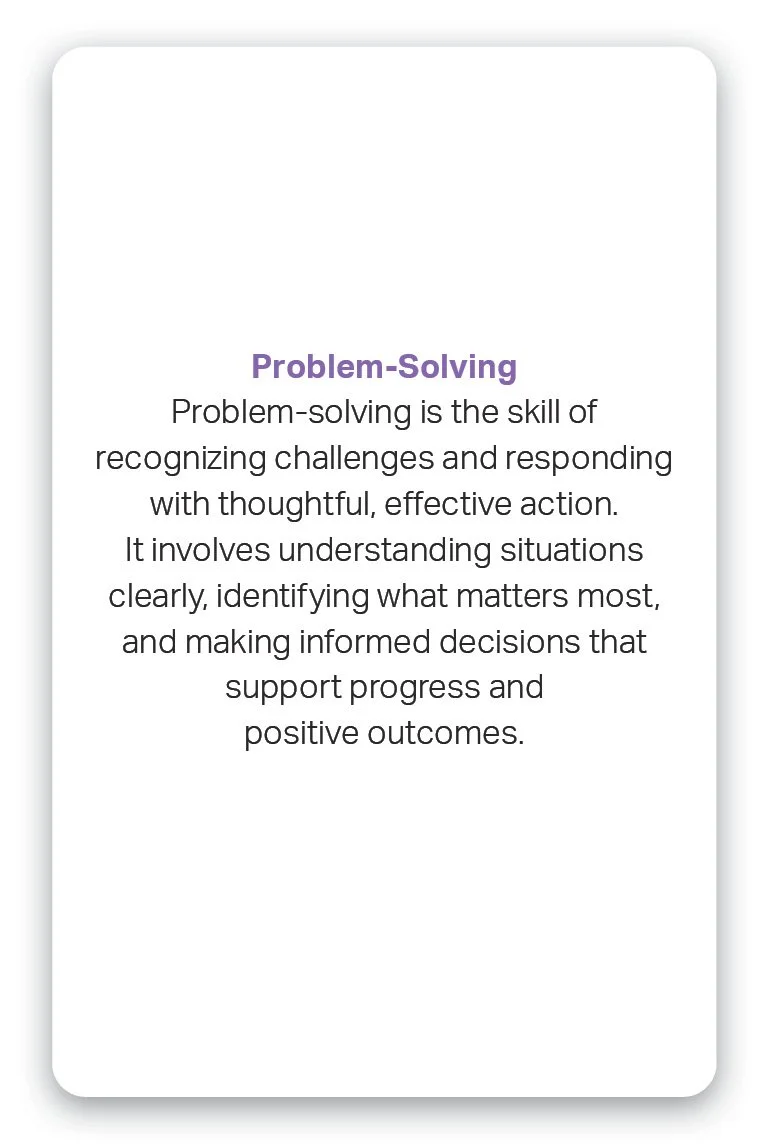
What is problem-solving? Problem-solving is the skill of recognizing challenges and responding with thoughtful, effective action. It involves understanding situations clearly, identifying what matters most, and making informed decisions that support progress and positive outcomes.
Individuals with strong problem-solving skills begin by slowing down, observing the situation, and understanding what is really happening. They learn to define the problem clearly, focus on the desired outcome, and consider different options before choosing a path forward. This reflective process encourages critical thinking, creativity, flexibility, and perseverance. It also helps individuals understand that mistakes and setbacks are not failures, but opportunities to learn, adjust, and try again.
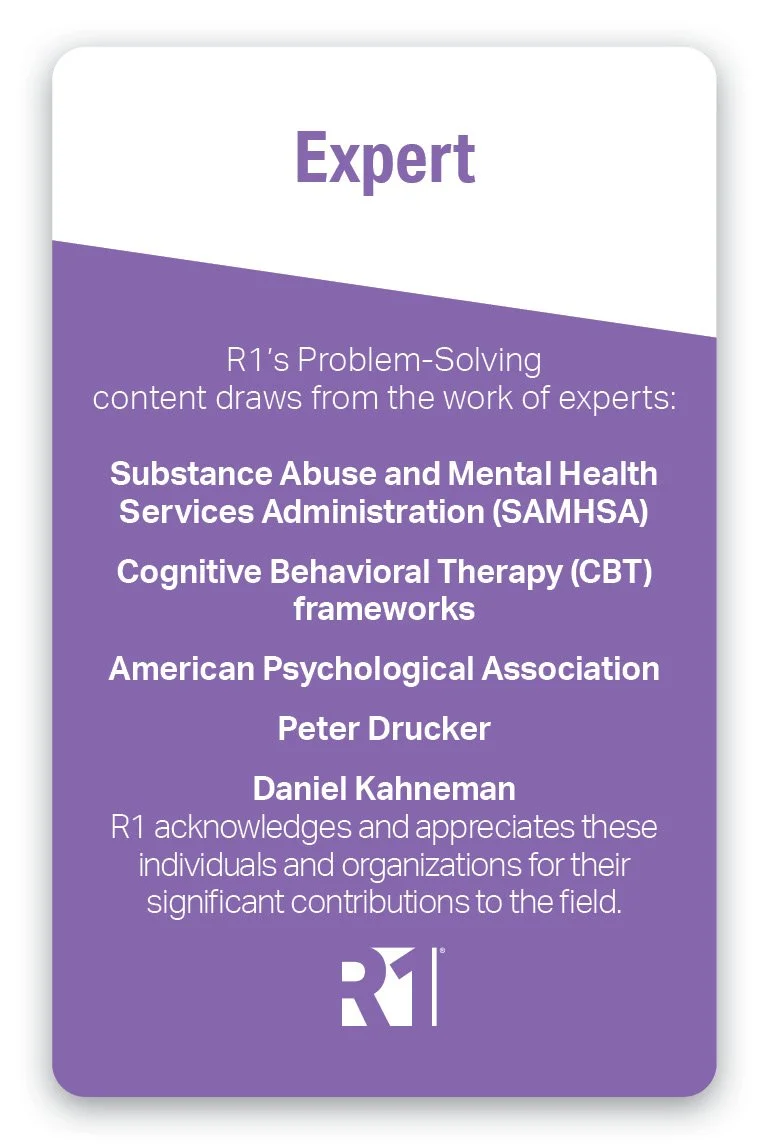
Notable influencers, theories, and best practices for R1’s Problem-Solving topic include American Psychological Associations, Albert Bandura creator of Social Cognitive Theory (SCT), Aaron Beck creator of Cognitive Behavioral Therapy (CBT), Edward de Bono, Alber Ellis creator of Rational Emotive Behavior Therapy (REBT), Peter Drucker, Daniel Kahneman & Amos Tversky, George Polya, Karl Popper, Substance Abuse and Mental Health Services Administration (SAMHSA), and Herbert Simon.
As an essential life skill, problem-solving supports personal growth, independence, and resilience. The more people practice identifying challenges, exploring solutions, making plans, taking action, and reflecting on results, the more prepared they become to handle future situations. By strengthening problem-solving skills, individuals build confidence in their ability to face obstacles, make informed choices, and create positive outcomes in their lives.
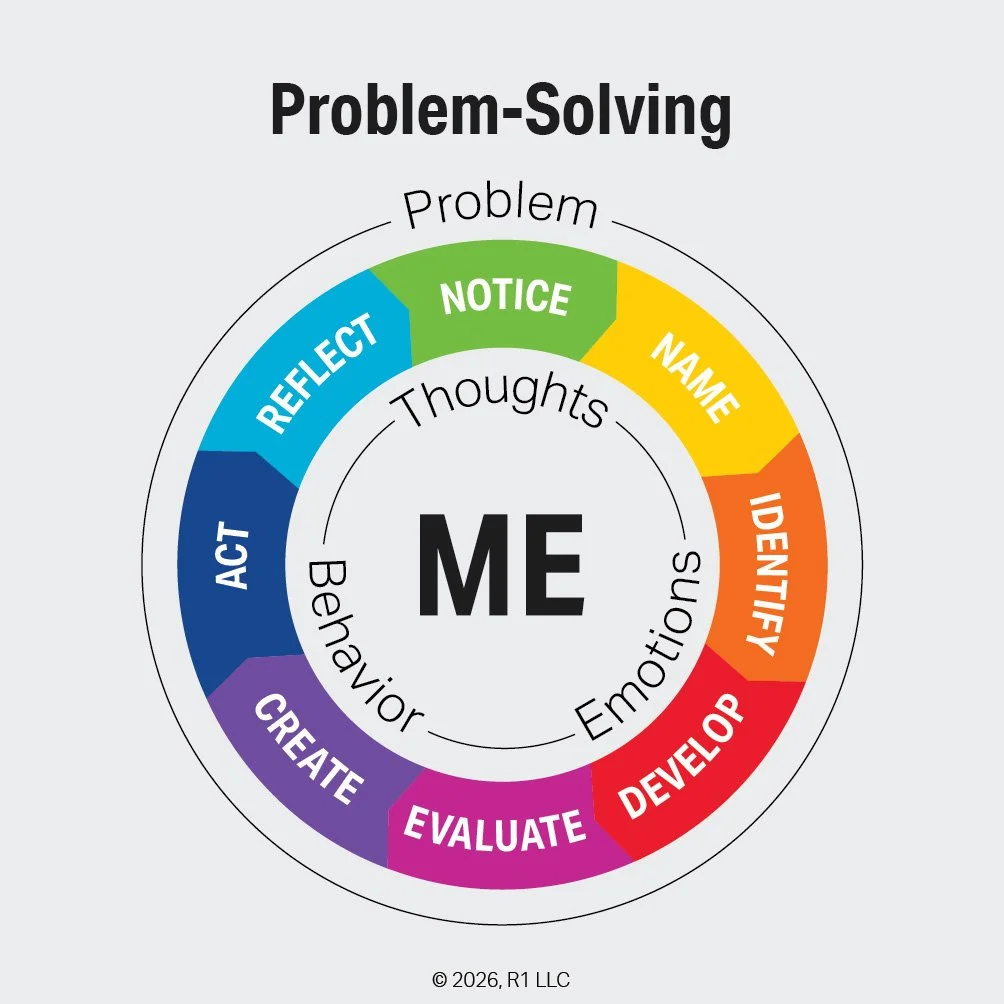
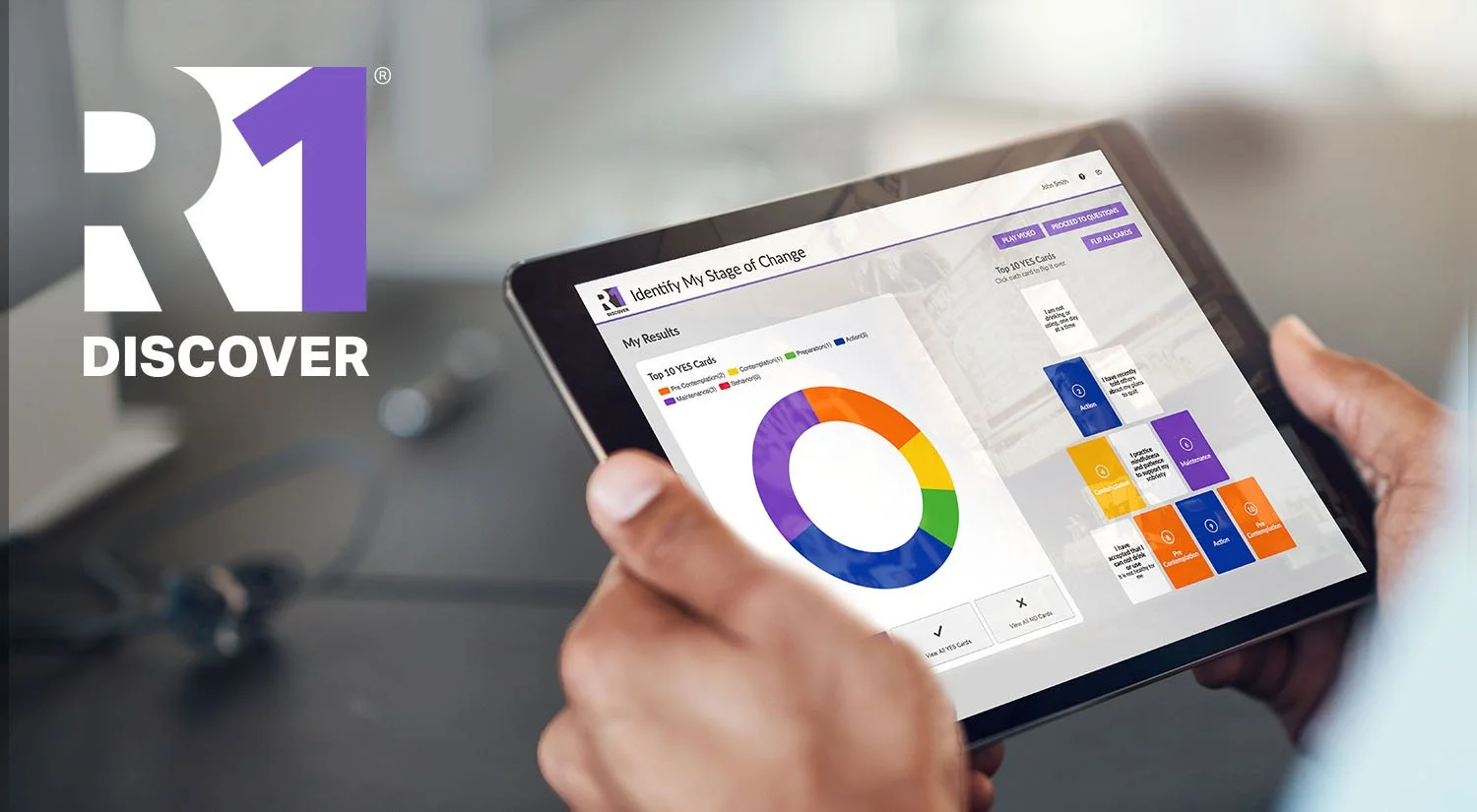
The purpose of today’s post is to share the basics of our new Problem-Solving topic so you can explore how best to use it with individuals in your setting. Take a moment to review the definitions and examples for each of the 8 Problem-Solving skills below. Then read through the Questions to Explore for yourself or with others in your organization. The R1 Problem-Solving Group Kit and R1 Discover App provide tools for engagement, education, and empowerment for individuals you work with or support. Implementing these tools often through practice is one of the best ways to learn. It’s all about practice… practice, practice, practice.
Explore R1 Discover — Interactive Engagement Tools
Problem-Solving Defined
What is problem-solving? Problem-solving is the skill of recognizing challenges and responding with thoughtful, effective action. It involves understanding situations clearly, identifying what matters most, and making informed decisions that support progress and positive outcomes.
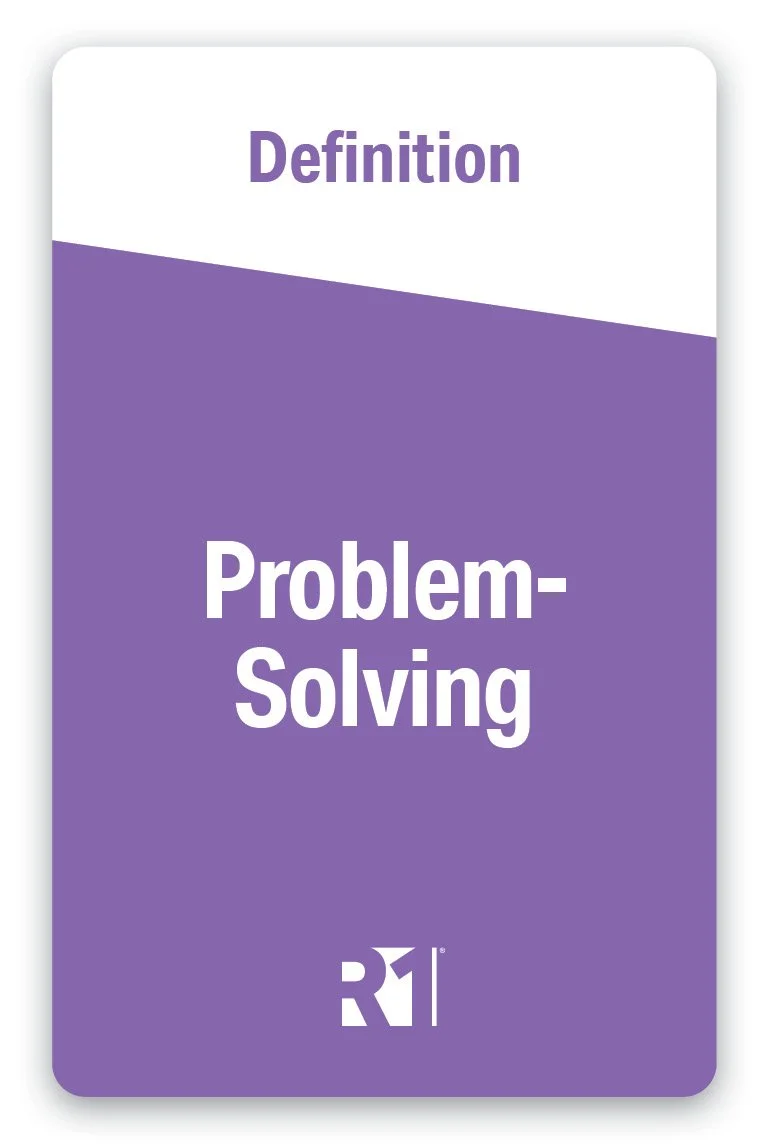
Problem-Solving — How do I build & strengthen my skills?
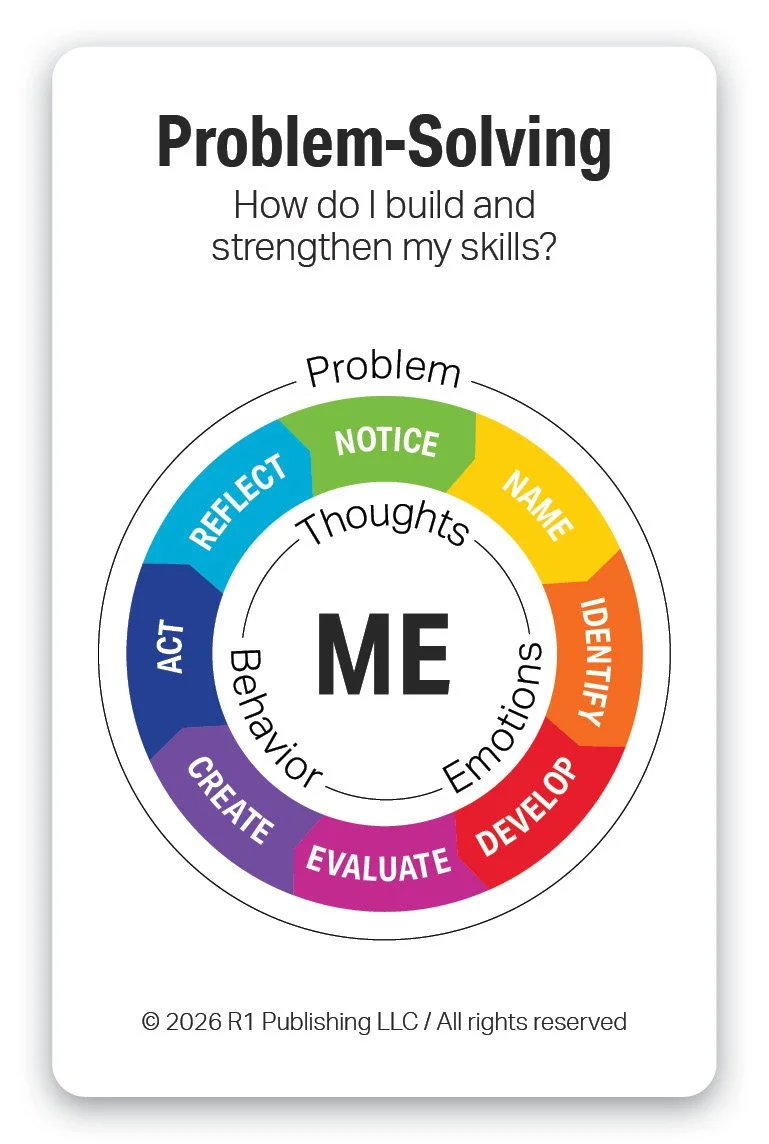
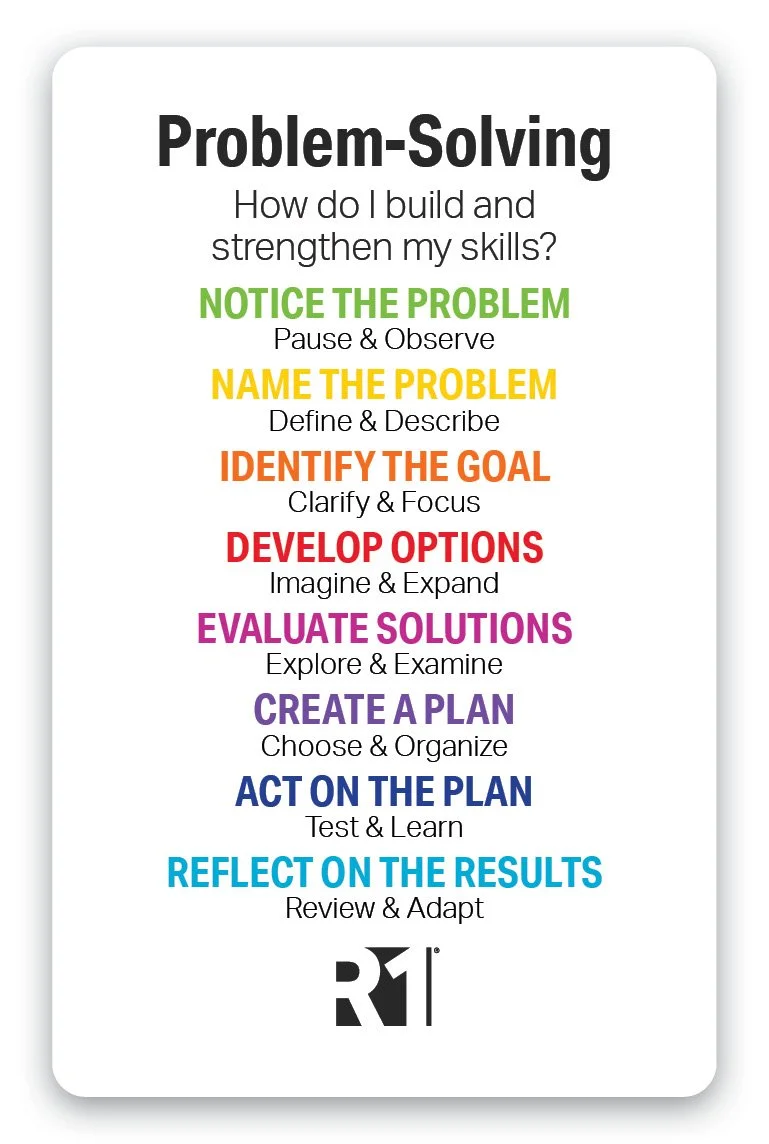
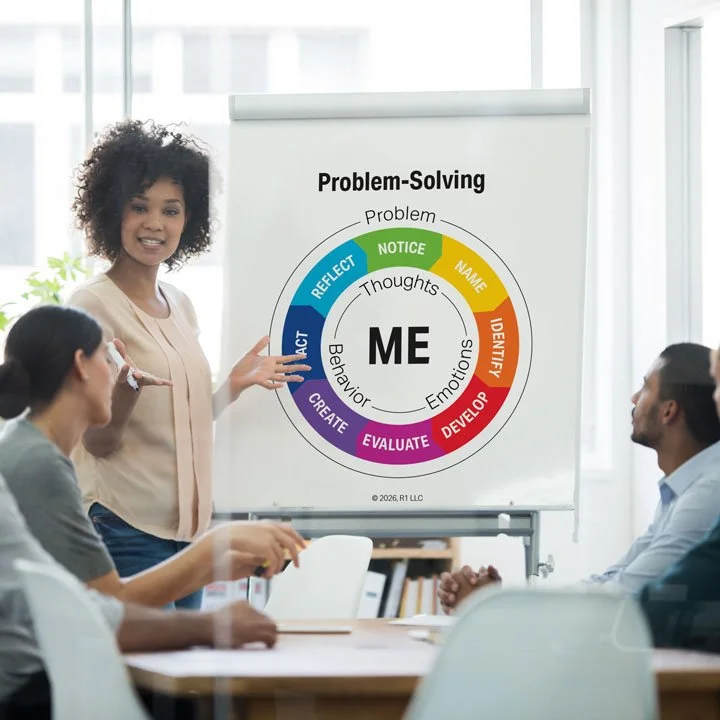
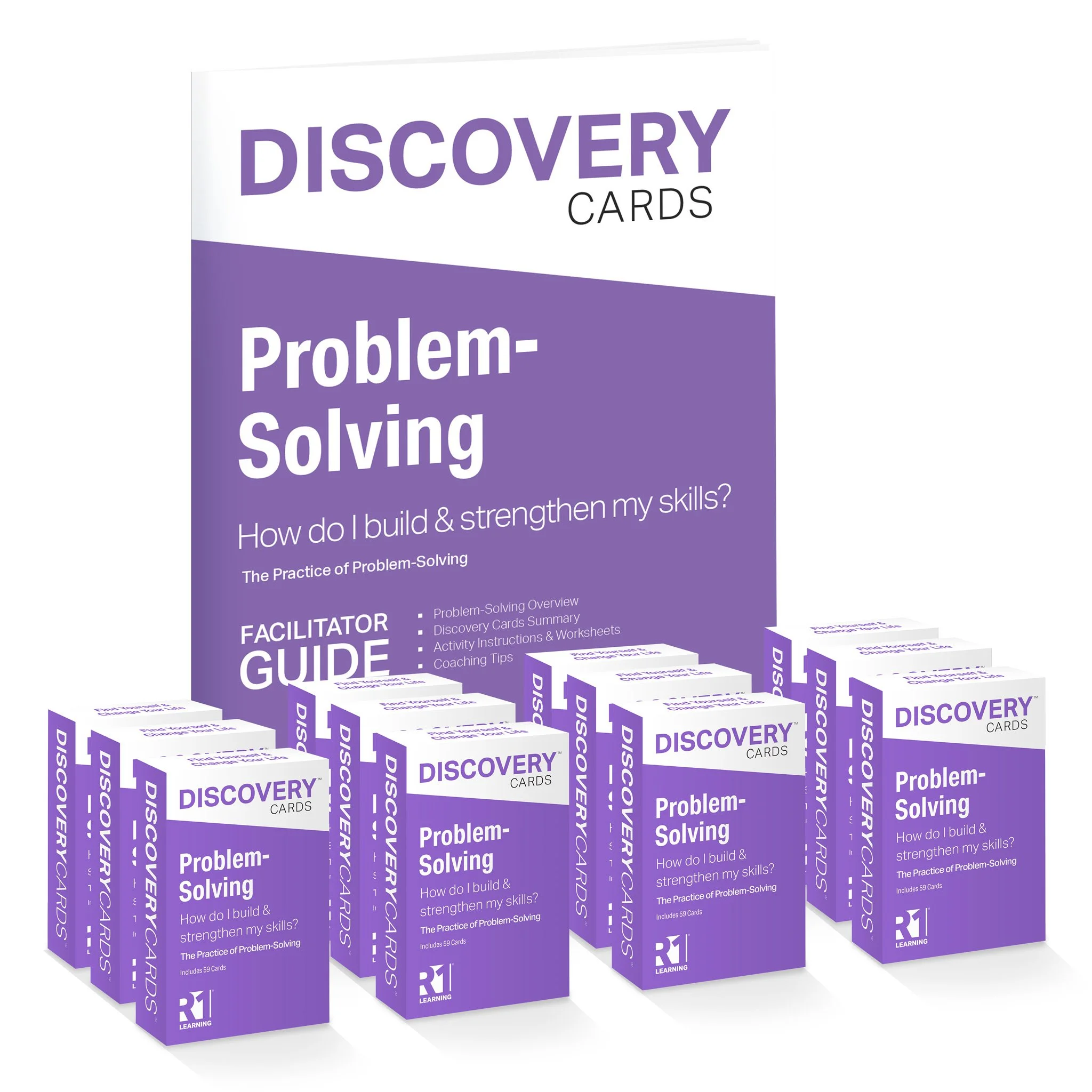
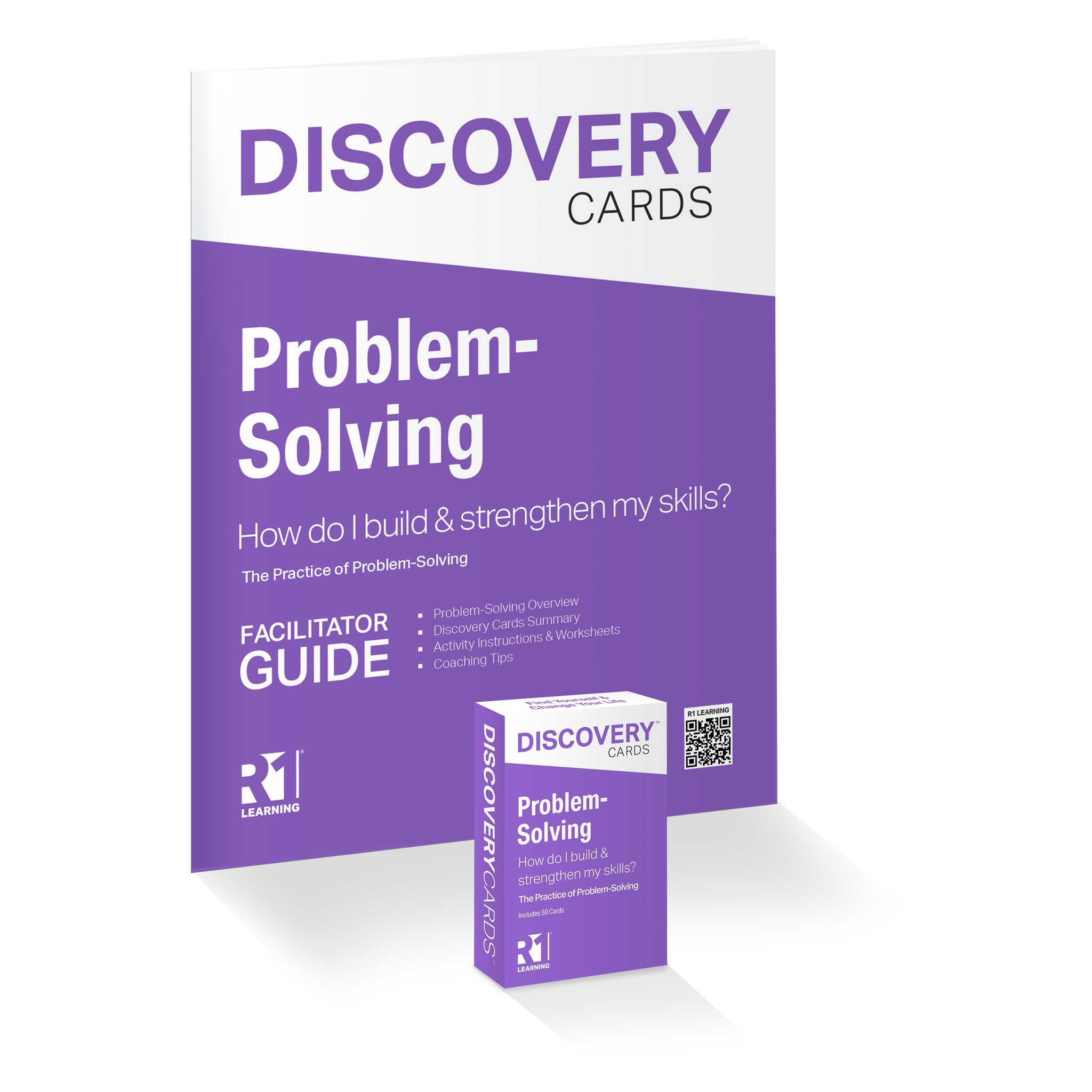
The 8 Problem-Solving Skills are listed below. For each, you will find a brief definition, examples of the Discovery Card’s behavioral statements, and Questions to Explore. Please note that all of this information, and more, is listed in the Problem-Solving Topic Kit (which includes 1 Discovery Cards deck, 1 Facilitator Guide, and 1 R1 Discover Seat License) located on the R1 Store.
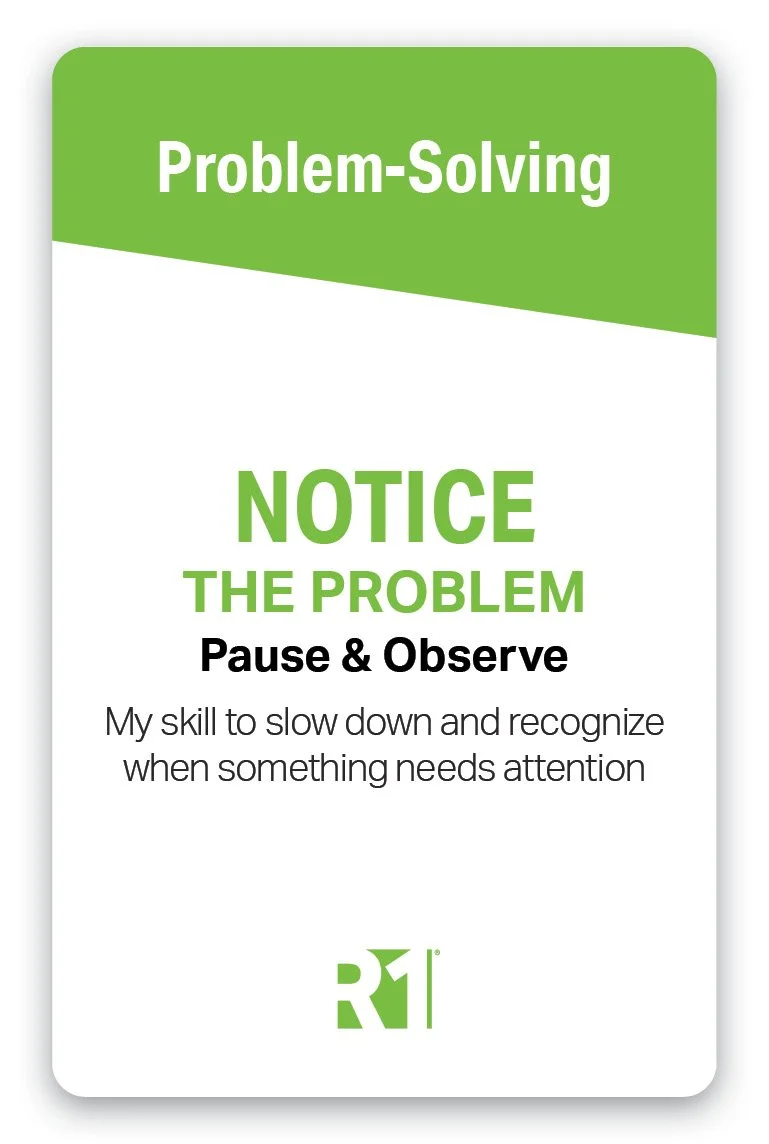
Notice the Problem — Pause & Observe: My skill to slow down and recognize when something needs attention
2 of 5 Discovery Cards Examples:
I pause and reflect when something feels off
I step back from responding when a problem shows up
2 of 5 Questions to Explore Examples:
How do you recognize when something isn’t working?
When have you benefited from not responding immediately?
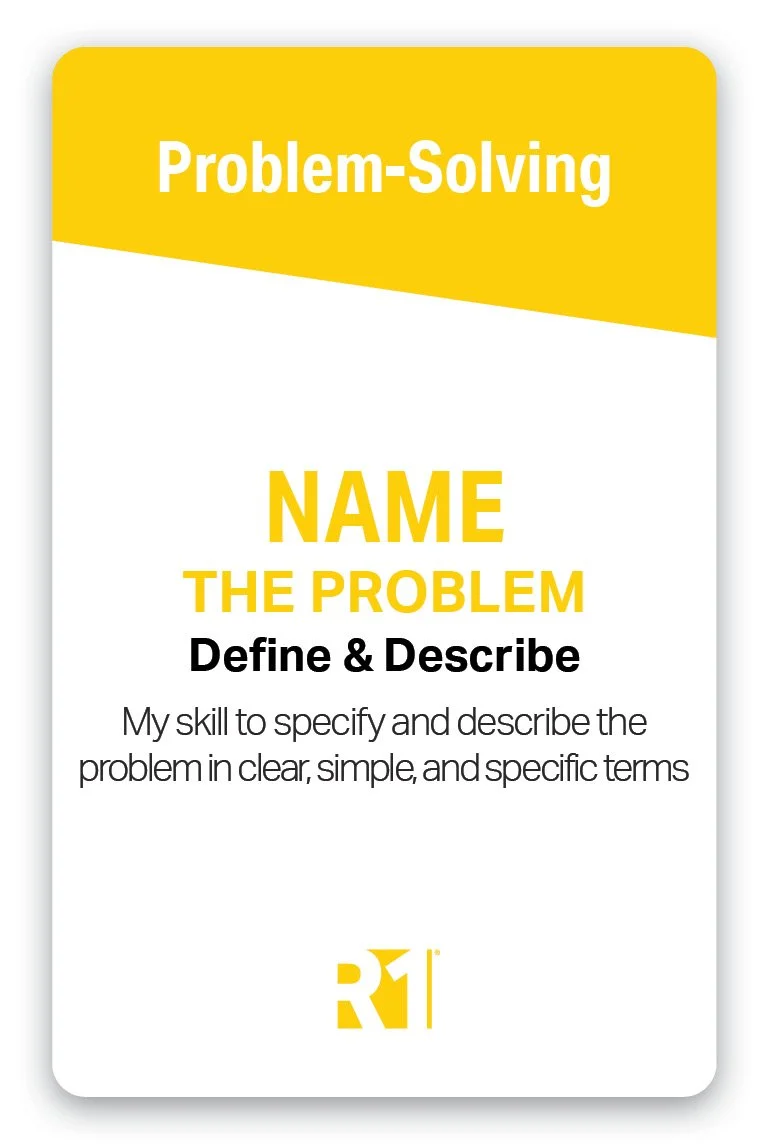
Name the Problem — Define & Describe: My skill to specify and describe the problem in clear, simple, and specific terms
2 of 5 Discovery Cards Examples:
I use facts and observations to name the problem
I ask questions to understand the problem
2 of 5 Questions to Explore Examples:
How would you express the problem to someone else?
What is the simplest way to describe the problem you are dealing with?
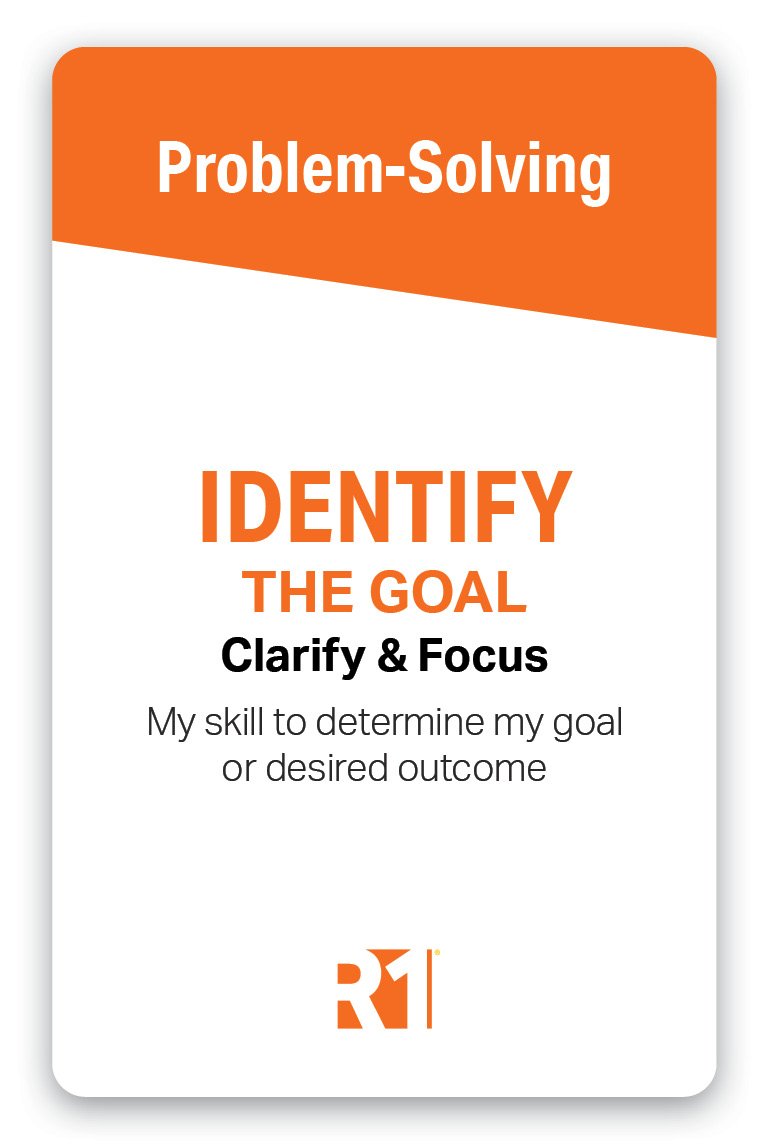
Identify the Goal — Clarify & Focus: My skill to determine my goal or desired outcome
2 of 5 Discovery Cards Examples:
I define the desired outcome I want to create
I align my goal with what matters most
2 of 5 Questions to Explore Examples:
How can you tap into your creativity to build a vision of the outcome you want?
What values influence your desired outcome?
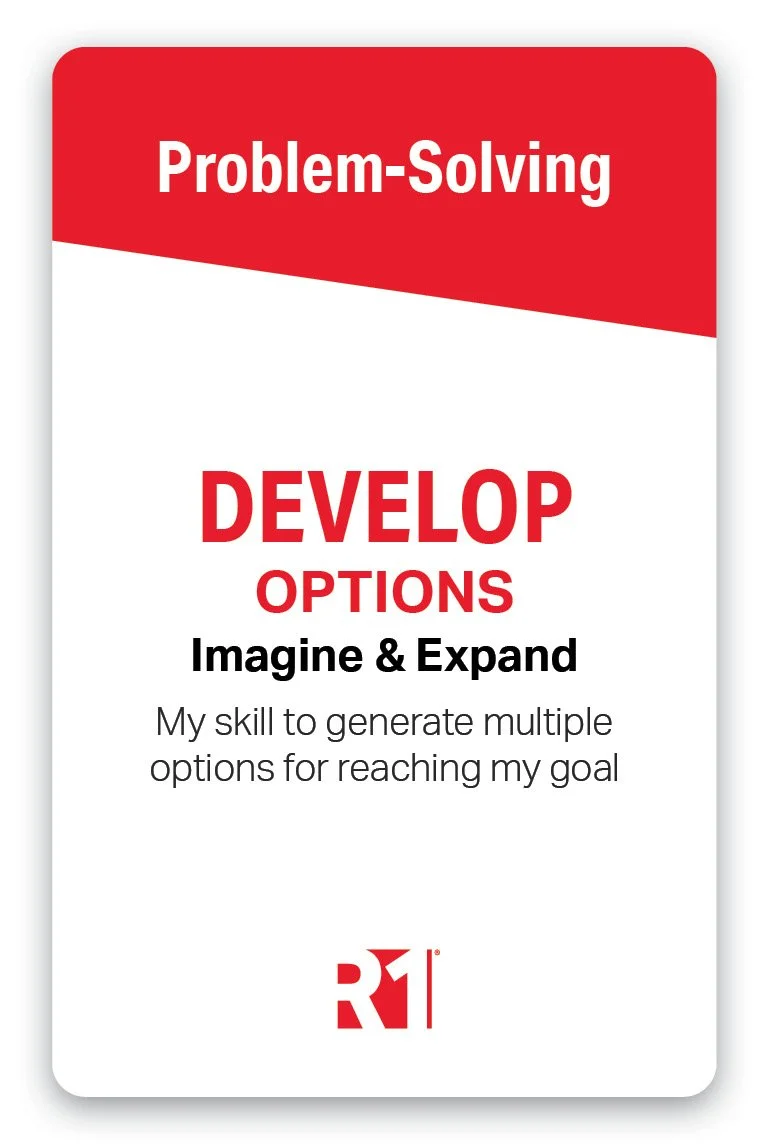
Develop Options — Imagine & Expand: My skill to generate multiple options for reaching my goal
2 of 5 Discovery Cards Examples:
I stay open to different solutions
I avoid acting on the first solution that comes to mind
2 of 5 Questions to Explore Examples:
What keeps you from acting on your first ideas or thoughts?
What new option can you try given your current problem?
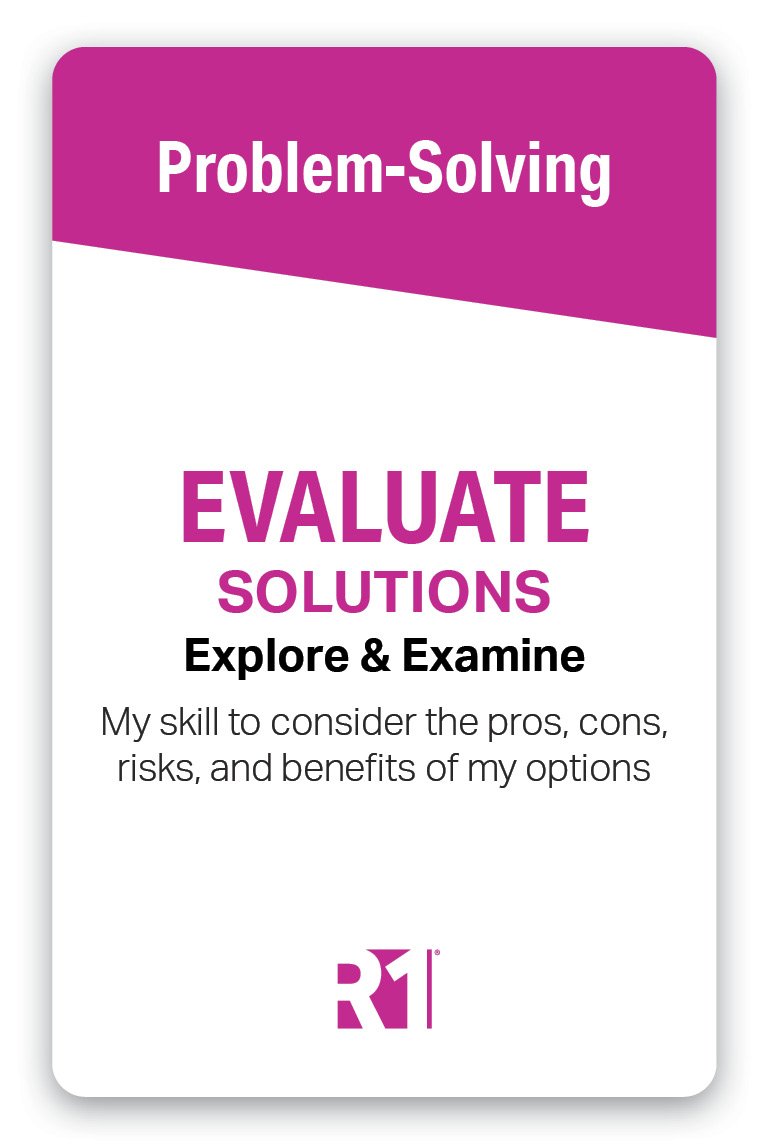
Evaluate Solutions — Explore & Examine: My skill to consider the pros, cons, risks, and benefits of my options
2 of 5 Discovery Cards Examples:
I evaluate my options carefully
I ask others for help in determining the best solution to try
2 of 5 Questions to Explore Examples:
How do you evaluate the outcome of each option?
What has worked or not worked in the past? Explain.
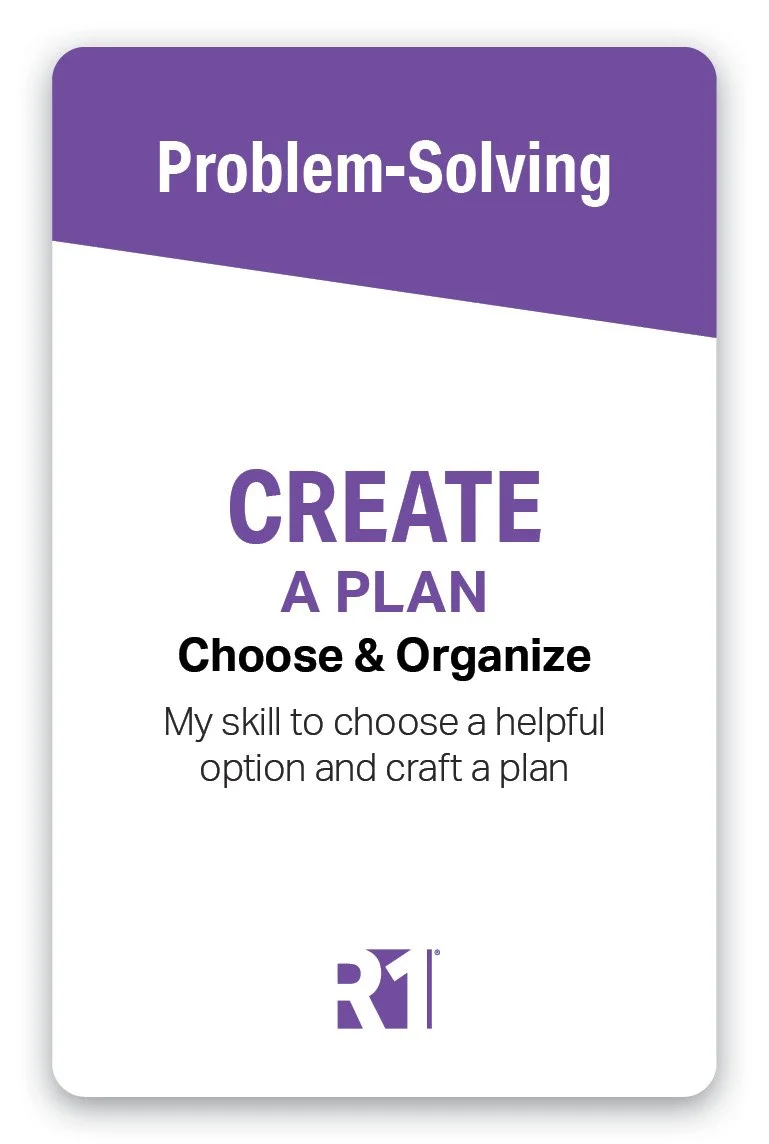
Create a Plan — Choose & Organize: My skill to select a helpful option and craft a plan
2 of 5 Discovery Cards Examples:
I create a clear, simple plan before I act
I map out the steps to follow through on my plan
2 of 5 Questions to Explore Examples:
How do you map out steps when planning? (e.g., think, write, talk with others)
Who are the trusted individuals you can seek feedback from on your problem-solving plan?
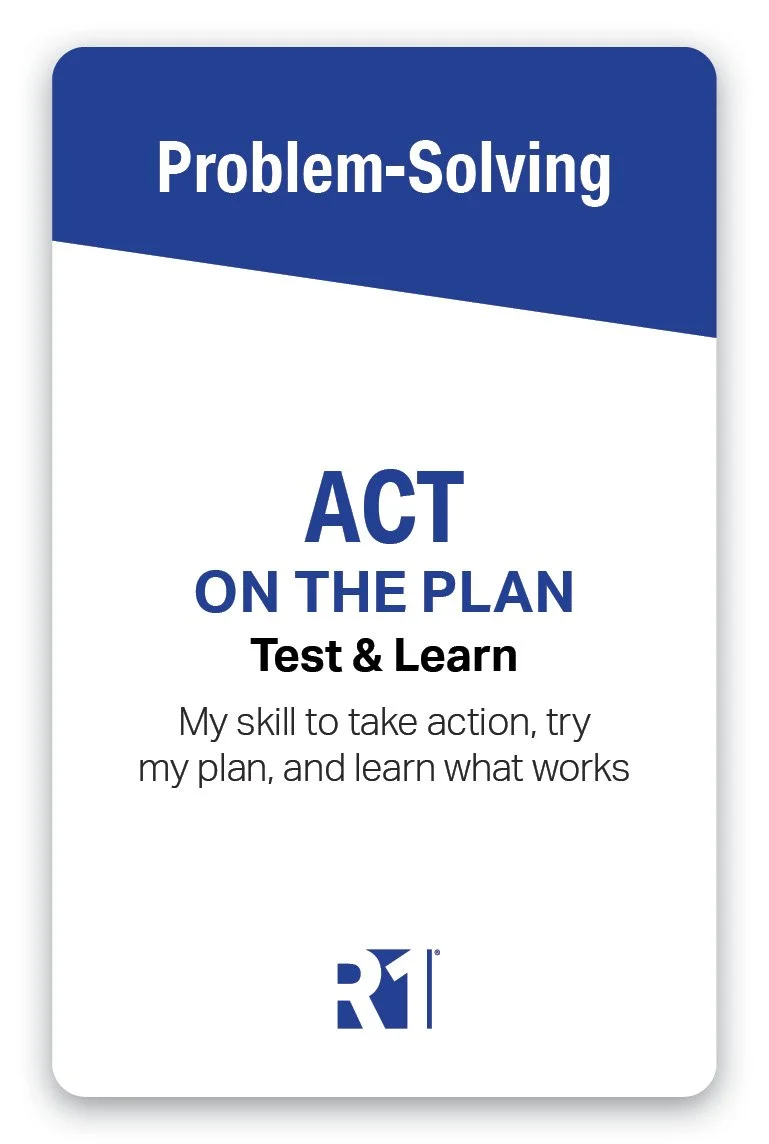
Act on the Plan — Test & Learn: My skill to take action, try my plan, and learn what works
2 of 5 Discovery Cards Examples:
I give my plan a chance to work; I don't give up too soon
I implement my plan with purpose and focus
2 of 5 Questions to Explore Examples:
What keeps you focused when addressing a challenging problem?
How do you stay committed to your plan? Explain.
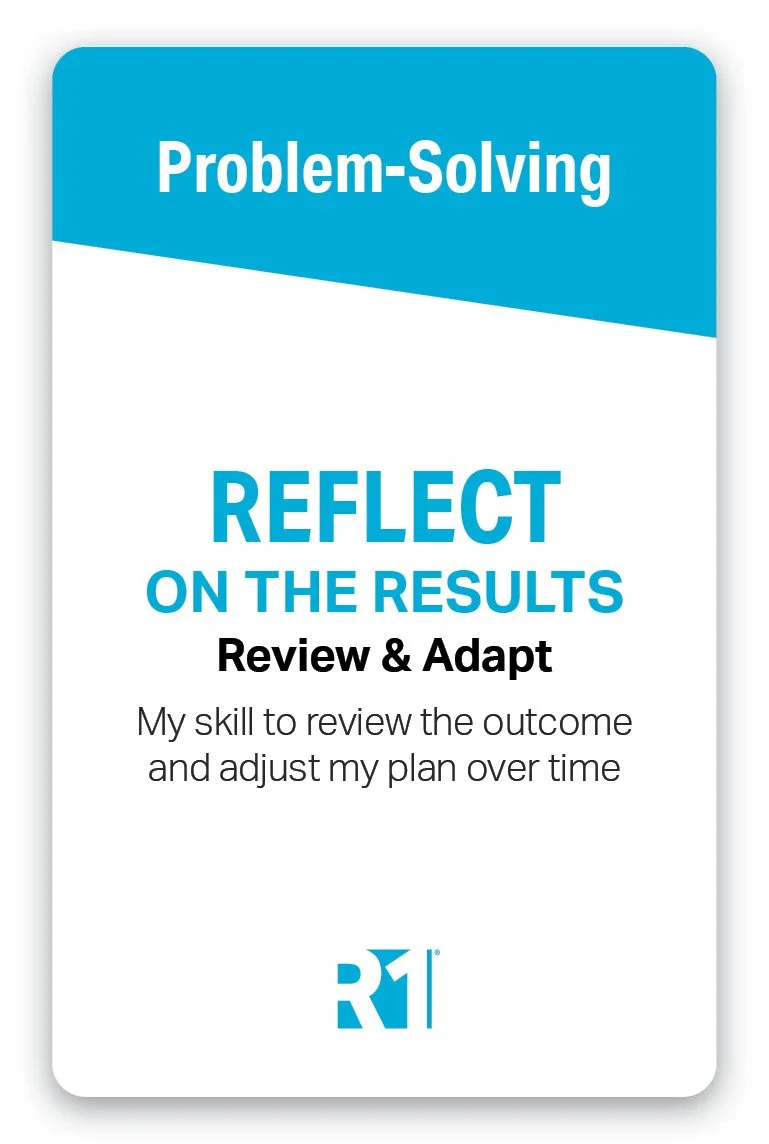
Reflect on the Results — Review & Adapt: My skill to review the outcome and adjust my plan over time
2 of 5 Discovery Cards Examples:
I adjust my approach based on the results
I review what I've learned with a trusted individual
2 of 5 Questions to Explore Examples:
What are some of the methods you use for evaluating what worked and what did not?
How do you capture and share lessons learned? How do you apply them in the future?
A Toolkit For Engagement — What’s In the Deck
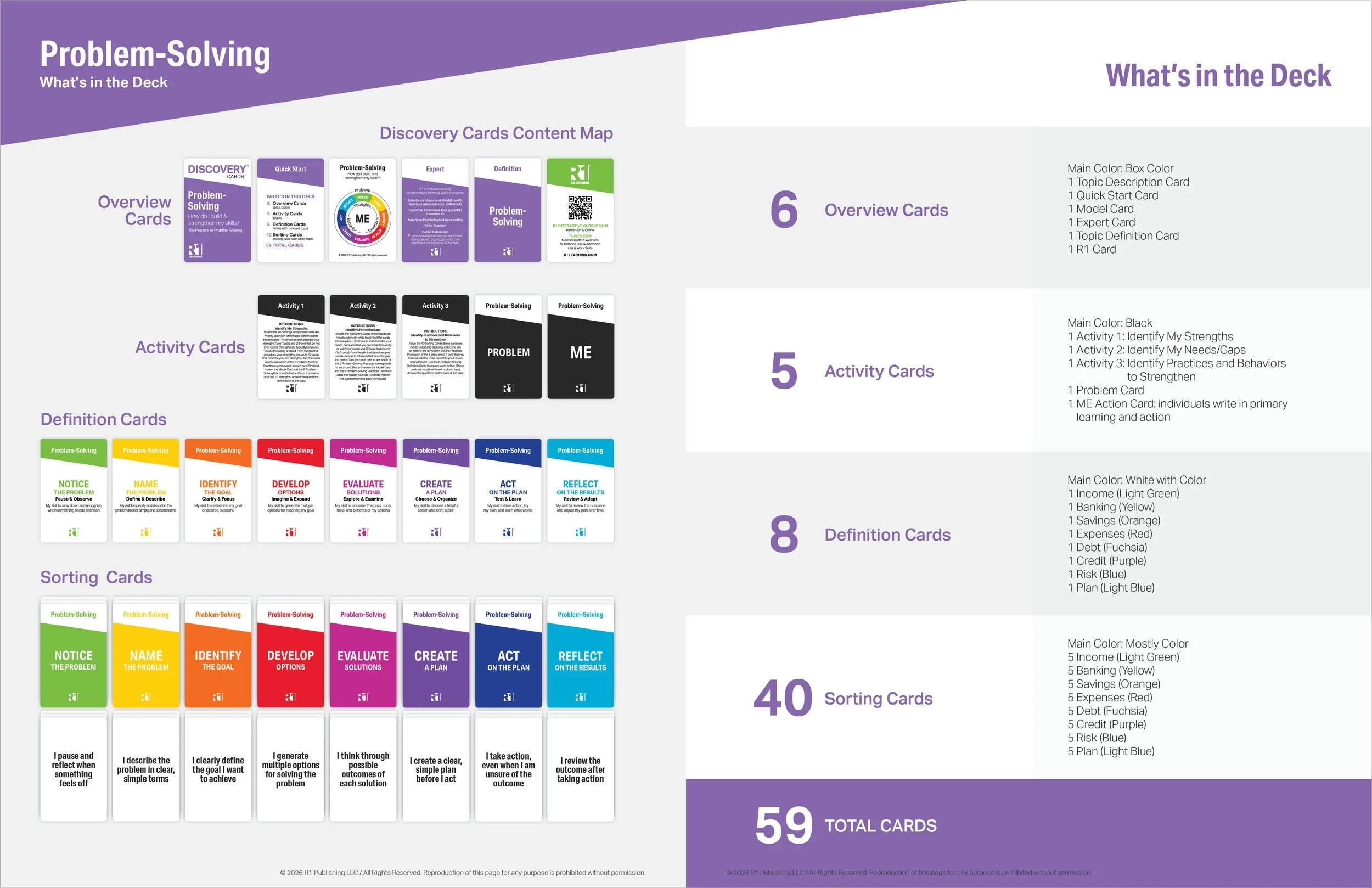
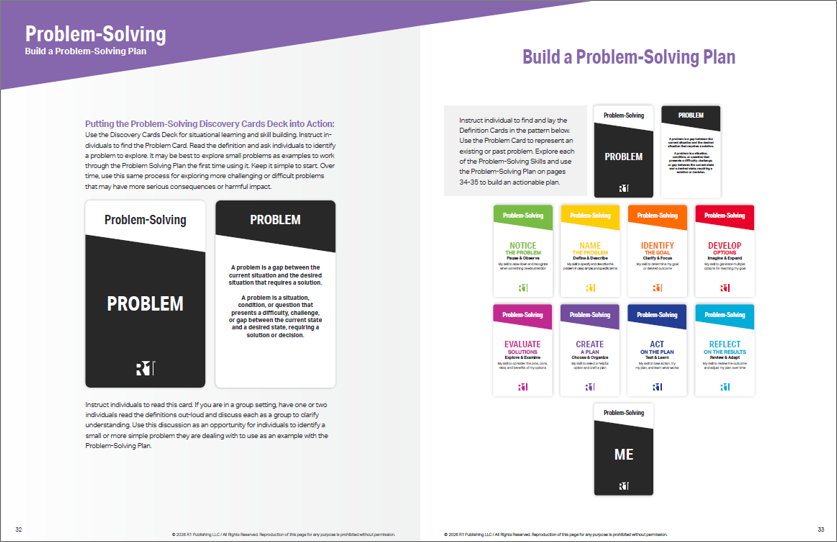
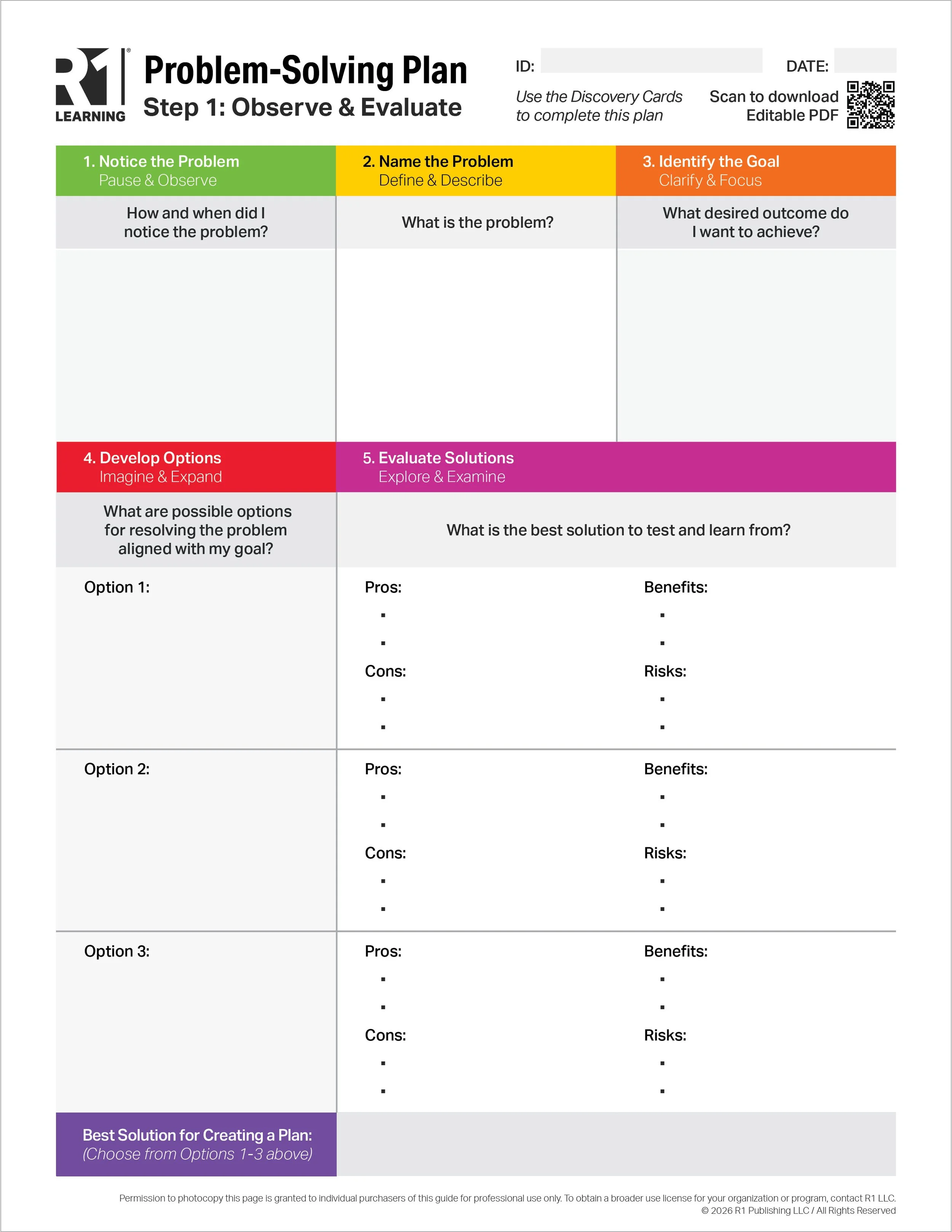
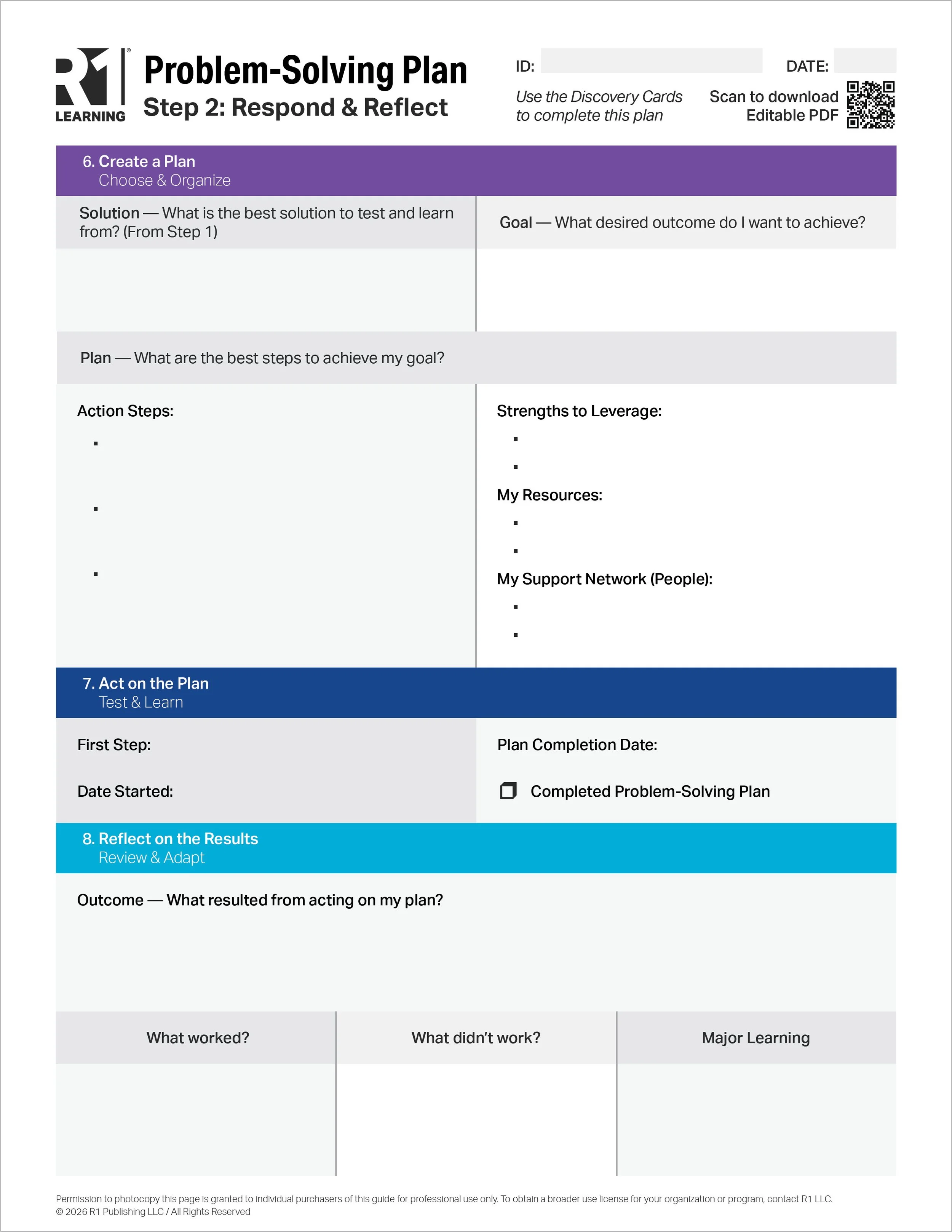
Activity-Based Experiential Learning: How Do I Build a Problem-Solving Plan?
The R1 Learning System includes user-friendly Facilitator Guides for each topic activity. The Discovery Cards and the R1 Discover App provide a gamified interactive approach to learning. The Facilitator Guides include several activities to use with individuals in your setting. This concrete approach to learning increases participation, engagement, and learning retention.
Questions to Explore
Answer the following questions for yourself or with your team:
What do you find helpful about the Problem-Solving Model?
How will the Problem-Solving Model be most useful for you and your team? Explain.
How does your knowledge of the 8 Problem-Solving Skills help you to better understand the strengths and needs of the individuals you serve?
How can you and your team use this information to engage and support individuals in your program?
What are some areas in your program where you can incorporate Problem-Solving activities?
What will be the benefit for you and others as you use this tool?
What is your major learning or takeaway from this post? Explain.
Thank you for reading this post and participating in this activity. Contact us if you would like to learn more about our Financial Fundamentals solutions and the R1 Learning System. We look forward to hearing from you.
References
Beck, J. S. (2020). Cognitive behavior therapy: Basics and beyond (3rd ed.). Guilford Press.
De Bono, E. (1985). Six thinking hats: An essential approach to business management. Little, Brown.
Drucker, P. F. (2009). The effective executive: The definitive guide to getting the right things done (Rev. ed.). HarperBusiness. (Original work published 1967)
Ellis, A., & MacLaren, C. (2005). Rational emotive behavior therapy: A therapist's guide (2nd ed.). Impact Publishers.
Kahneman, D. (2011). Thinking, fast and slow. Farrar, Straus and Giroux.
Polya, G. (1957). How to solve it: A new aspect of mathematical method (2nd ed.). Princeton University Press.
Popper, K. R. (2002). The logic of scientific discovery. Routledge. (Original work published 1934)
Copyright 2026 R1 Publishing LLC / All Rights Reserved. Use of this article for any purpose is prohibited without permission.
Engagement Tools
Integrating Discovery Card activities into your groups and one-on-ones will allow individuals to think concretely, increase self-awareness, build vocabulary, express themselves more effectively, and put insights into action. Visit the R1 Store to learn more about these evidence-based topics and models.

Here are a few ideas to help you learn more about R1 and engage others on this topic:
Share this blog post with others. (Thank you!)
Start a conversation with your team. Bring this information to your next team meeting or share it with your supervisor. Change starts in conversations. Good luck! Let us know how it goes.
Visit www.R1LEARNING.com to learn more about R1, the Discovery Cards, and how we’re creating engaging learning experiences through self-discovery.