
3 Anger Awareness Practices — What Are My Strengths?
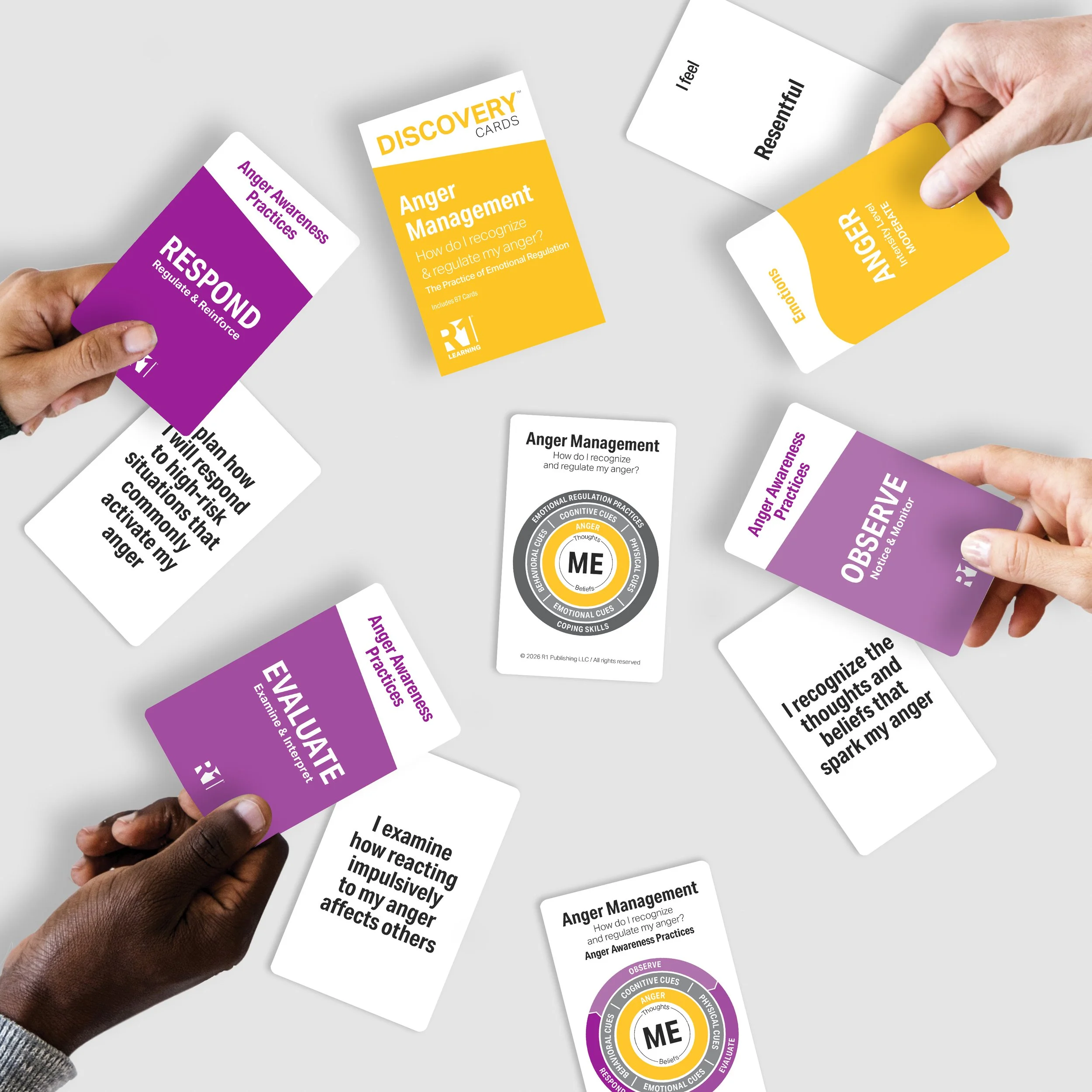
We are excited to announce with this post the release of two new topics, Anger Management and Emotional Regulation. We developed these two topics at the same time since most of the content is the same. Anger Management includes additional Anger Cards, and the Anger Cues and Anger Awareness Practices are anger specific. Like other R1 topics, this one is grounded in theory and built for practical, interactive, person-centered, situational learning experiences. Most importantly, this anger management toolkit is extremely useful for staff development and individual engagement in one-on-ones and groups.
For those who know our content well, please note our Anger Management topic addresses one of the 14 skills in our Life Skills model like we recently did with Communication Skills, Problem-Solving Skills, and Financial Fundamentals. In addition, we used these two new emotions focused topics to pause and make a few updates to our Emotions Cards and Emotional Regulation Practices Cards in our Emotional Triggers, Substance Use Triggers, Emotions & Feelings and Grief & Loss topics. We also made a few minor updates to the introductory pages in our Facilitator Guides for our Cognitive Theory of Emotions for all of our emotions related topics. All in the spirit of staying current and relevant.
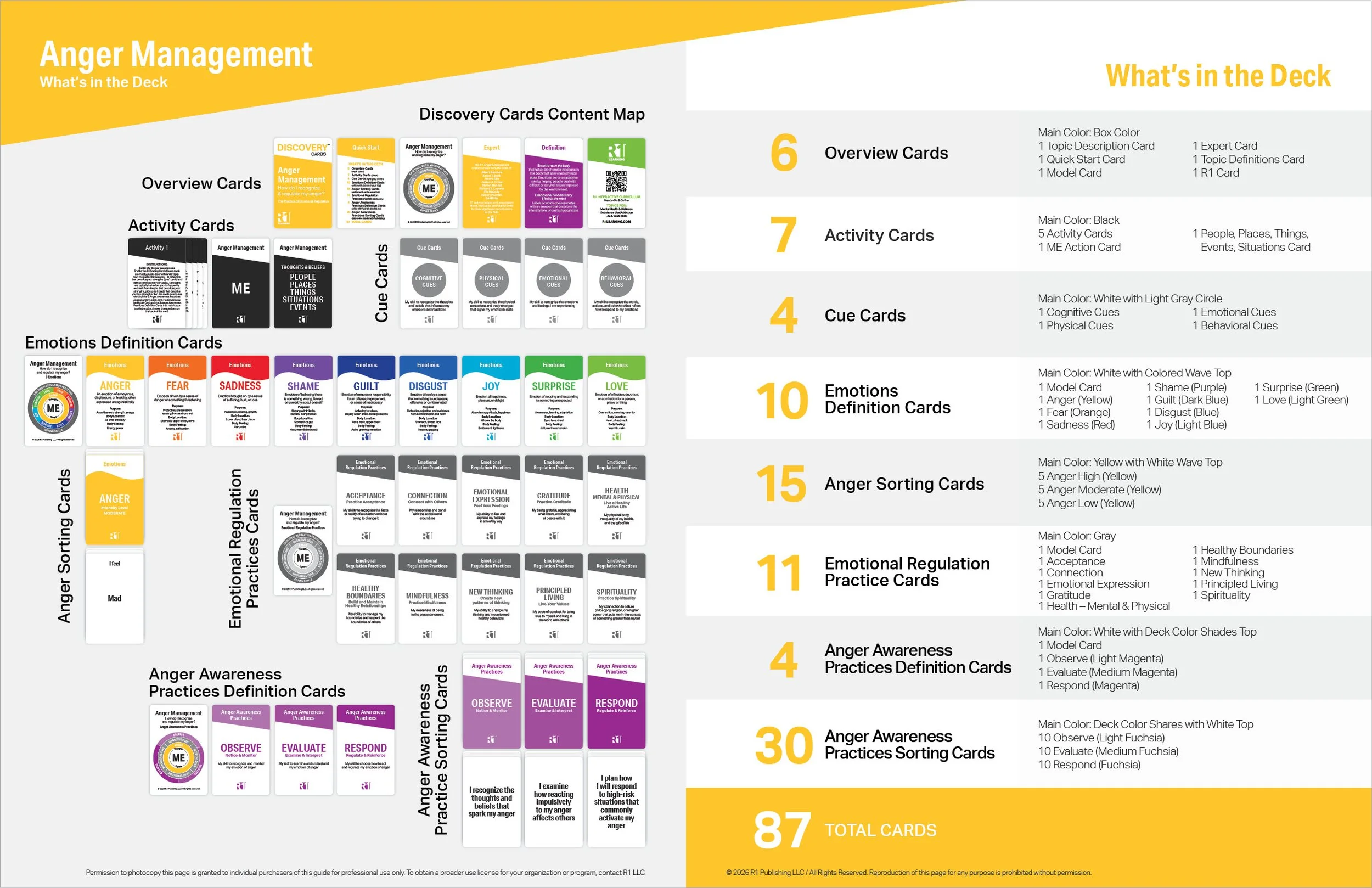
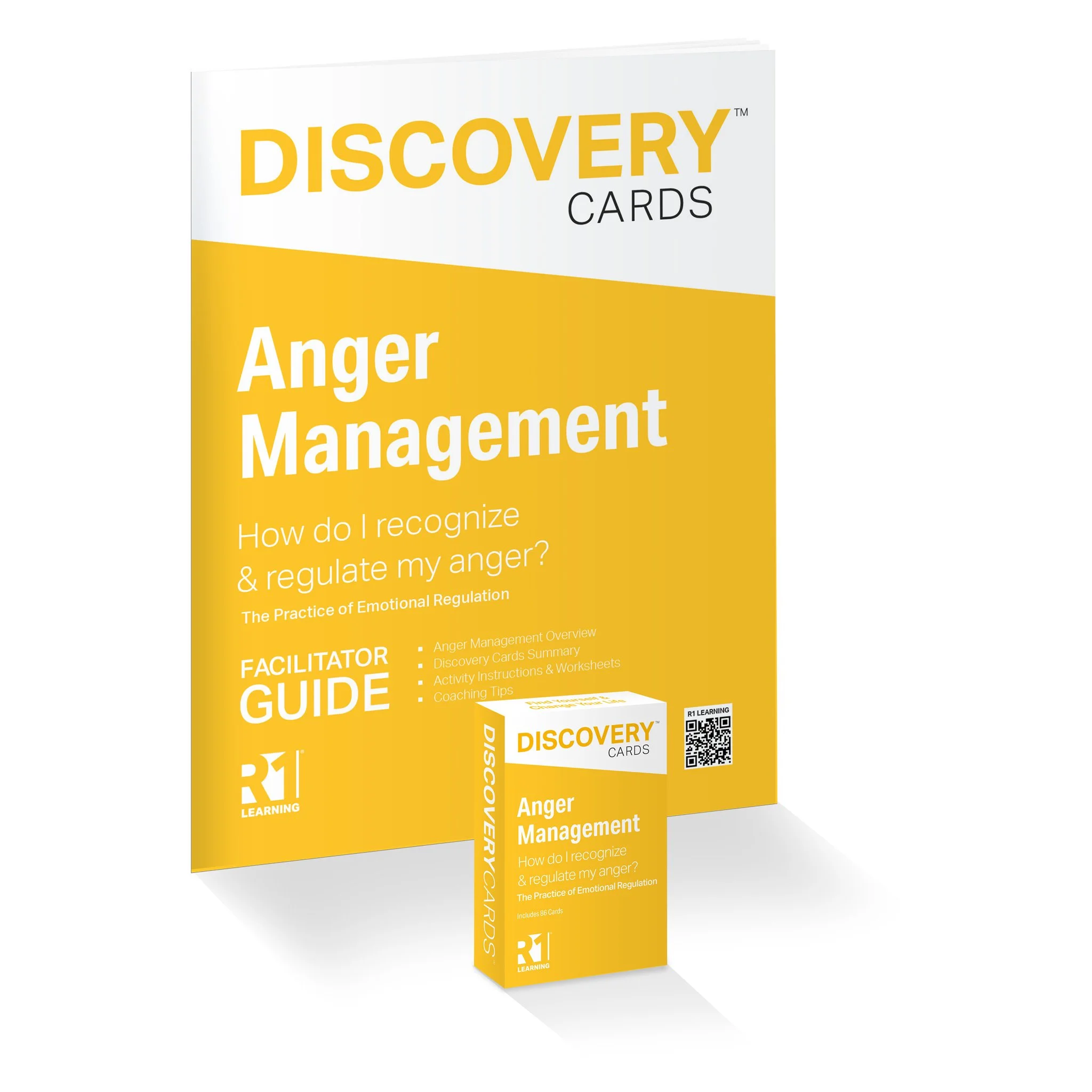
Our new Anger Management topic provides an amazing set of concrete, interactive tools to increase engagement, learning, and impact in both clinical and non-clinical sessions. It includes five tools within its Discovery Cards deck (See the What’s in the Deck below for reference):
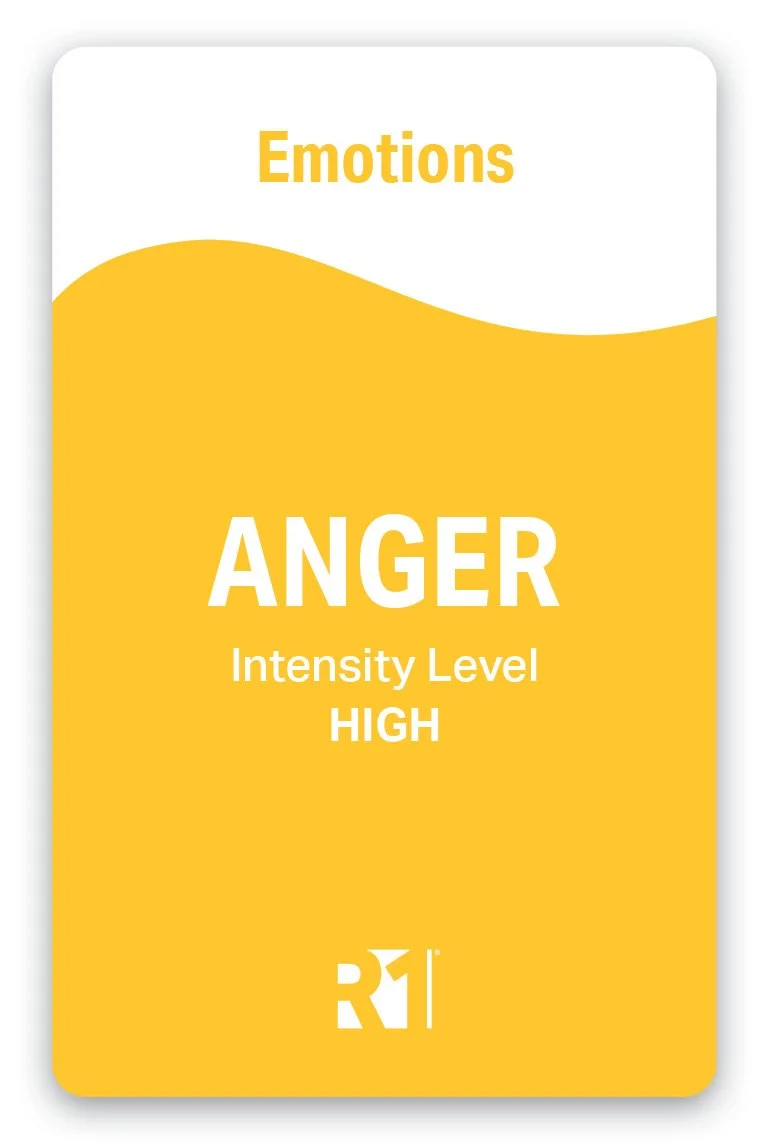
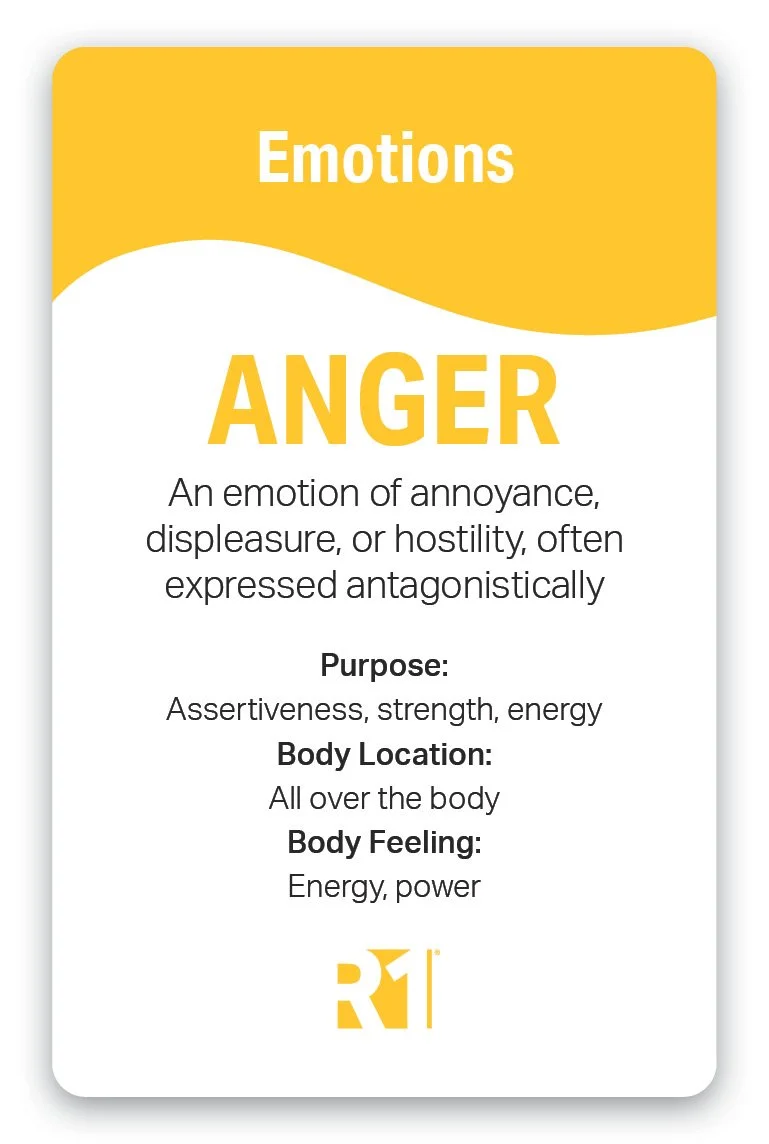
15 Anger Cards
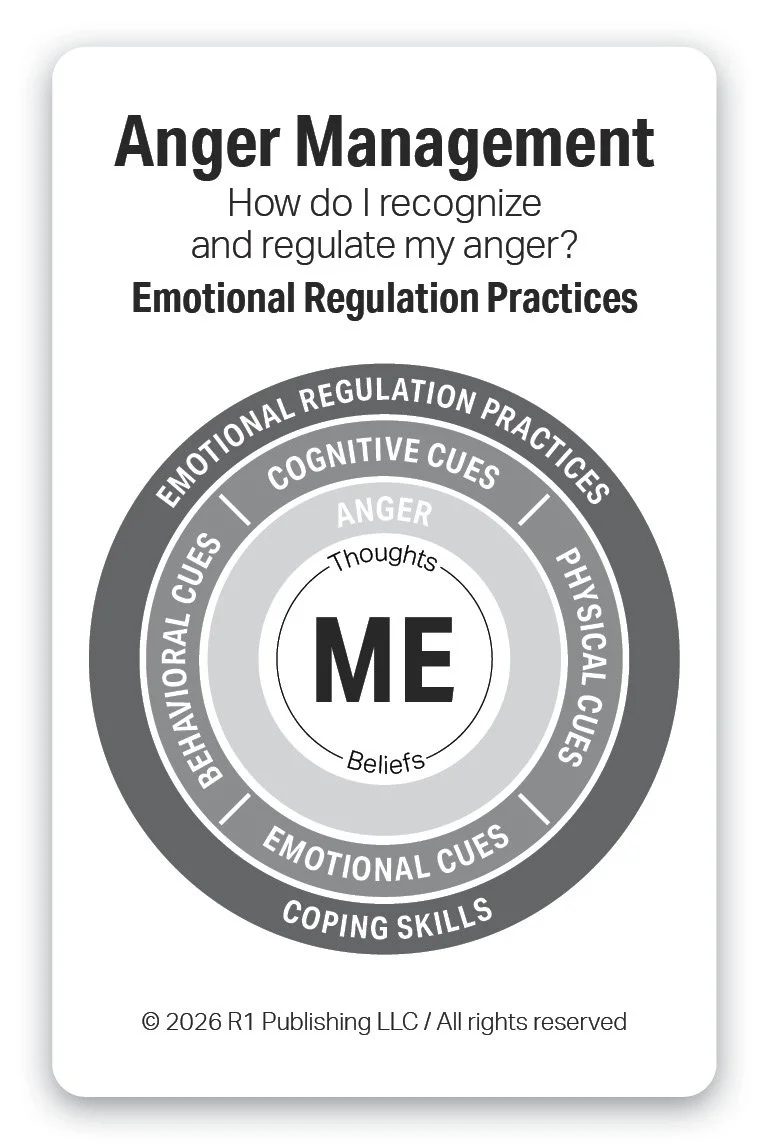
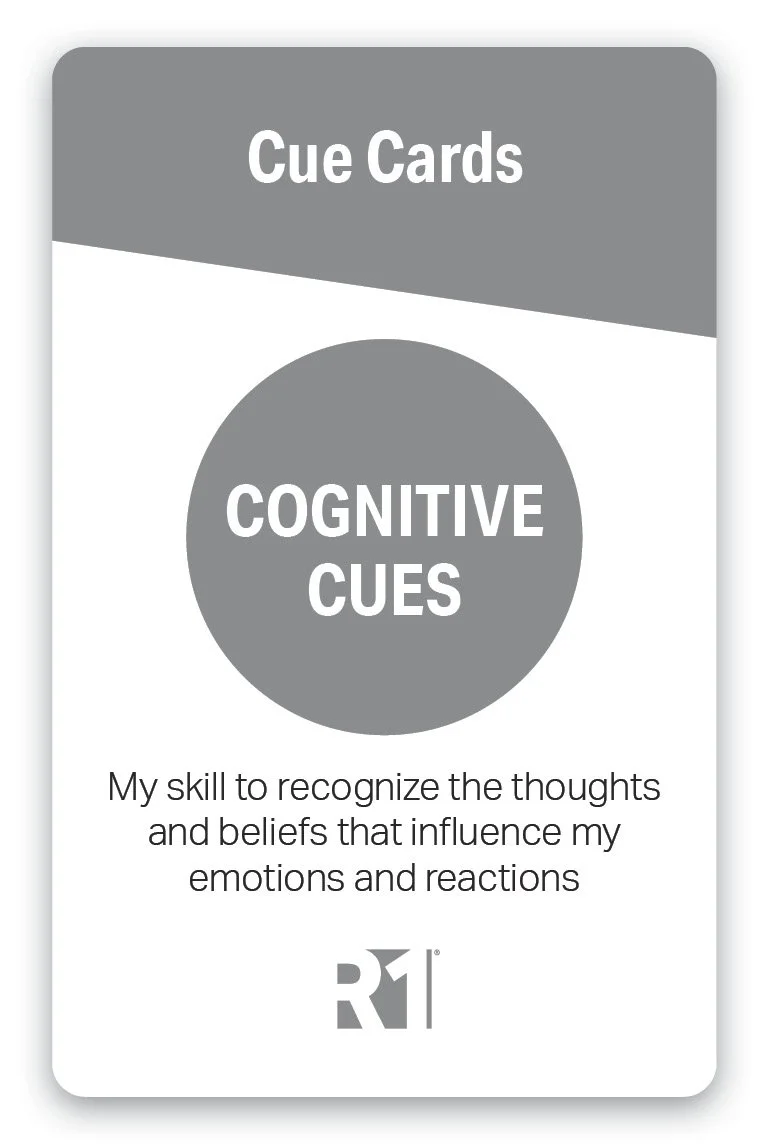
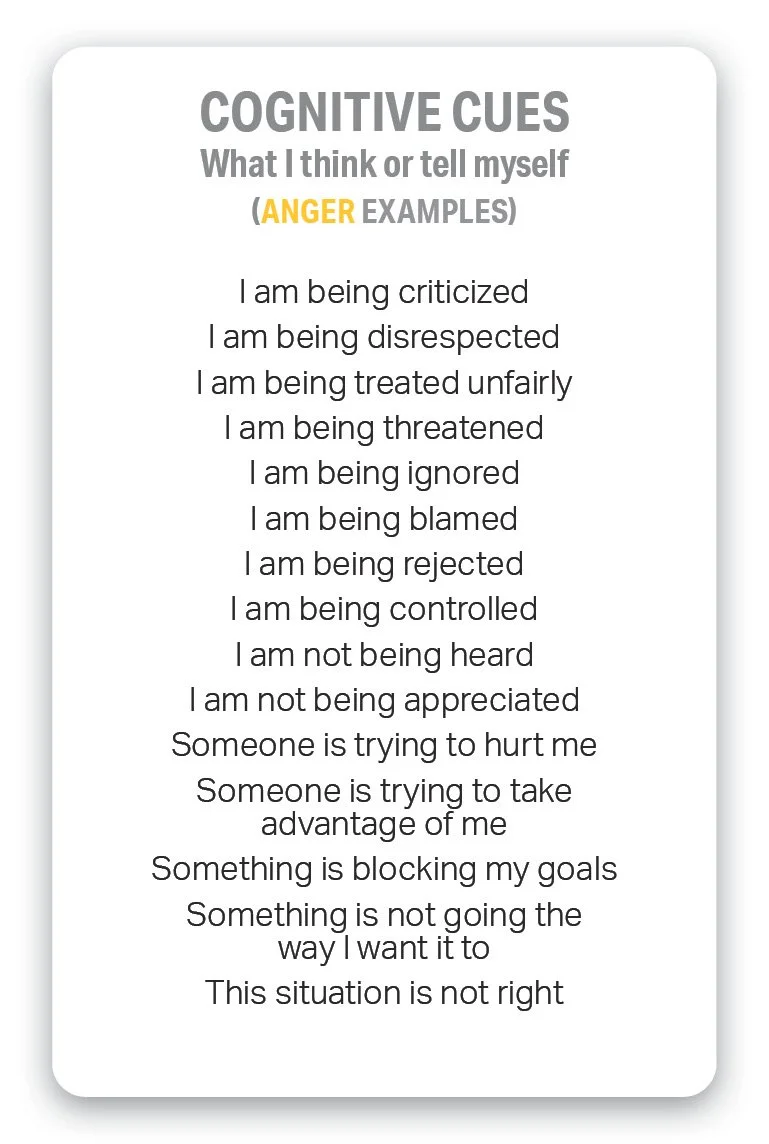
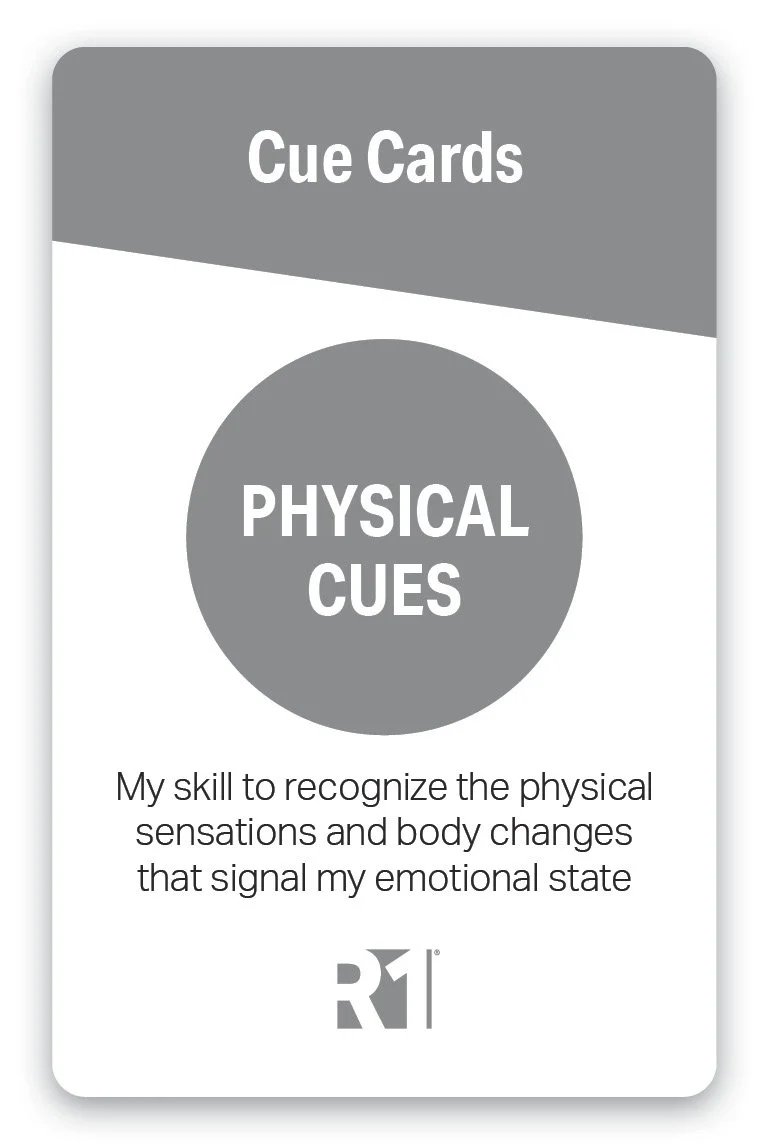
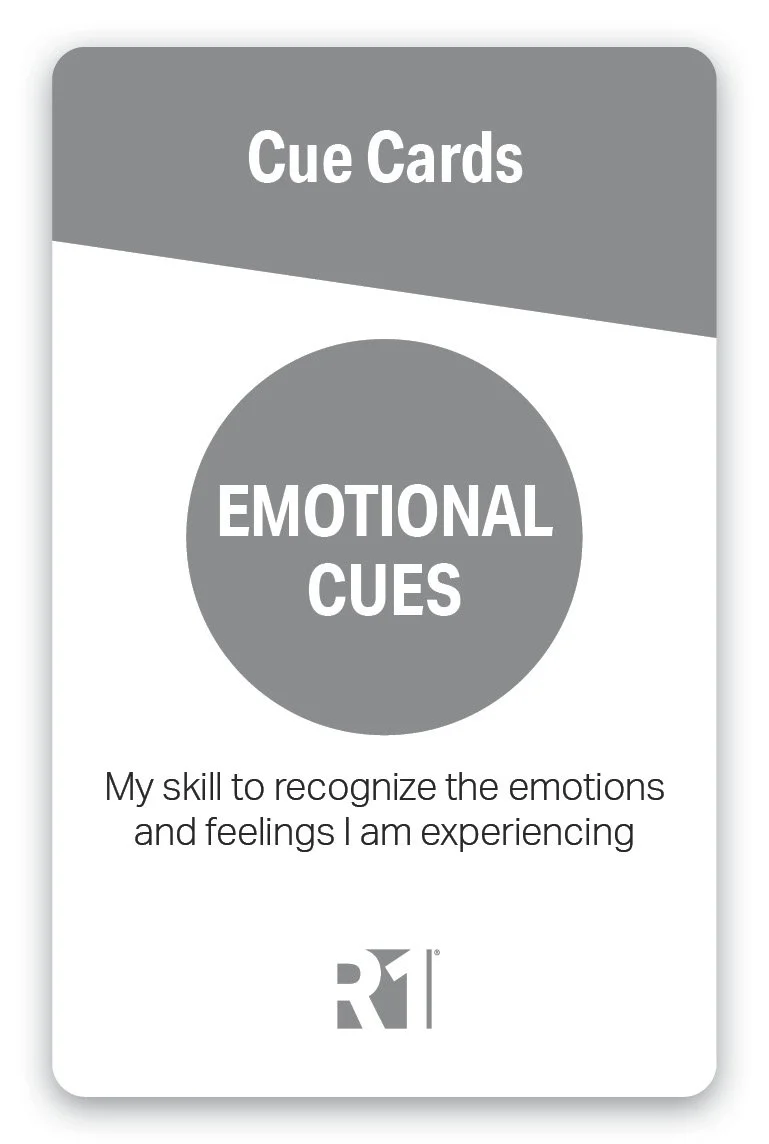
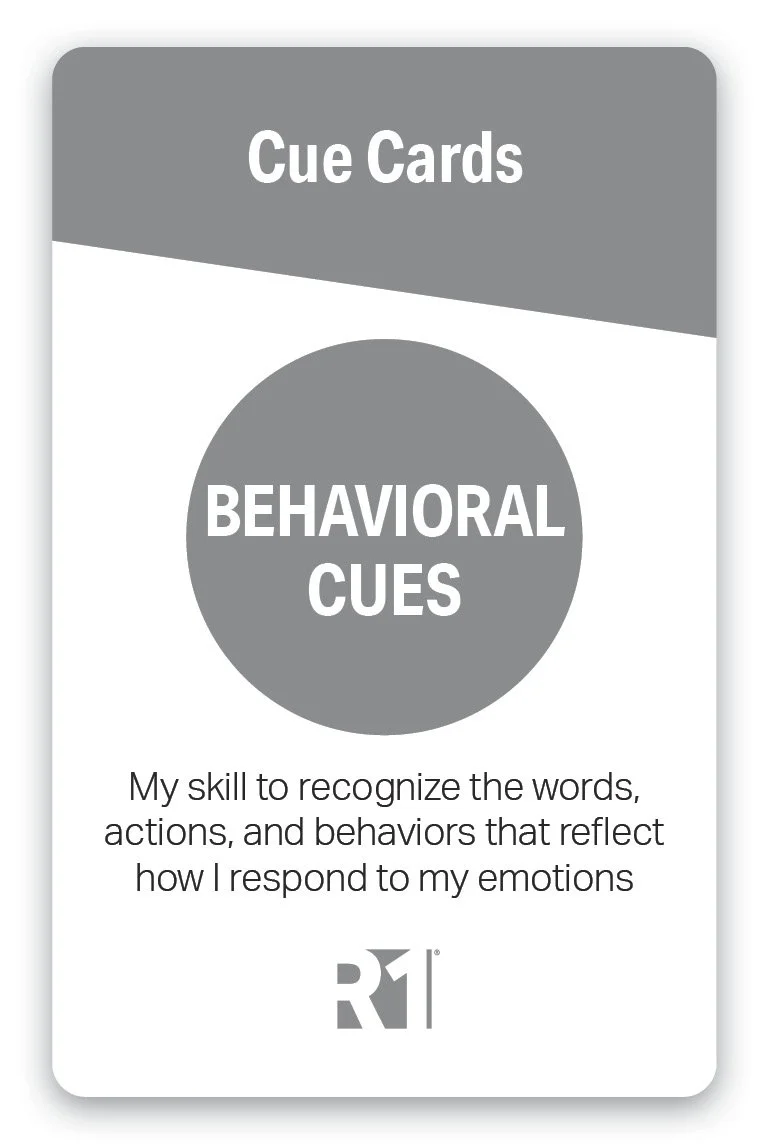
4 Anger Cue Cards (Cognitive, Physical, Emotional, and Behavioral)
9 Emotion Cards
10 Emotional Awareness Practices Cards
3 Anger Awareness Practices Definition Cards with 10 Sorting Cards for each (30 Sorting Cards)
Each of these tools can be used as the focus of one or more interactive sessions. All are grounded in evidence-base and best practice models and theories.
Although we are sharing some details for each of these 5 tools in this post, we plan to focus on and share the background for our 3 Anger Awareness Practices which lays the foundation for diving into the other tools.
A Toolkit For Engagement — What’s in the Deck
The purpose of today’s post is to share the basics of our new Anger Management topic so you can explore how best to use it with individuals in your setting. Take a moment to review the definitions and examples for each of the 3 Anger Awareness Practices below. Then read through the Questions to Explore for yourself or with others in your organization. The R1 Anger Management Group Kit and R1 Discover App provide tools for engagement, education, and empowerment for individuals you work with or support. Implementing these tools often through practice is one of the best ways to learn. R1 offers a unique on-the-job training and individual engagement tool coupled into one.
Explore R1 Discover — Interactive Engagement Tools

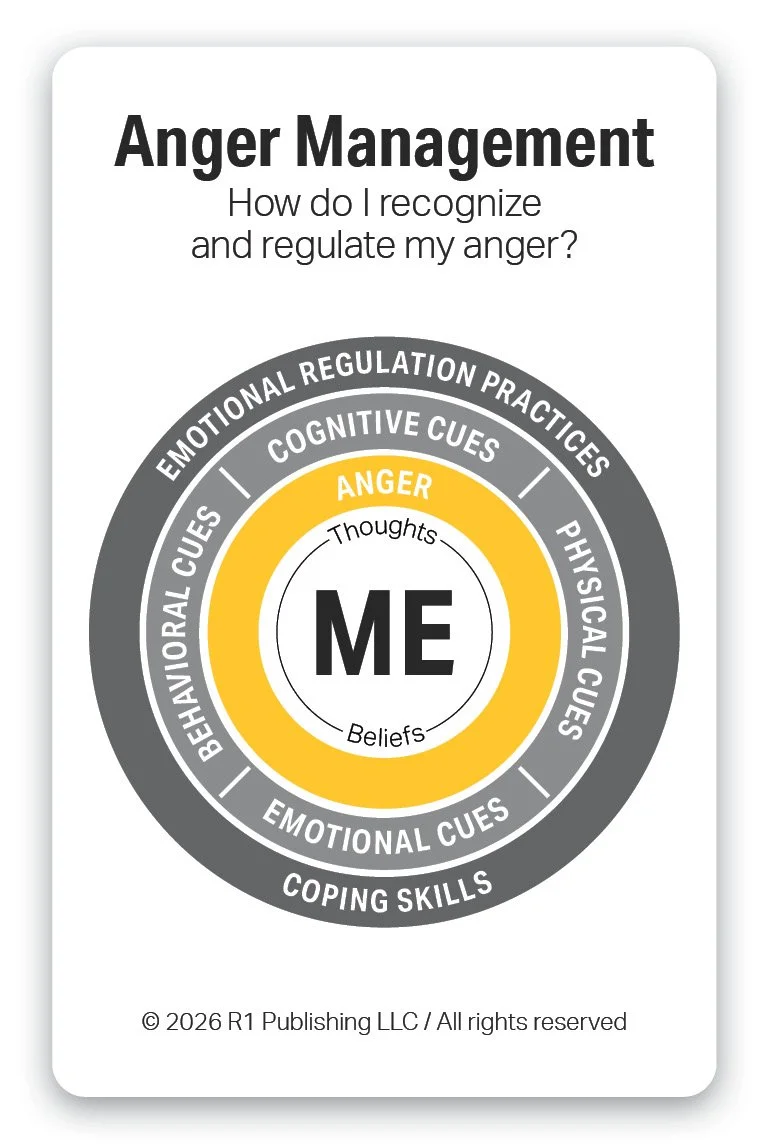
Anger Management Defined
Anger management is the ability to recognize, understand, and respond to the emotion of anger in constructive ways that are appropriate, effective, and aligned with one’s goals and values.
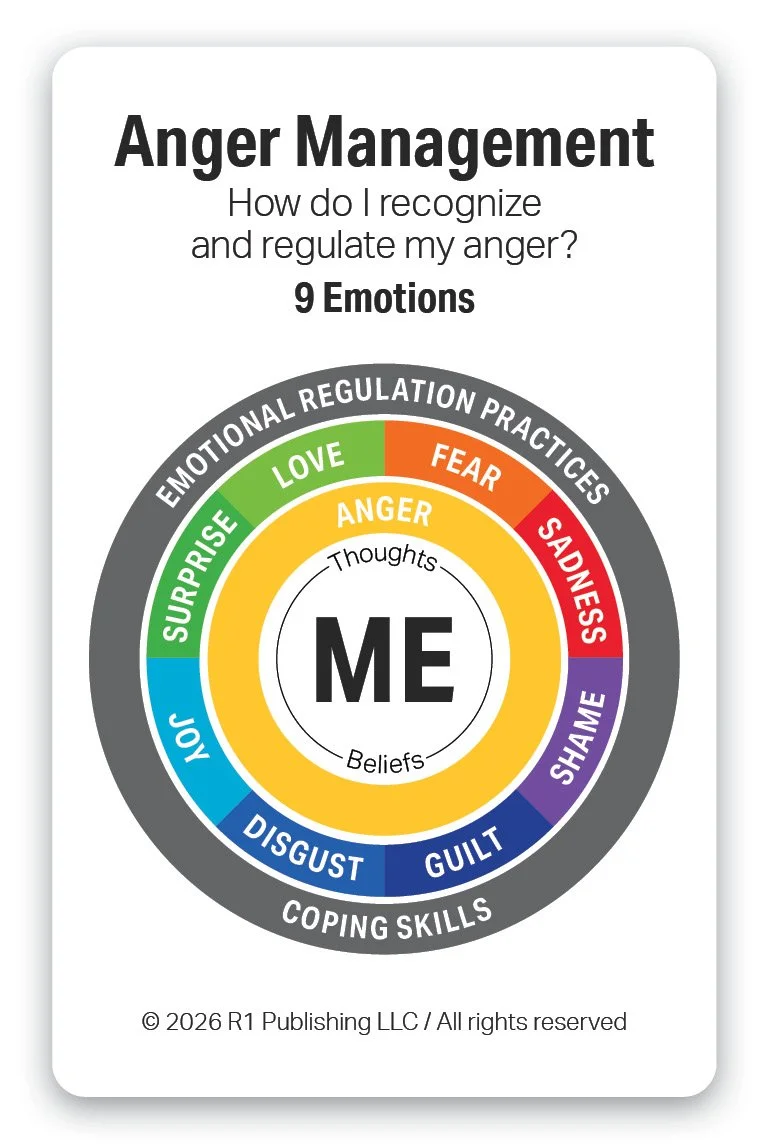
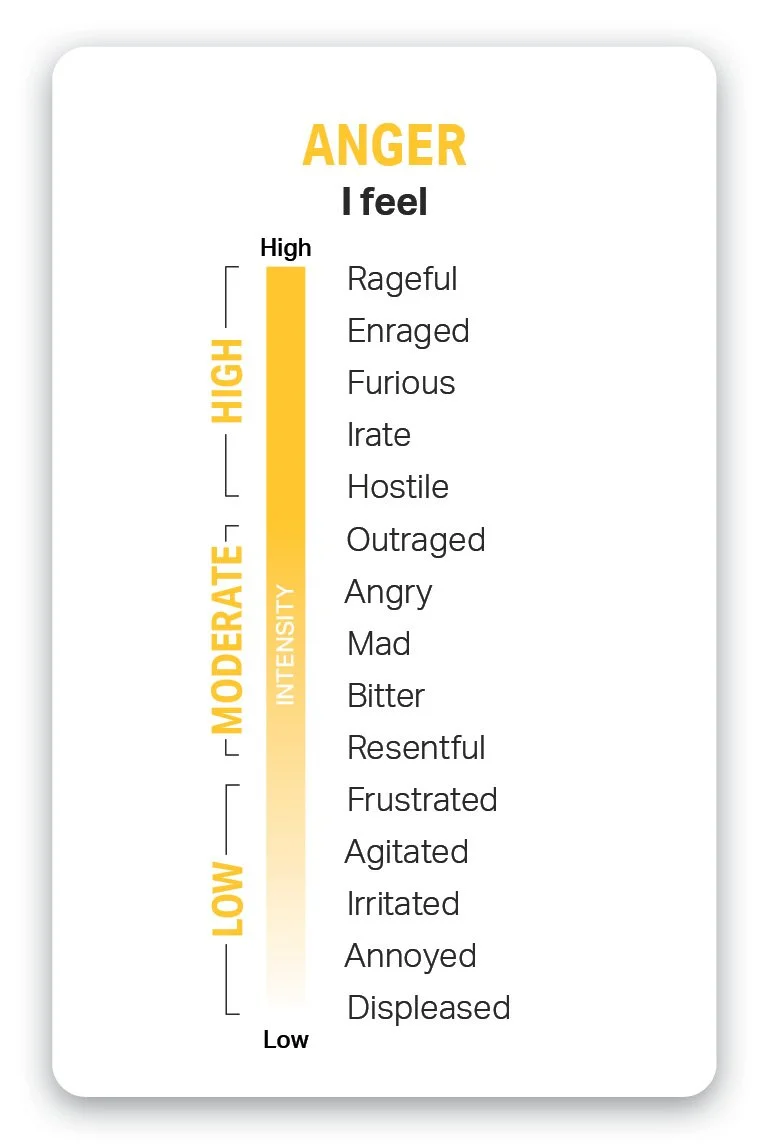
Anger Defined
Anger Definition: An emotion of annoyance, displeasure, or hostility, often expressed antagonistically.
Anger is a normal and healthy human emotion that everyone experiences. It often gets activated when individuals perceive a threat, unfairness, disrespect, or an obstacle that prevents them from reaching an important goal. Anger serves an important purpose—it alerts individuals that something needs attention and provides the energy to protect them, set healthy boundaries, solve problems, or create positive change. Experiencing anger is normal; it is a natural part of how our minds and bodies respond to challenging situations.
While anger itself is neither good nor bad, the way individuals respond to it can have a significant impact on one’s health, relationships, and daily life. When anger is recognized early and managed effectively, it can lead to thoughtful decisions, respectful communication, and productive problem-solving. However, when anger becomes intense or goes unregulated, it can overwhelm one’s ability to think clearly and increase the likelihood of impulsive words or actions. Dysregulated anger may contribute to conflict, damaged relationships, poor decision-making, physical and emotional stress, substance use, workplace or school problems, and even legal consequences.
Anger References
Barrett, L. F. (2017). How emotions are made: The secret life of the brain. Houghton Mifflin Harcourt.
Ekman, P. (1992). An argument for basic emotions. Cognition & Emotion, 6(3–4), 169–200. https://doi.org/10.1080/02699939208411068
Fredrickson, B. L. (2001). The role of positive emotions in positive psychology: The broaden-and-build theory of positive emotions. American Psychologist, 56(3), 218–226. https://doi.org/10.1037/0003-066X.56.3.218
Gross, J. J. (Ed.). (2015). Handbook of emotion regulation (2nd ed.). Guilford Press.
Lazarus, R. S. (1991). Emotion and adaptation. Oxford University Press.
Plutchik, R. (2001). The nature of emotions. American Scientist, 89(4), 344–350. https://www.americanscientist.org/article/the-nature-of-emotions
Anger Cues Defined
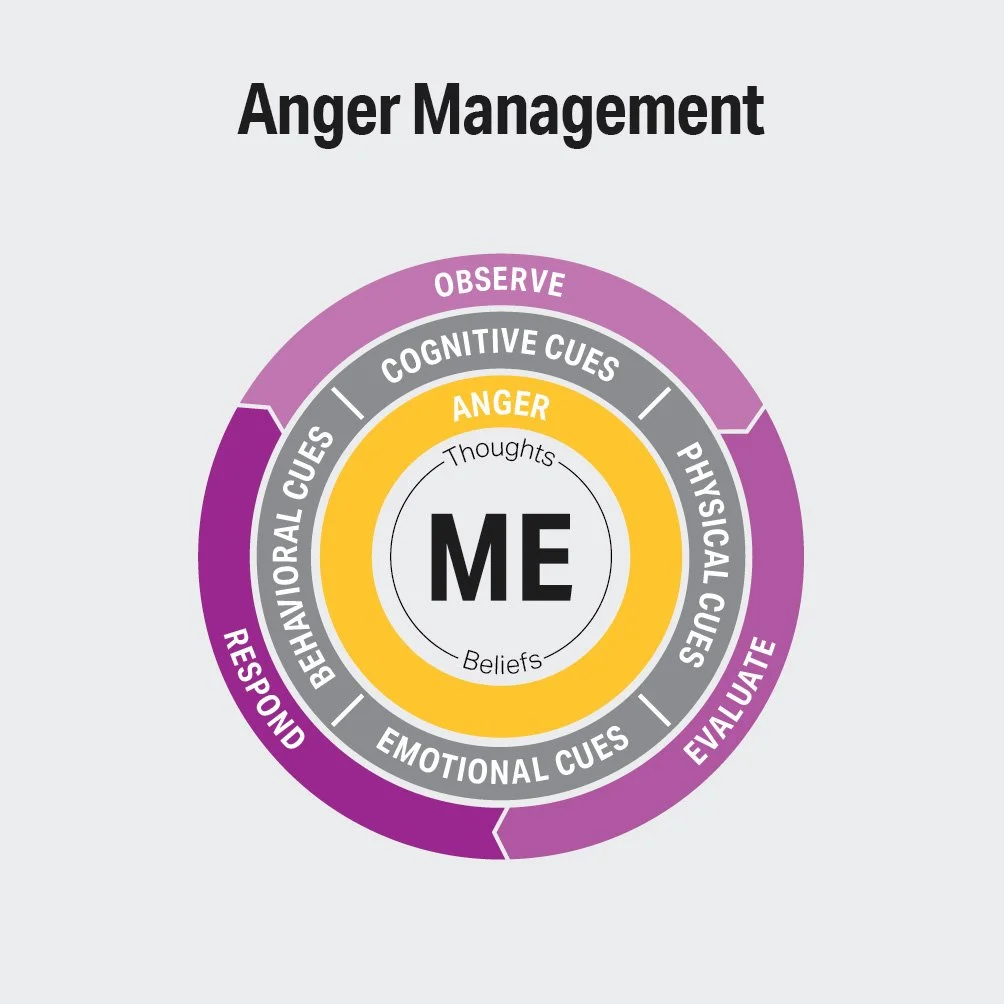
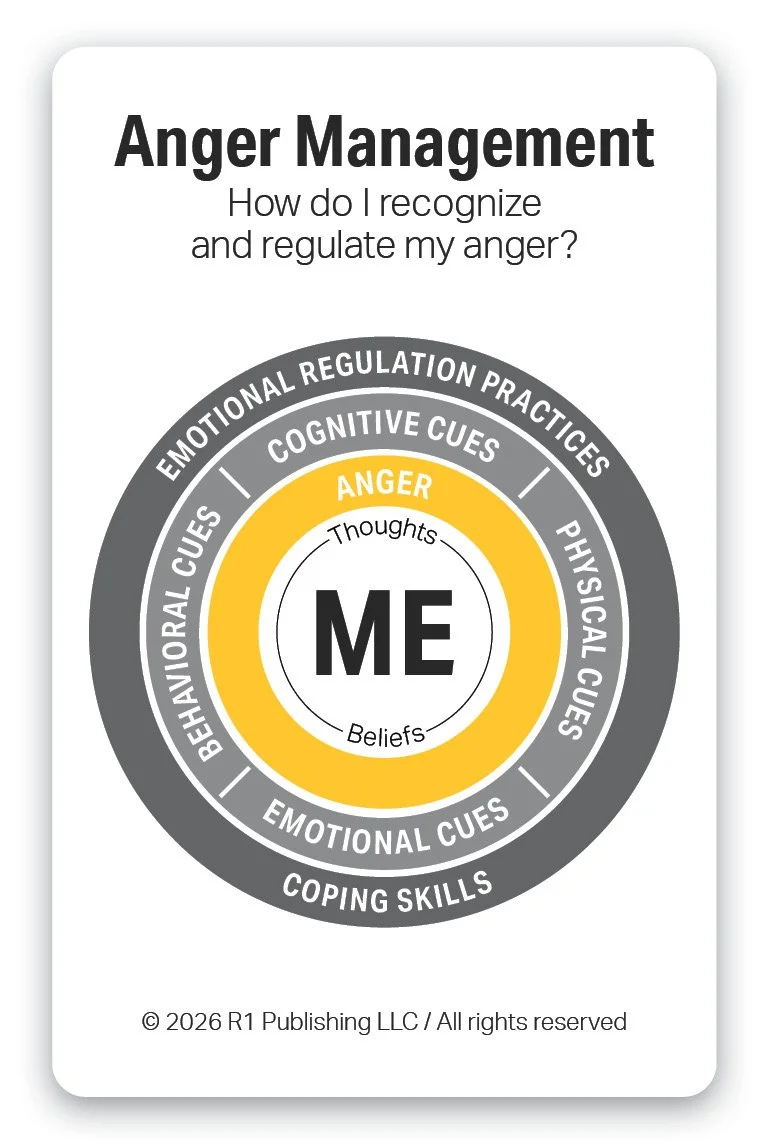
Anger Cues are the thoughts, physical sensations, emotions, and behaviors that signal how individuals respond to a person, place, thing, situation, or event (or thought of or belief about).
When anger is activated by a stimuli or trigger, it creates observable cues. Cues are the signals that help individuals recognize what they are experiencing on the inside before they respond on the outside. These cues can appear as cognitive cues (thoughts and beliefs), physical cues (changes or sensations in the body), emotional cues (feelings), and behavioral cues (words and actions). Learning to observe and evaluate these cues helps individuals better understand what is happening, recognize patterns, and identify the factors influencing their reactions. As self-awareness grows, individuals become more capable of pausing before reacting, making thoughtful decisions, choosing healthy emotional regulation practices, and responding in ways that align with their goals and values. This increased awareness provides the foundation for effective emotional regulation, healthier relationships, improved decision-making, and greater overall well-being.
Anger Cues References
Gross, J. J. (1998). The emerging field of emotion regulation: An integrative review. Review of General Psychology, 2(3), 271–299. https://doi.org/10.1037/1089-2680.2.3.271
Gross, J. J. (Ed.). (2015). Handbook of emotion regulation (2nd ed.). Guilford Press.
Beck, J. S. (2020). Cognitive behavior therapy: Basics and beyond (3rd ed.). Guilford Press.
Bandura, A. (1991). Social cognitive theory of self-regulation. Organizational Behavior and Human Decision Processes, 50(2), 248–287. https://doi.org/10.1016/0749-5978(91)90022-L
Substance Abuse and Mental Health Services Administration, Center for Substance Abuse Treatment. (2019). Anger management for substance use disorder and mental health clients (Publication No. PEP19-02-01-002). U.S. Department of Health and Human Services. https://www.samhsa.gov/
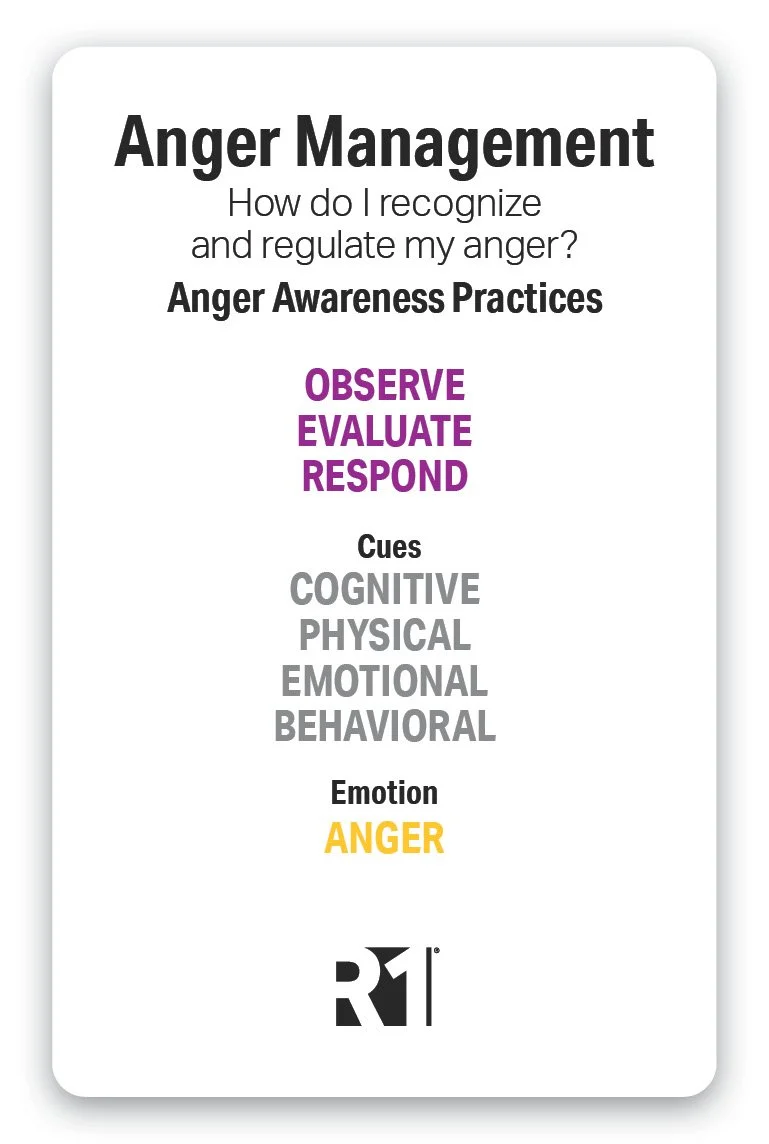
Anger Awareness Practices — How do I recognize and regulate my anger?
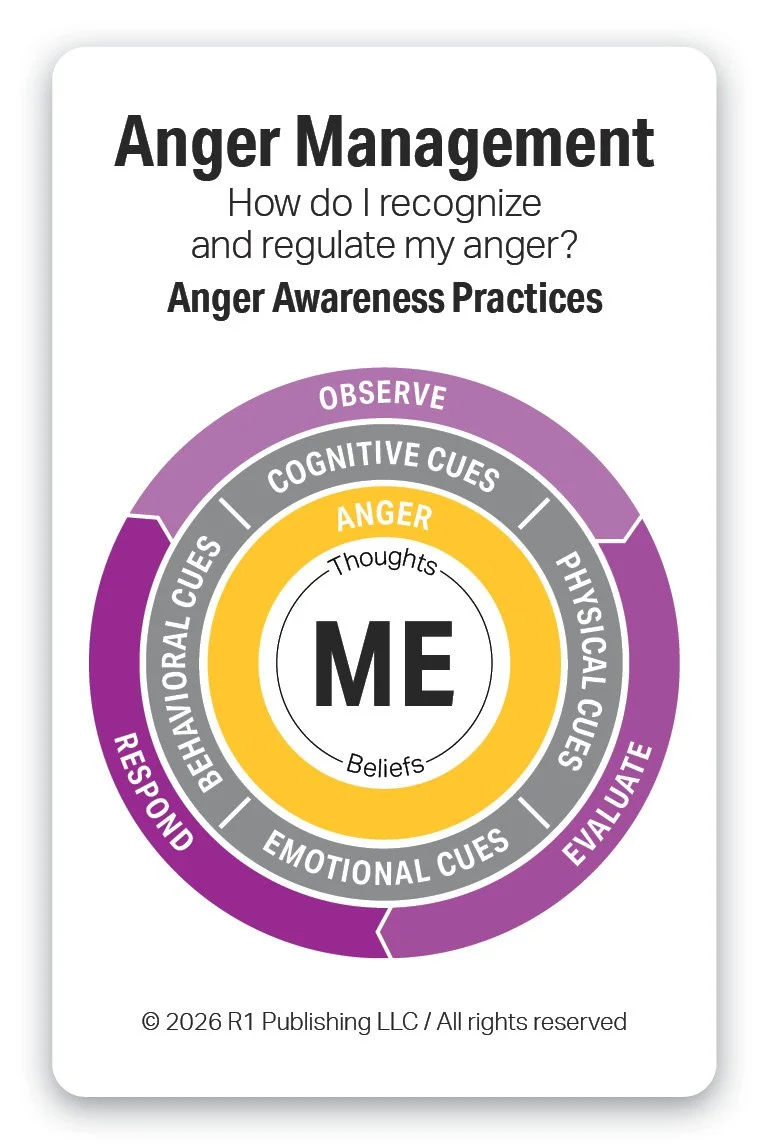
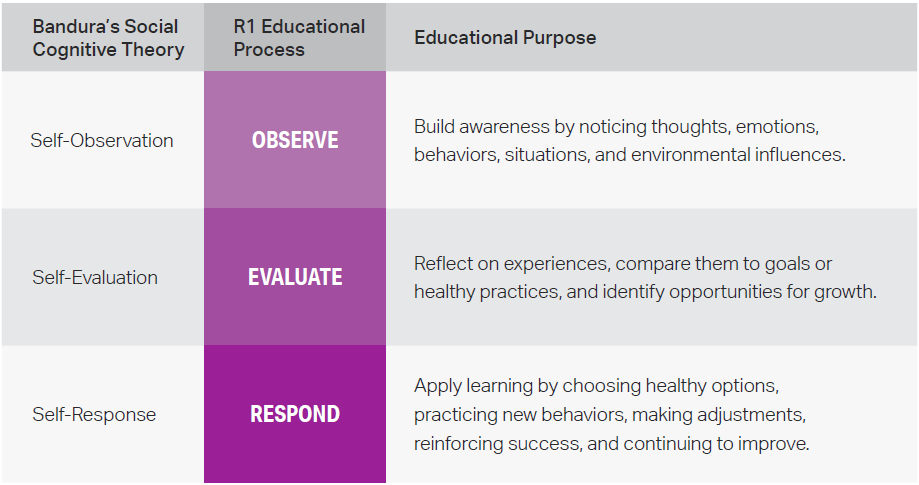
Social Cognitive Theory – Why R1 uses this theory for learning. Albert Bandura's Social Cognitive Theory provides one of the strongest evidence-based foundations for learning, behavior change, and lifelong skill development. At the heart of this theory is self-regulation—the ability to monitor, evaluate, and intentionally adjust one's thoughts, emotions, and behaviors. Bandura proposed that effective learning occurs through a continuous cycle of Self-Observation, Self-Evaluation, and Self-Response, enabling individuals to become active participants in their own growth rather than passive recipients of information.
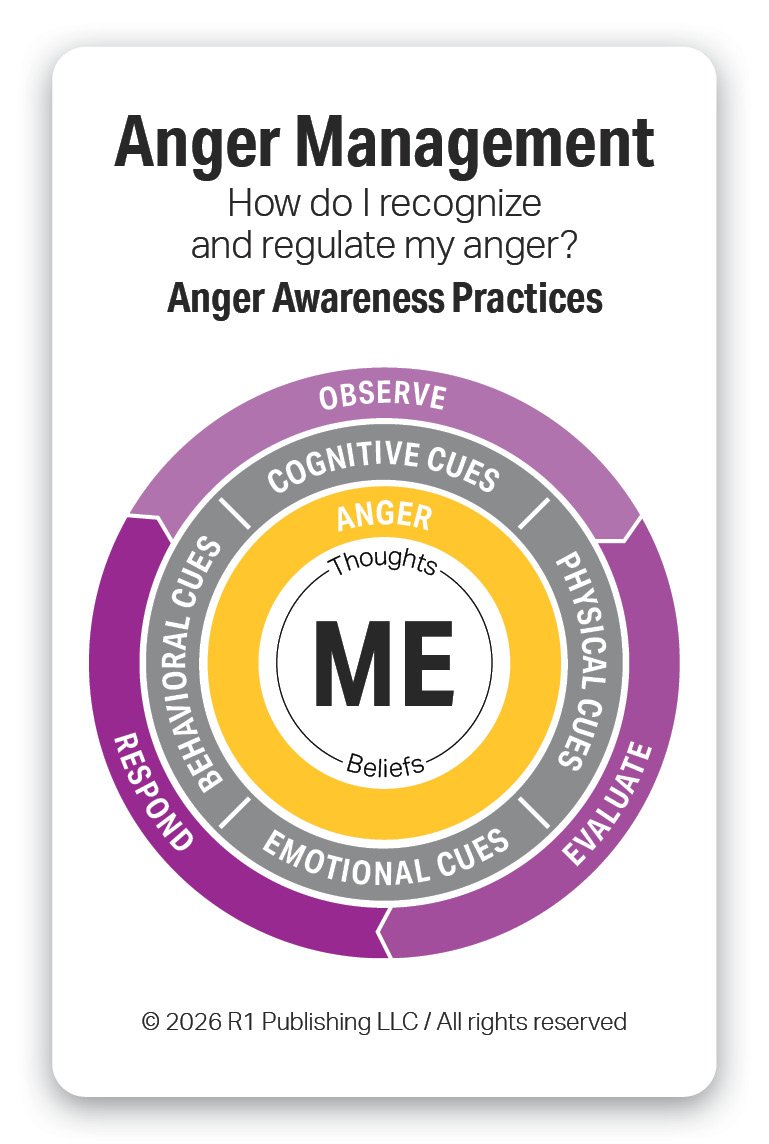
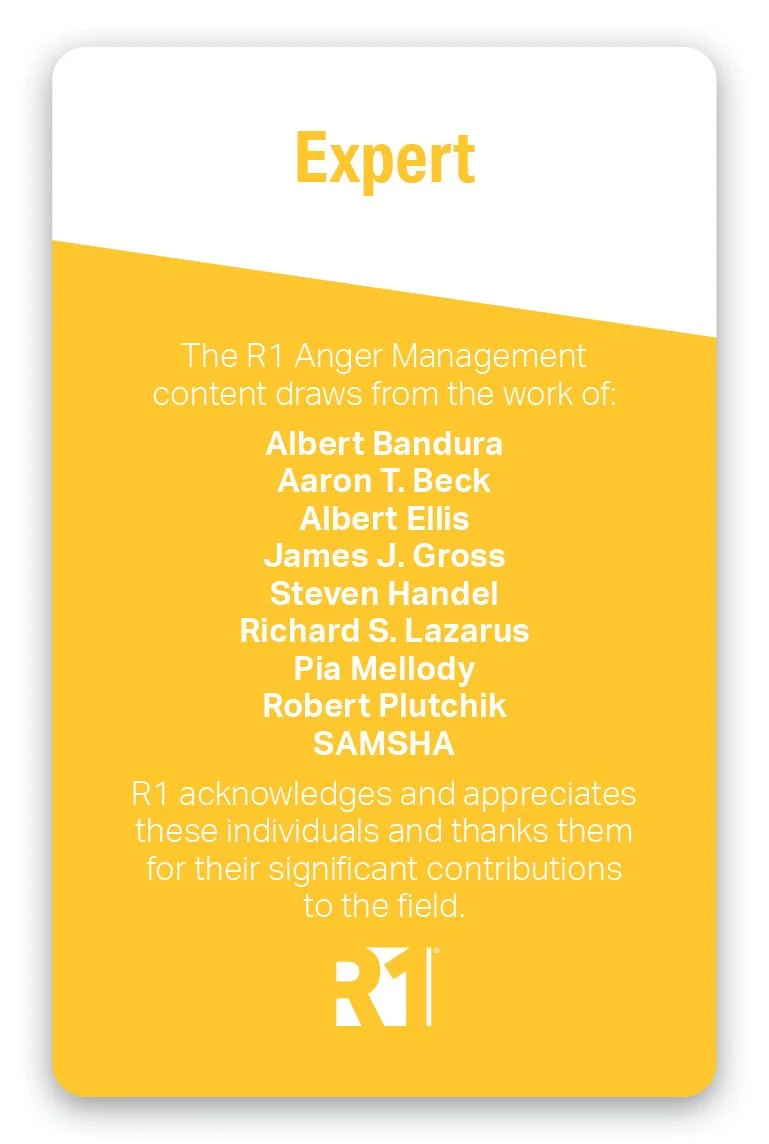
R1's Educational Process of Observe, Evaluate, and Respond is directly aligned with this model while using simpler, more accessible language. Rather than focusing solely on teaching information, the framework teaches individuals how to learn from their own experiences. Learners build awareness, reflect on their experiences, and intentionally choose actions that lead to positive outcomes. This creates a practical learning process that can be applied across virtually any evidence-based practice, life skill, or educational topic.
Anger Awareness Practices Defined
Definition: Anger Awareness Practices are the skills and habits of observing, evaluating, and responding to one's emotion of anger. These practices help individuals recognize what activates anger, understand its impact on thoughts, emotions, the body, and behaviors, and choose healthy responses that align with personal goals and values.
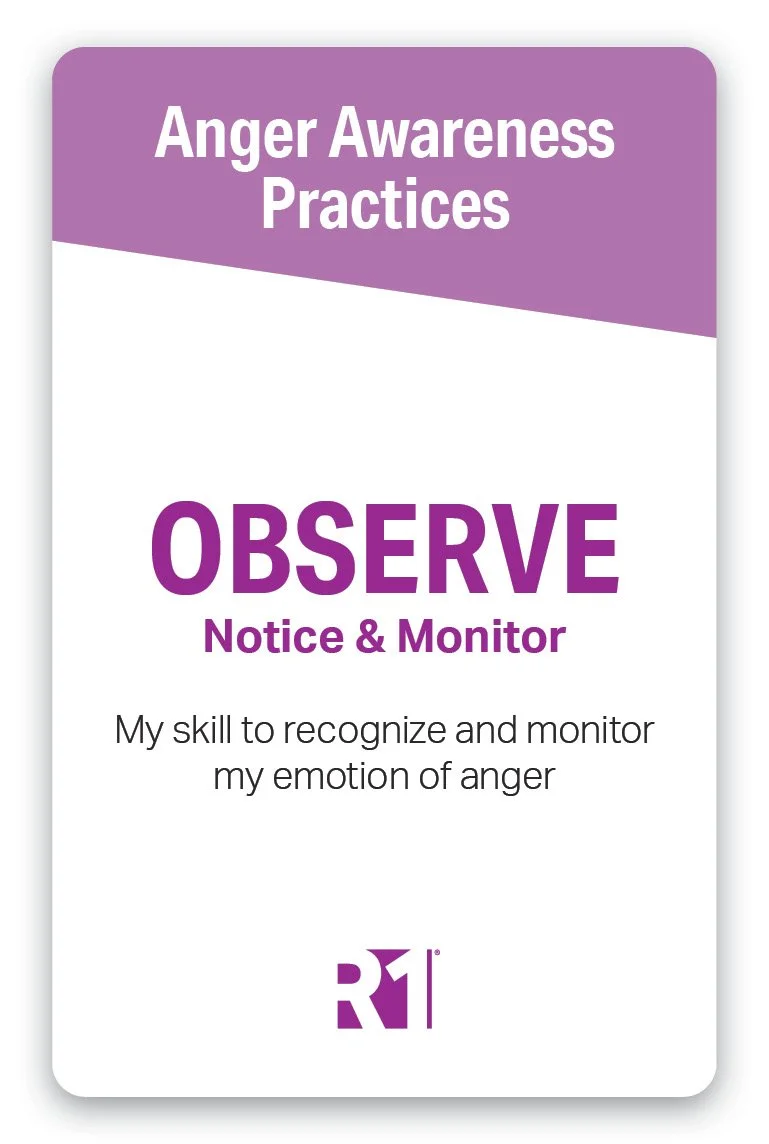
OBSERVE — Notice & Monitor: My skill to recognize and monitor my emotion of anger
The Observe phase establishes the foundation for learning by increasing self-awareness. Individuals notice situations, thoughts, emotions, behaviors, physical sensations, successes, and challenges without immediately judging them. This awareness helps learners recognize patterns and connect educational concepts to their own experiences, making learning concrete and personally meaningful rather than abstract.
3 of 10 Discovery Cards Examples:
I recognize the thoughts and beliefs that spark my anger
I notice what activates my anger (e.g., people, places, things, situations, events)
I am aware of how often I get angry
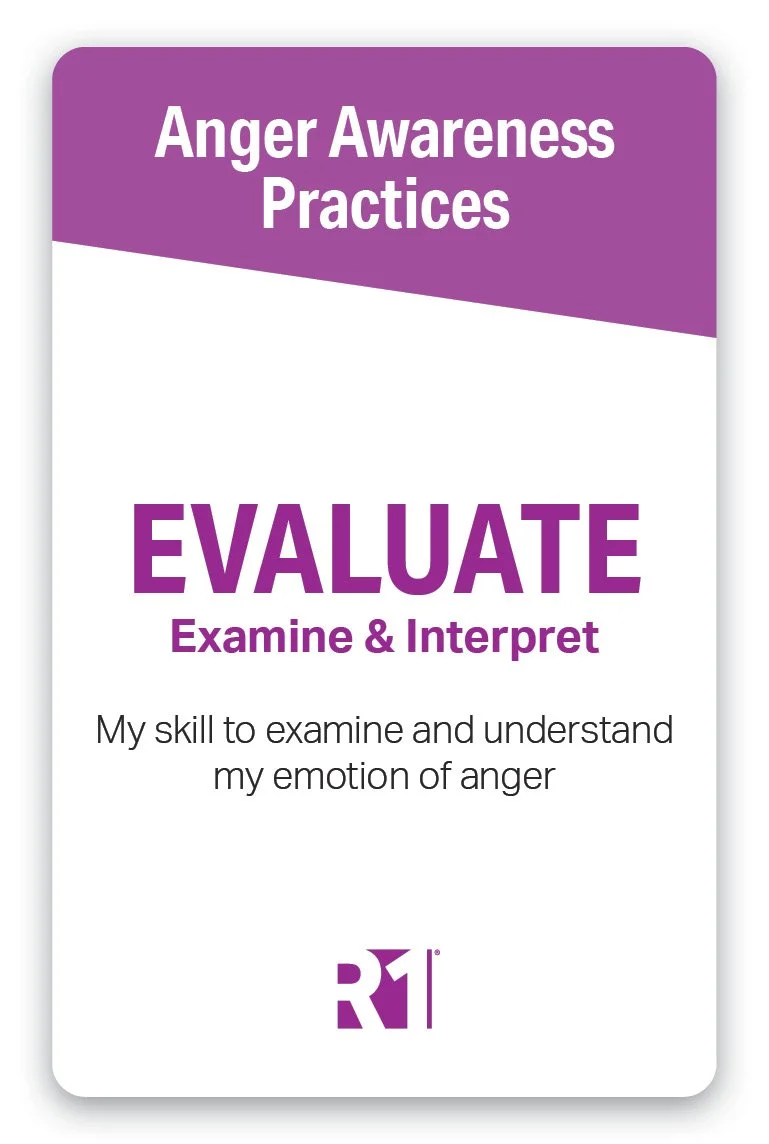
EVALUATE — Examine & Interpret: My skill to examine and understand my emotion of anger
The Evaluate phase transforms experience into understanding through reflection and critical thinking. Learners compare what they observed with their goals, values, evidence-based practices, or desired outcomes by asking questions such as What happened? What was the impact? What worked? What could I do differently? How can I improve in this area? This process develops insight, sound judgment, and self-efficacy—the belief that one can understand situations and make effective decisions.
3 of 10 Discovery Cards Examples:
I examine which cues signal that my anger is increasing (e.g., cognitive, physical, emotional, behavioral)
I determine whether my thoughts are accurate or exaggerated
I examine the patterns in my anger (e.g., triggers, cues, intensity, impact)
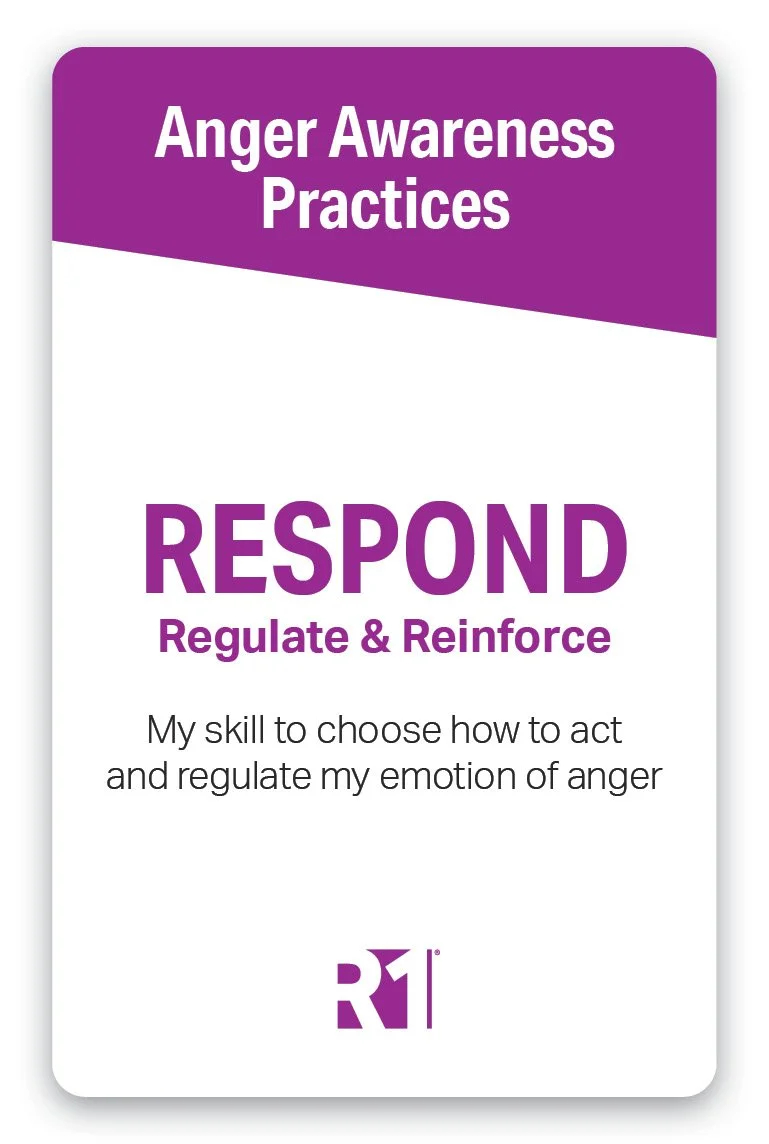
RESPOND — Regulate & Reinforce: My skill to choose how to act and regulate my emotion of anger
The Respond phase converts reflection into action. Learners apply what they have discovered by choosing healthy options, practicing new behaviors, testing strategies, making adjustments, and reinforcing successful actions. Rather than viewing mistakes as failures, every response becomes another learning opportunity that feeds back into the Observe phase, creating a continuous cycle of growth, resilience, and improvement.
3 of 10 Discovery Cards Examples:
I address the thoughts and situations that make me angry
I reframe situations or events that make me angry
I use healthy coping skills to regulate my anger (e.g., breathing practices, CBT, DBT)
What Are the Strengths of this Theory for Learners?
This learning cycle is particularly effective because it naturally supports experiential, situational, and reflective learning. Individuals learn from their own experiences, practice skills within real-life situations, and continually reflect on outcomes to improve future performance. Knowledge is not simply remembered—it is applied, tested, refined, and integrated into everyday life.
Another major strength of the framework is its flexibility. Because Observe, Evaluate, and Respond represent a universal learning process rather than a single clinical intervention, it can be consistently applied across virtually every educational topic delivered by R1, including emotional regulation, problem-solving, physical health, financial wellness, recovery, communication, employment readiness, parenting, and interpersonal relationships. Using the same learning process across diverse subjects reduces cognitive burden while increasing learners' confidence in applying their skills across multiple life domains.
Ultimately, the greatest value of this framework is that it develops self-regulated learners. Rather than becoming dependent on instructors or educational materials, individuals learn how to monitor their own progress, evaluate their own decisions, and intentionally adjust their behavior over time. This directly reflects Bandura's concept of self-efficacy—the confidence that one can successfully influence personal outcomes through thoughtful action.
By grounding our educational methodology in Bandura's Social Cognitive Theory, R1 provides learners with more than knowledge—it provides a practical process for lifelong learning. Observe, Evaluate, and Respond transforms education into an ongoing process of awareness, reflection, and intentional action, enabling individuals to build the confidence, resilience, and skills needed to create lasting behavior change.
Anger Awareness Practices References
Bandura, A. (1986). Social foundations of thought and action: A social cognitive theory. Prentice-Hall.
Bandura, A. (1991). Social cognitive theory of self-regulation. Organizational Behavior and Human Decision Processes, 50(2), 248–287. https://doi.org/10.1016/0749-5978(91)90022-L
Bandura, A. (1997). Self-efficacy: The exercise of control. W. H. Freeman.
Kolb, D. A. (2015). Experiential learning: Experience as the source of learning and development (2nd ed.). Pearson.
Schön, D. A. (1983). The reflective practitioner: How professionals think in action. Basic Books.
Zimmerman, B. J. (2000). Attaining self-regulation: A social cognitive perspective. In M.
Boekaerts, P. R. Pintrich, & M. Zeidner (Eds.), Handbook of self-regulation (pp. 13–39). Academic Press. https://doi.org/10.1016/B978-012109890-2/50031-7
Questions to Explore
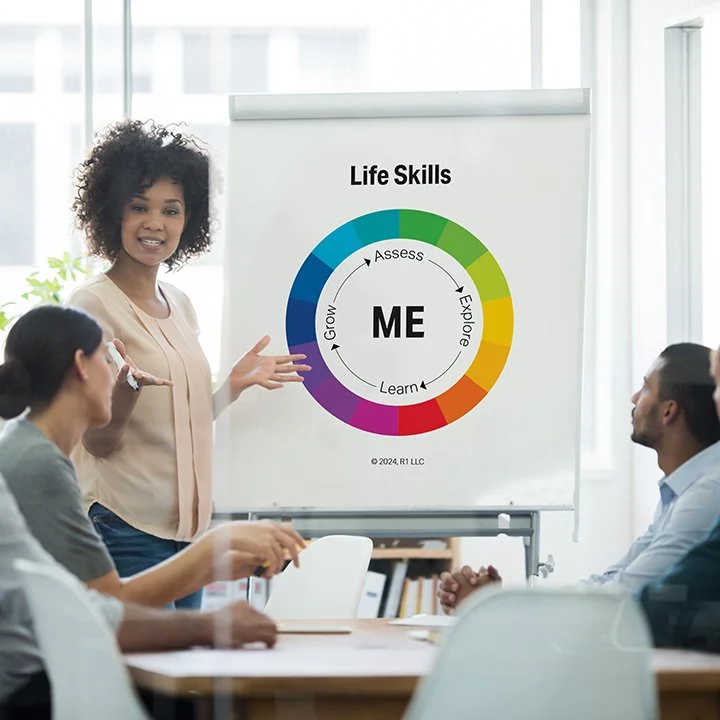
Answer the following questions for yourself or with your team:
What do you find helpful about the Anger Management information presented?
How will the Anger Management Models be most useful for you and your team? Explain.
How does your knowledge of the Anger, Anger Cues, and the 3 Anger Awareness Practices help you to better understand the strengths and needs of the individuals you serve?
How can you and your team use this information to engage and support individuals in your program?
What are some areas in your program where you can incorporate Anger Management activities?
What will be the benefit for you and others as you use this tool?
What is your major learning or takeaway from this post? Explain.
Thank you for reading this post and participating in this activity. Contact us if you would like to learn more about our Anger Management solutions and the R1 Learning System. We look forward to hearing from you.
Copyright 2026 R1 Publishing LLC / All Rights Reserved. Use of this article for any purpose is prohibited without permission.
Engagement Tools
Integrating Discovery Card activities into your groups and one-on-ones will allow individuals to think concretely, increase self-awareness, build vocabulary, express themselves more effectively, and put insights into action. Visit the R1 Store to learn more about these evidence-based topics and models.

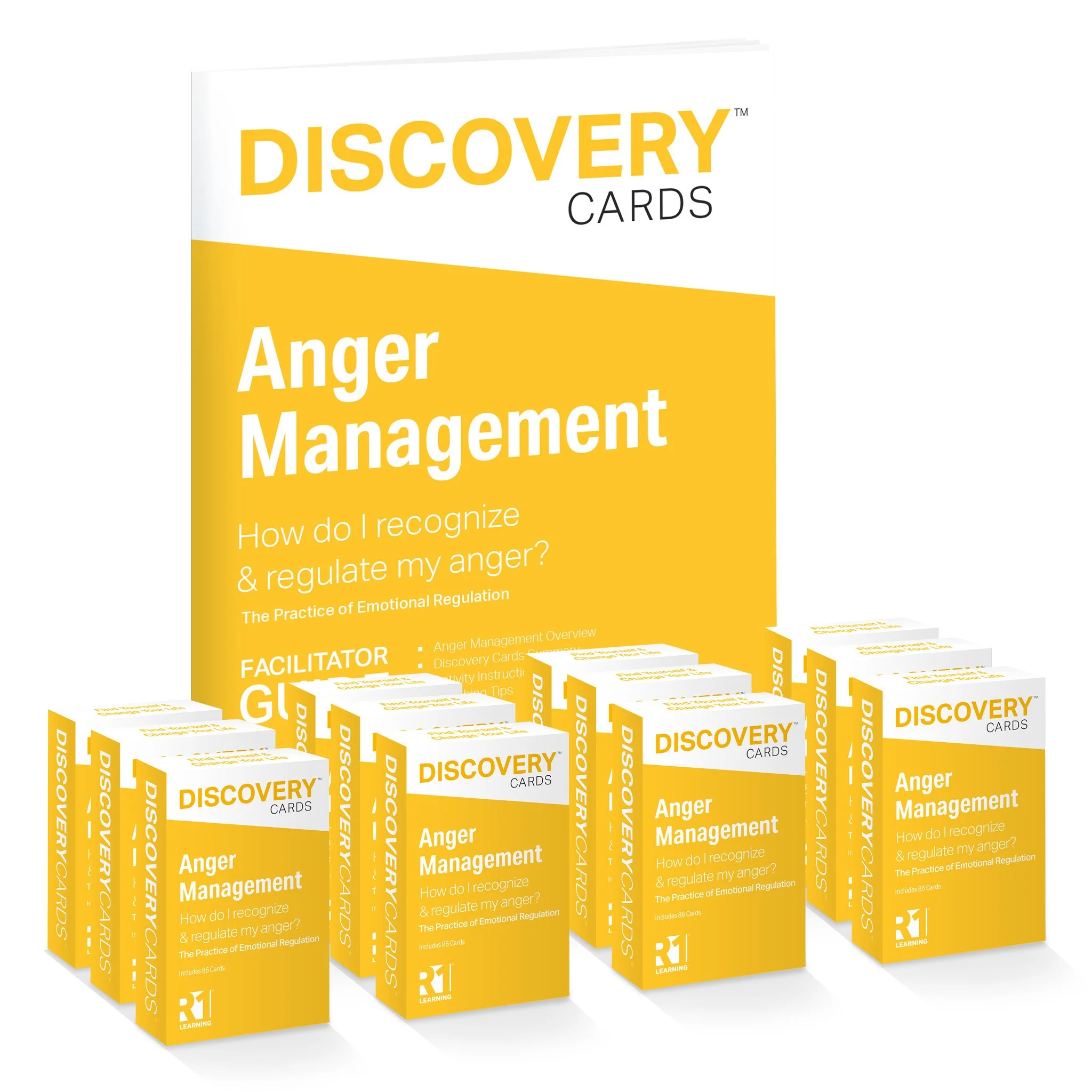
Here are a few ideas to help you learn more about R1 and engage others on this topic:
Share this blog post with others. (Thank you!)
Start a conversation with your team. Bring this information to your next team meeting or share it with your supervisor. Change starts in conversations. Good luck! Let us know how it goes.
Visit www.R1LEARNING.com to learn more about R1, the Discovery Cards, and how we’re creating engaging learning experiences through self-discovery.