
Emotional Regulation — How Do I Recognize and Regulate My Emotions?
This may be R1’s best structured content yet and path for making a meaningful impact in the world of behavioral health. As I mentioned in our recent post for Anger Management, we used the development of Emotional Regulation and Anger Management to make a few updates to our Emotions and Emotional Regulation Practices Discovery Cards in all of our emotions related topics… Emotional Triggers, Substance Use Triggers, Emotions & Feelings and Grief & Loss. We also made a few updates to the introductory pages in our Facilitator Guides for our Cognitive Appraisal Theory of Emotions for all of our emotions related topics. All with an eye on staying current and relevant.
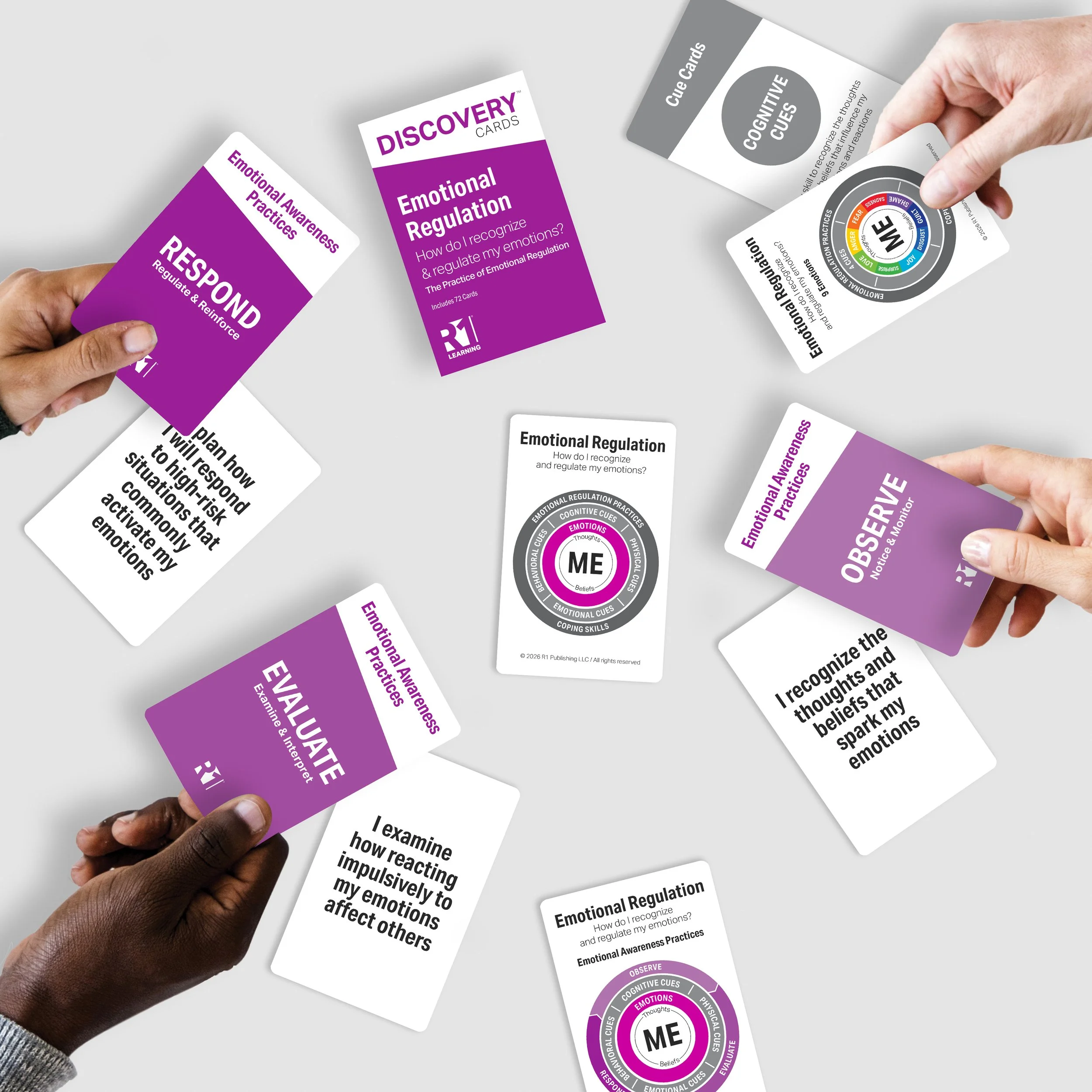
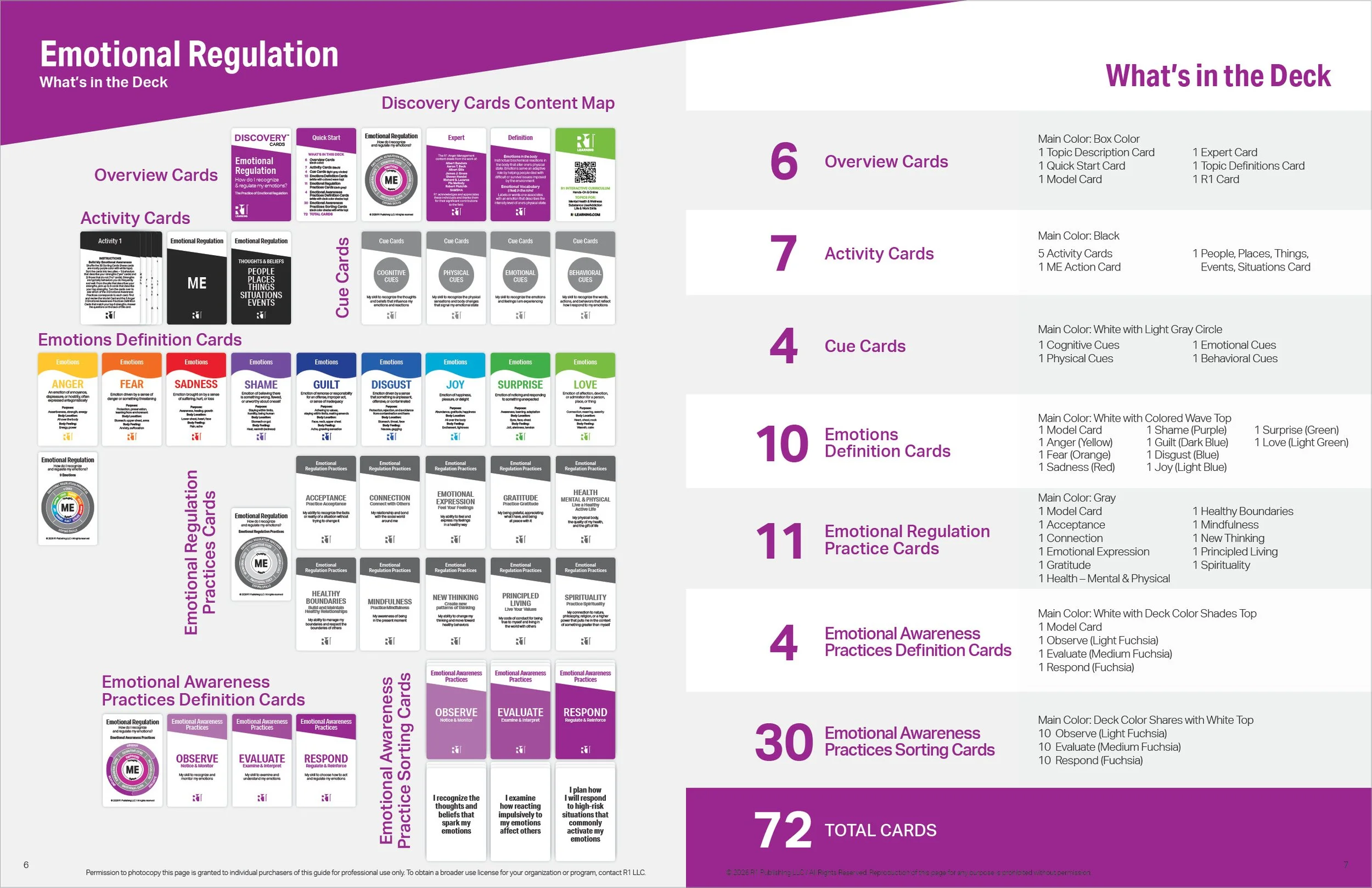
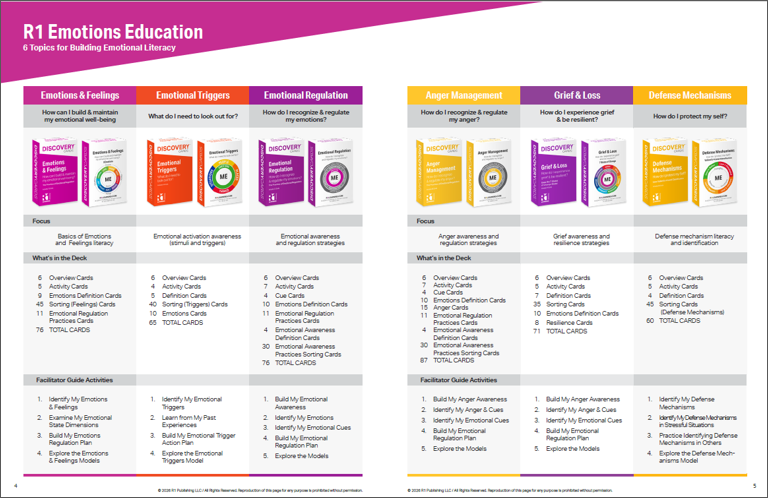
You will find this post to be one that is mostly made up of visual Discovery Cards. Given the question for this topic being: How do I recognize and regulate my emotions? we decided to keep this post centered on helping you see how we are defining emotions and the regulation practices. Like with Anger Management, this topic includes an amazing set of concrete, interactive tools to increase engagement, learning, and impact in both clinical and non-clinical sessions. It includes four tools within its Discovery Cards deck (See the What’s in the Deck below for reference):
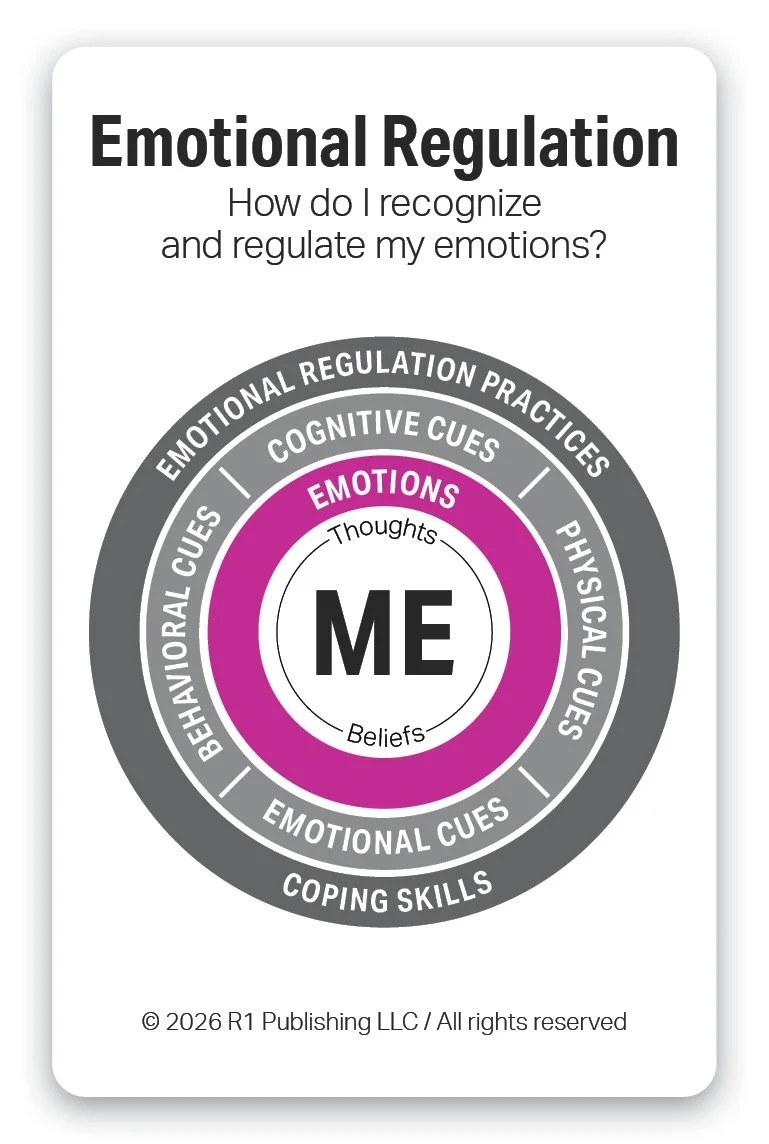
4 Cue Cards (Cognitive, Physical, Emotional, and Behavioral)
9 Emotions Definition Cards
10 Emotional Regulation Practices Cards
3 Emotional Awareness Practices Definition Cards with 10 Sorting Cards for each (30 Sorting Cards)
Also note that our Emotions & Feelings topic will be updated to include our latest set of 45 individual emotions/feelings cards, 5 from each of the fronts of the 9 Emotions Cards where they are identified on the intensity scales. Many of these Discovery Cards will remain the same from the current version, but we have two new emotions and a few changes to the Shame and Guilt cards. The new version will be released during our next print-run in early 2027.
Although we are sharing some details for each of these 4 tools in this post, we plan to focus on and share the background for our 9 Emotions Cards and the 10 Emotional Regulation Practices.
A Toolkit For Engagement — What’s in the Deck
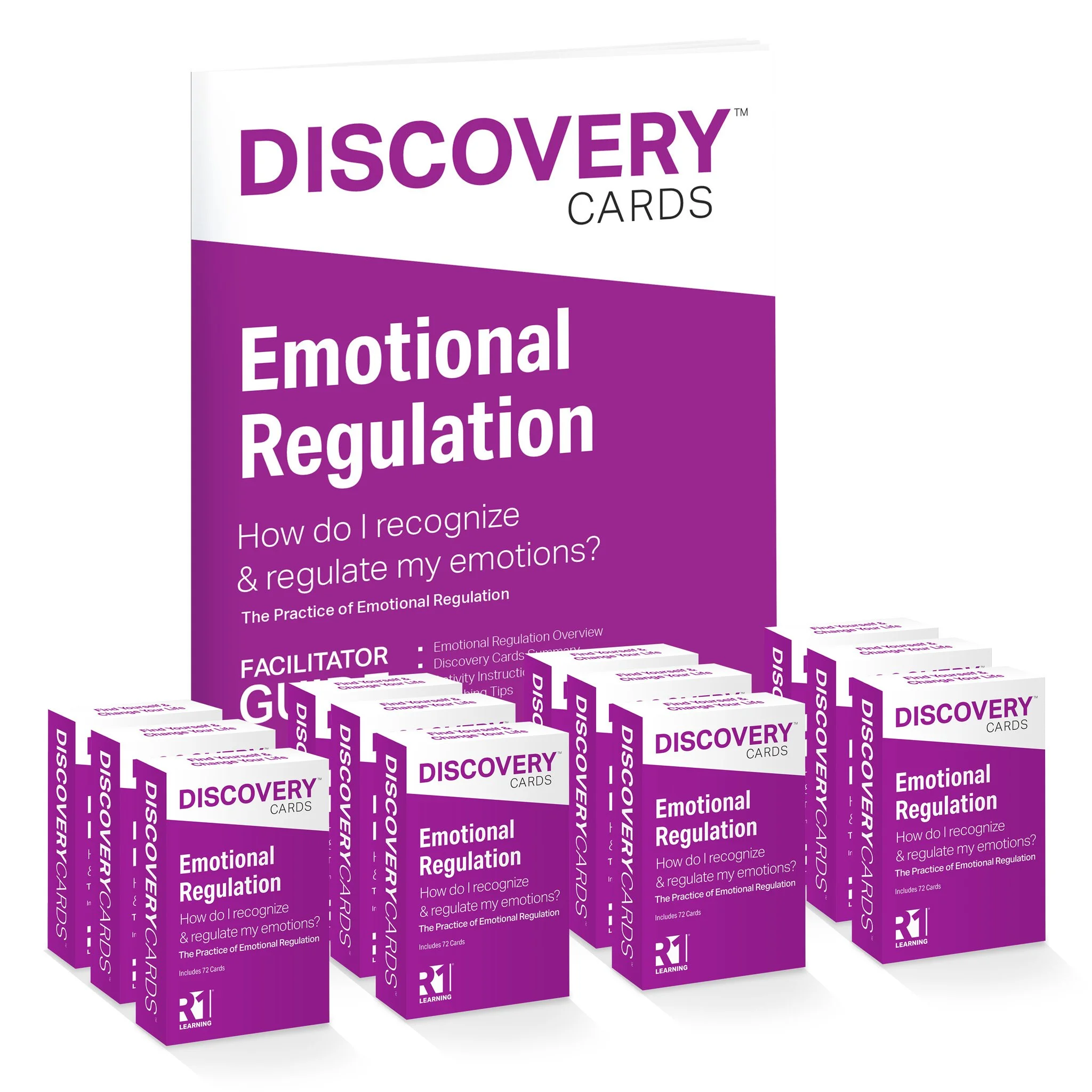
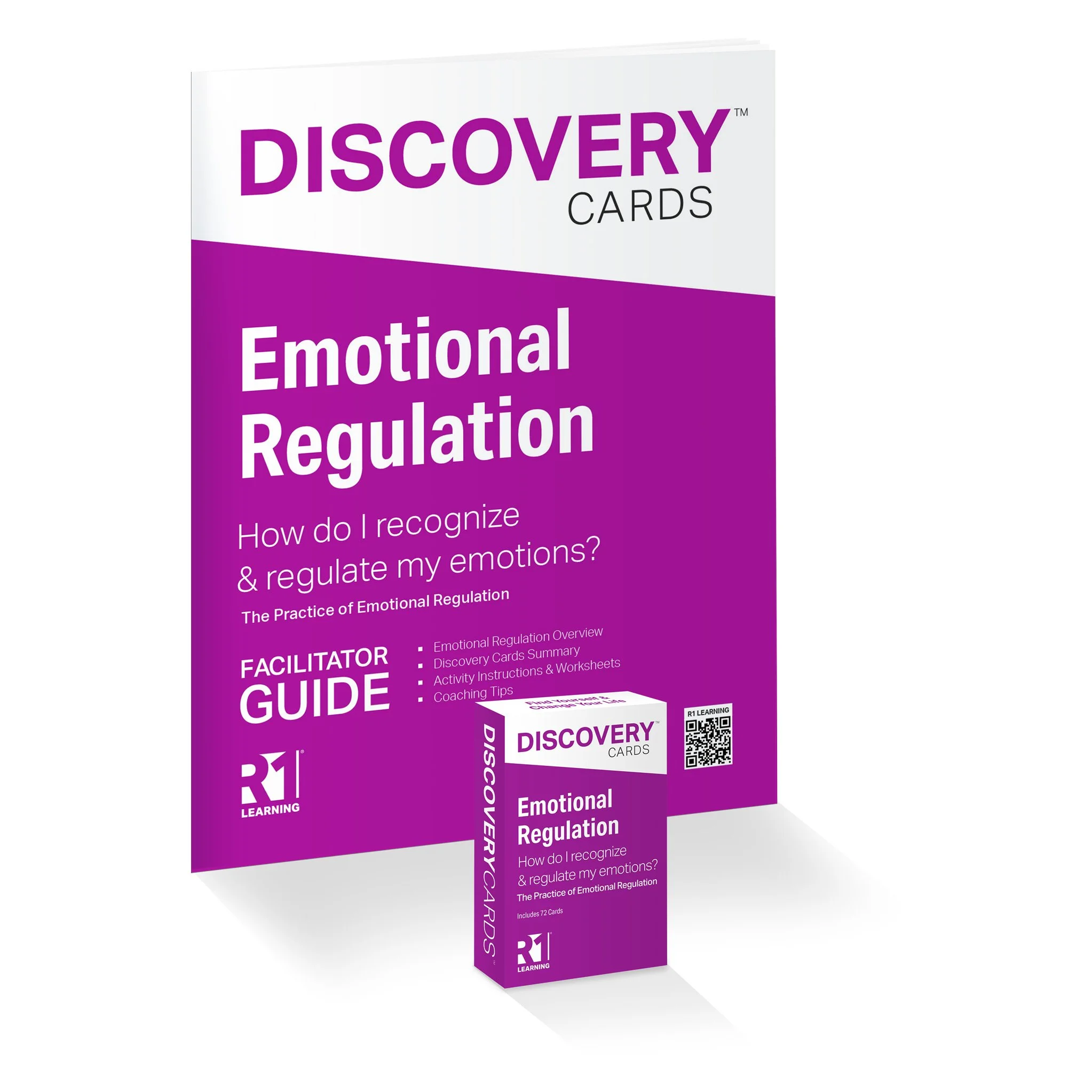
The purpose of today’s post is to share the basics of our new Emotional Regulation topic so you can explore how best to use it with individuals in your setting. Take a moment to review the definitions and examples for each of the 3 Emotional Awareness Practices below. Then read through the Questions to Explore for yourself or with others in your organization. The Emotional Regulation Group Kit and R1 Discover App provide tools for engagement, education, and empowerment for individuals you work with or support. Implementing these tools often through practice is one of the best ways to learn. R1 offers a unique on-the-job training and individual engagement tool coupled into one.
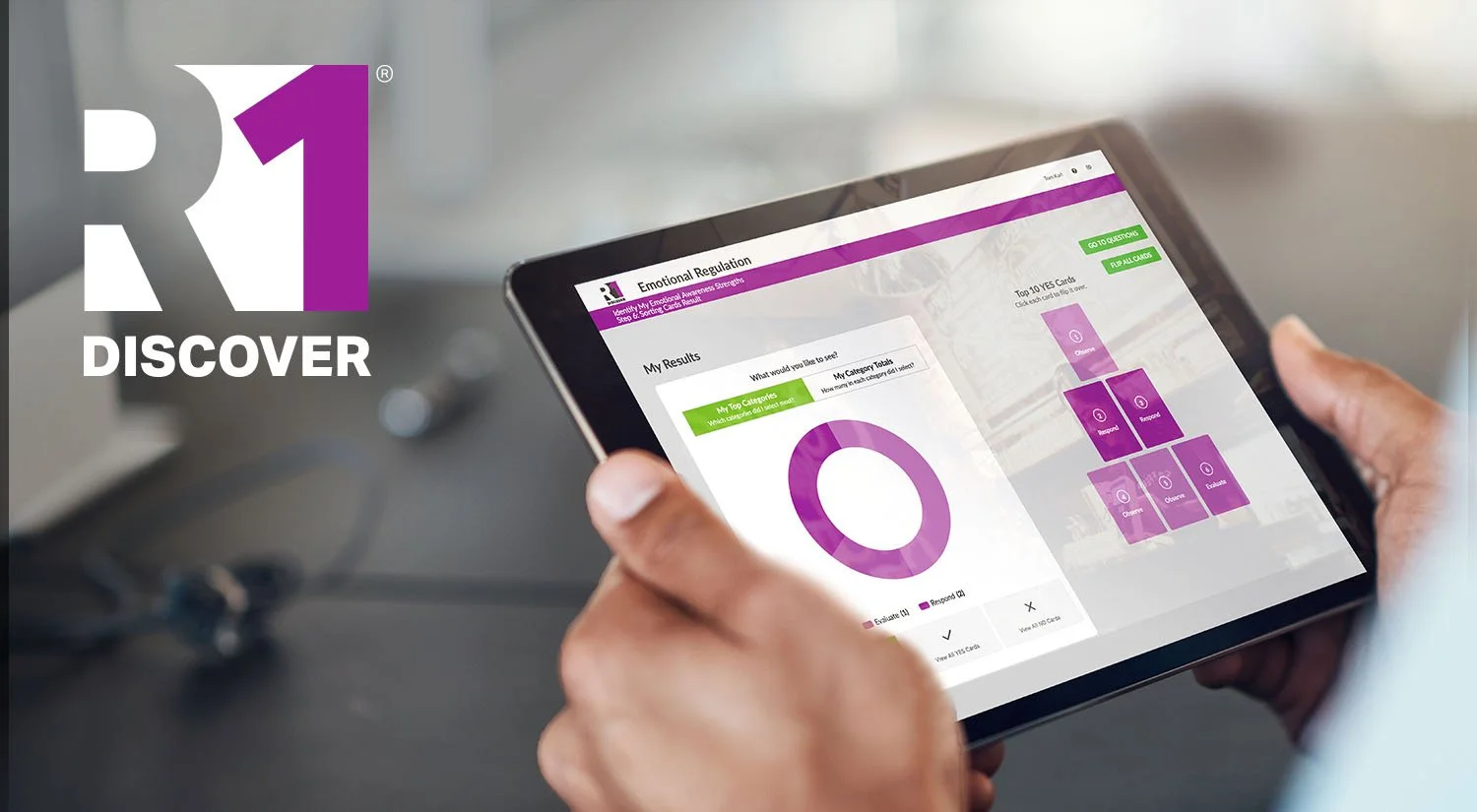
Explore R1 Discover — Interactive Engagement Tools
Emotional Regulation Defined
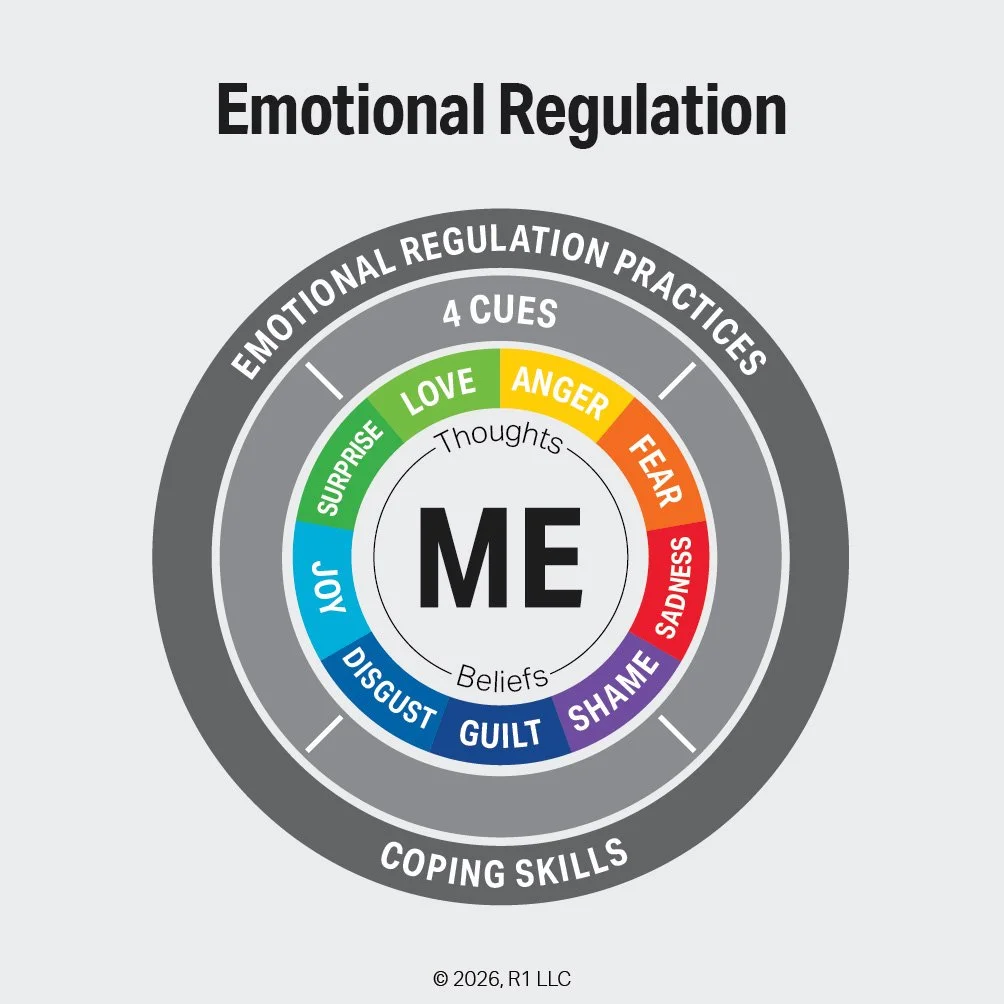
Emotional Regulation is the ability to recognize, understand, and respond to one’s emotions in constructive ways that are appropriate, effective, and aligned with one’s goals and values.
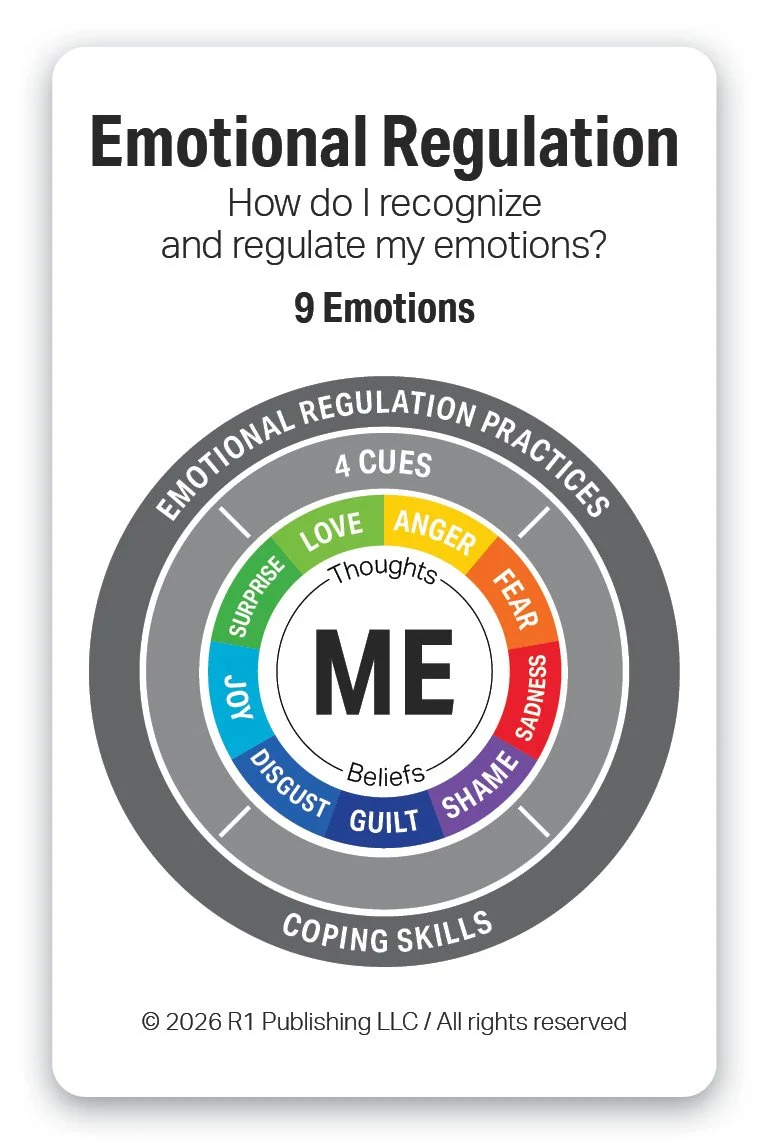
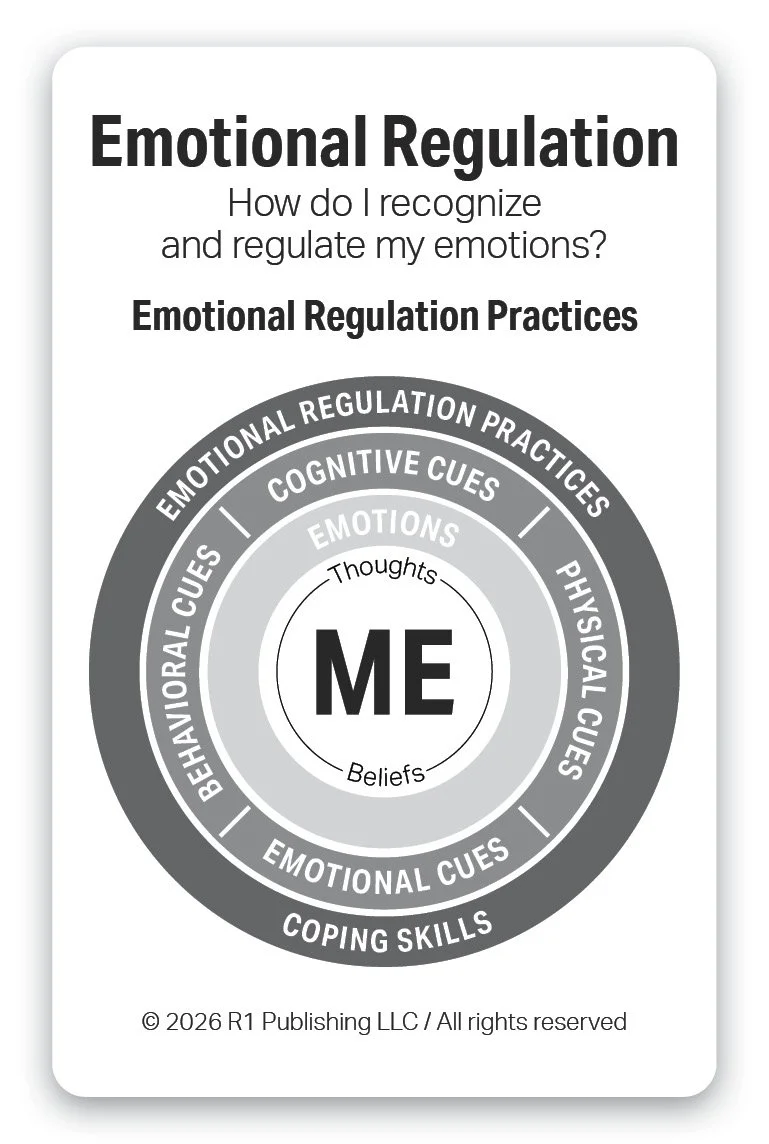
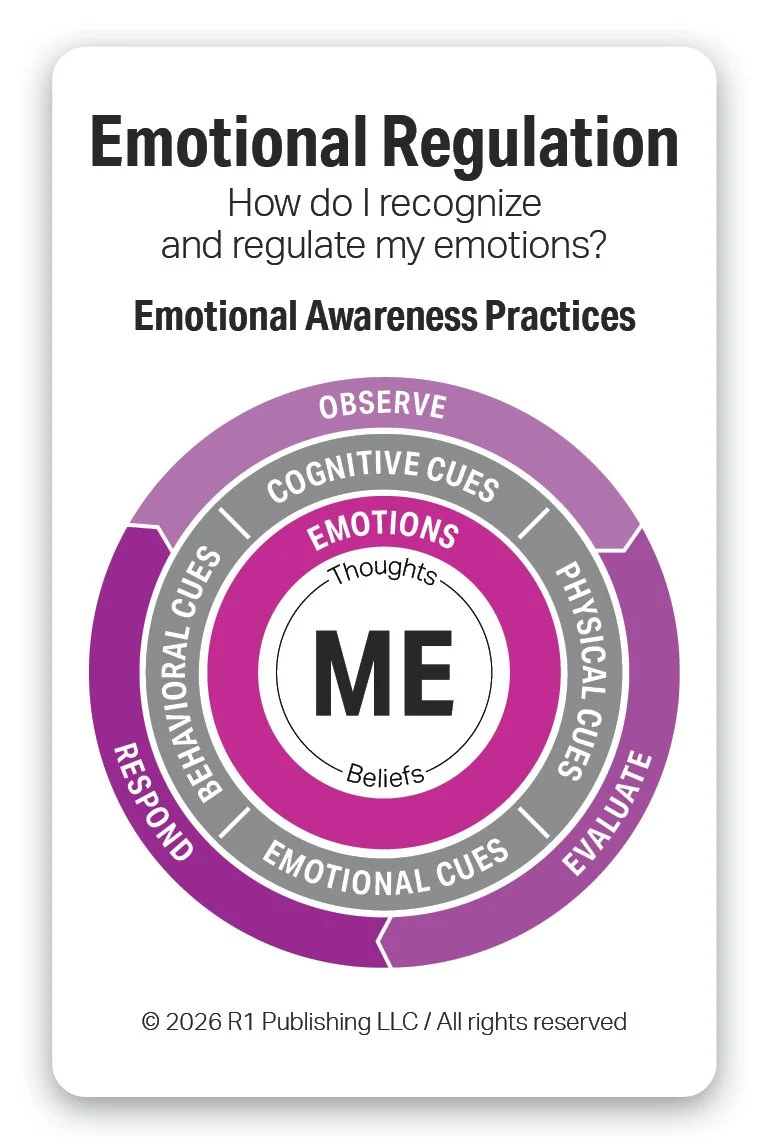
9 Emotions Defined
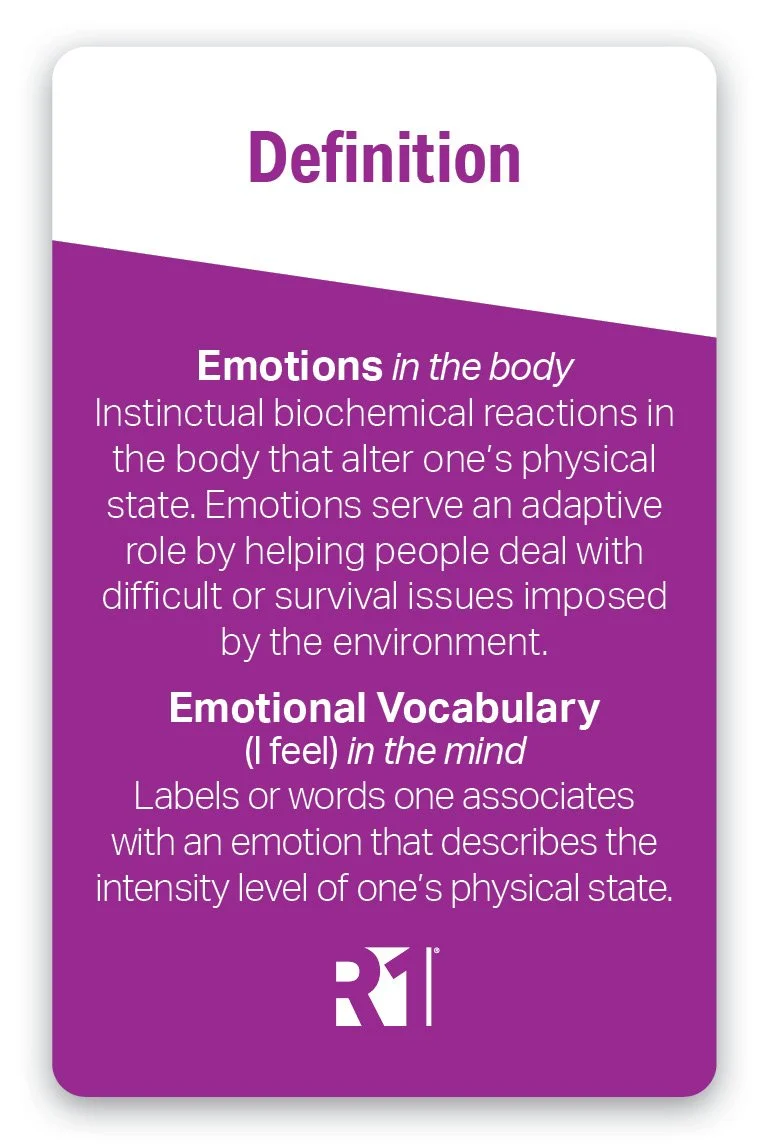
Emotions Definition in the body: Instinctual biochemical reactions in the body that alter one's physical state. Emotions serve an adaptive role by helping people deal with difficult or survival issues imposed by the environment.
Emotional Vocabulary (I feel) in the mind: Labels or words one associates with an emotion that describes the intensity level of one's physical state. The intensity scale provided on the front of each Emotion Discovery Cards below (shown only for Anger below) is a general guide showing where feelings may fall from lower to higher intensity. Intensity can vary by person, situation, and experience, so each feeling does not represent a fixed level.
Vocabulary matters. It can be difficult for individuals to recognize what they are experiencing and find the right words to describe it. Building an emotional vocabulary helps individuals identify, understand, express, and regulate their emotional experiences. Simply putting words to emotions increases self-awareness, improves communication, and supports healthier decision-making and emotional regulation. The model presented below organizes emotional experiences into 9 emotion categories: Anger, Fear, Sadness, Shame, Guilt, Disgust, Joy, Surprise, and Love.
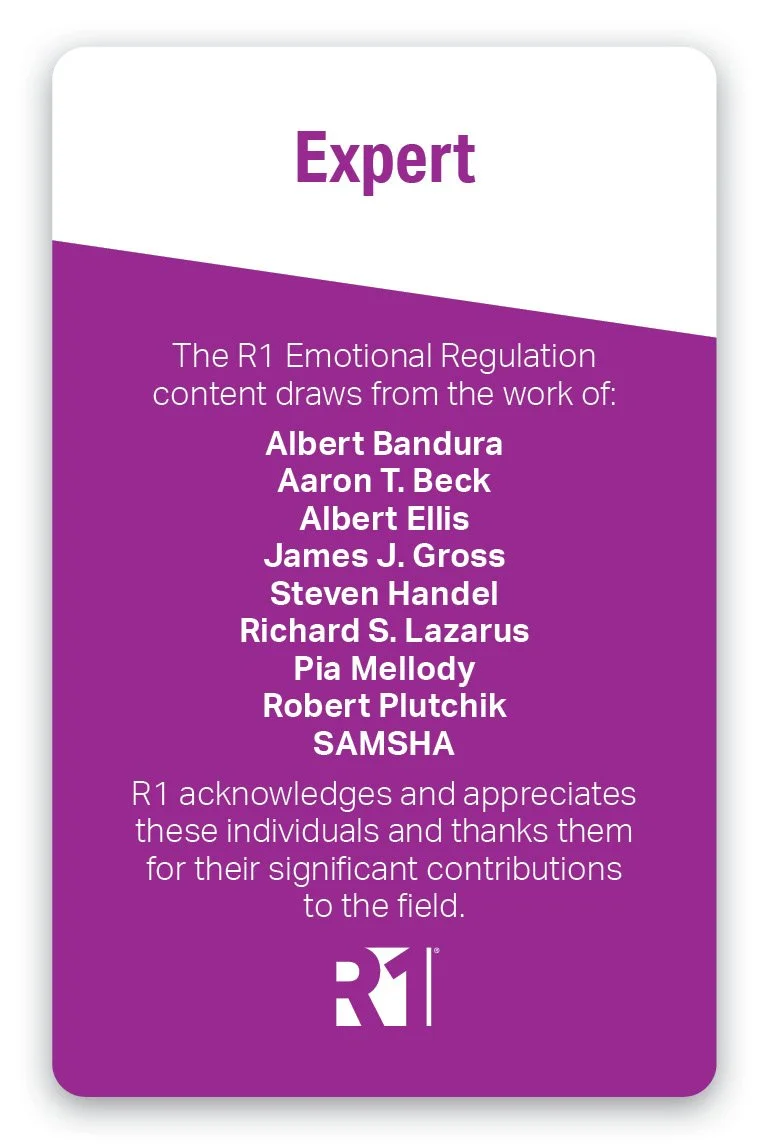
This educational framework is informed by leading theories of emotion, cognitive appraisal, and emotion regulation, including the work of Richard Lazarus, Paul Ekman, Robert Plutchik, James Gross, Lisa Feldman Barrett, and Barbara Fredrickson. Together, these theories emphasize that emotions serve important adaptive functions, are influenced by how individuals interpret their experiences, and can be recognized, understood, and managed through increased awareness and effective emotional regulation practices.
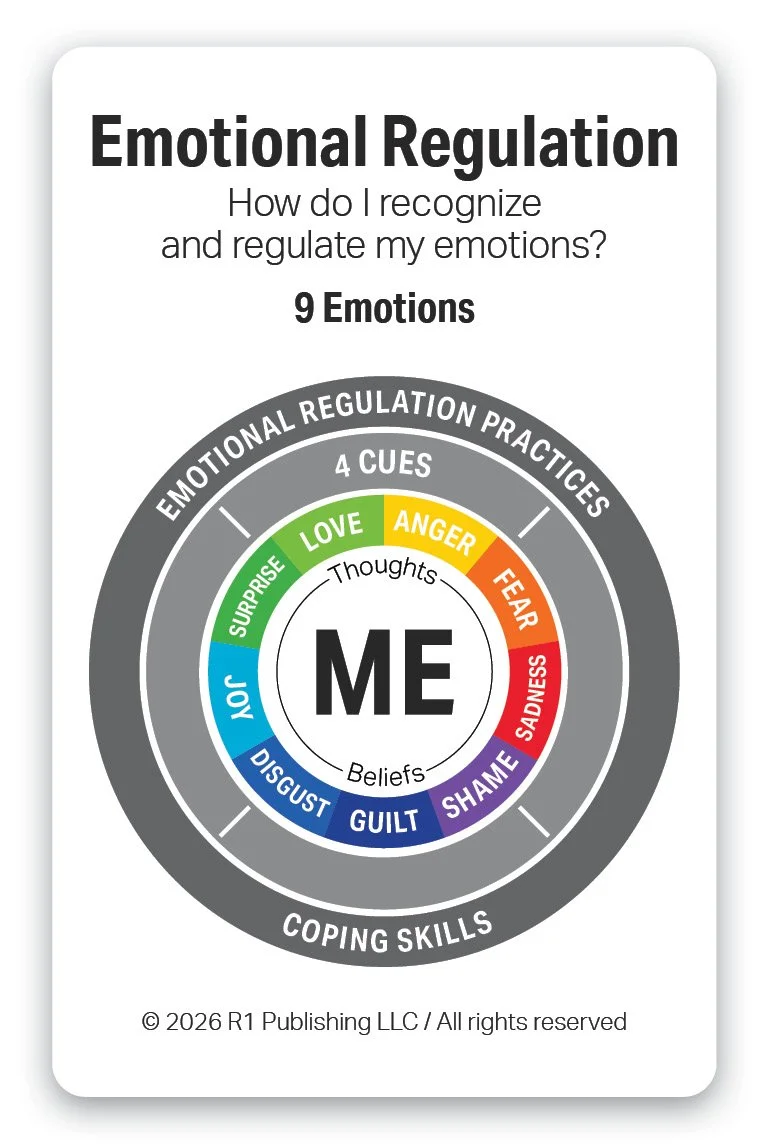
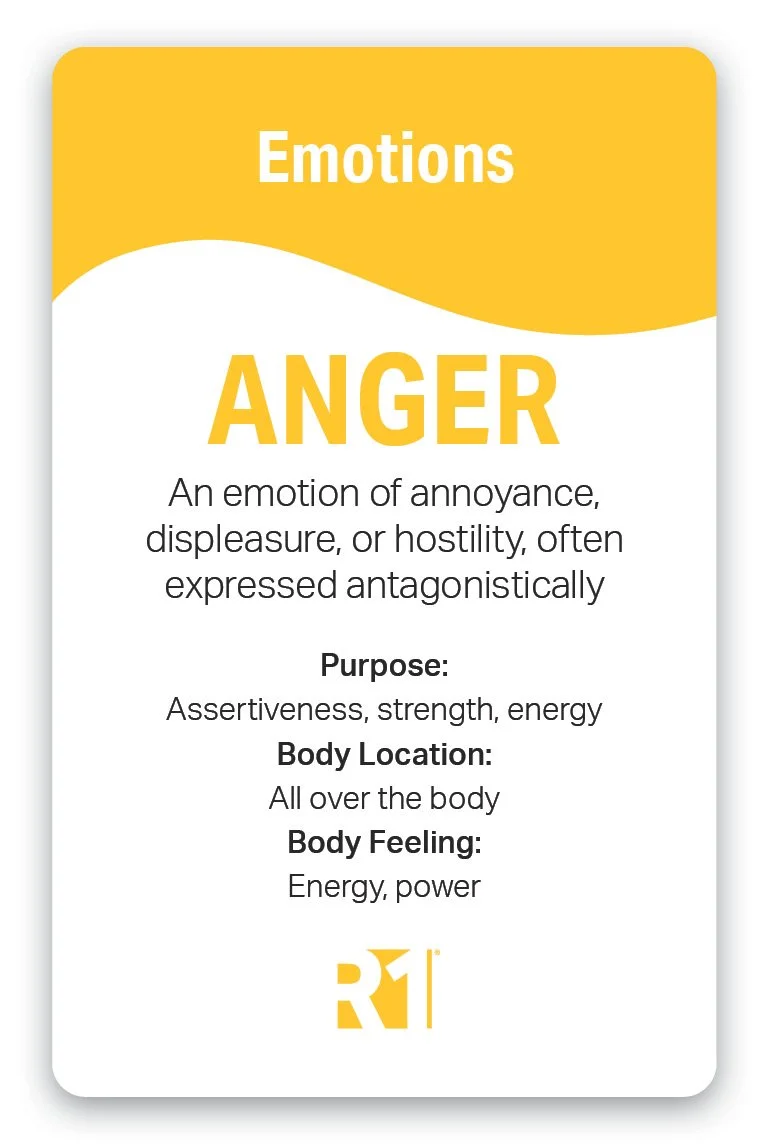
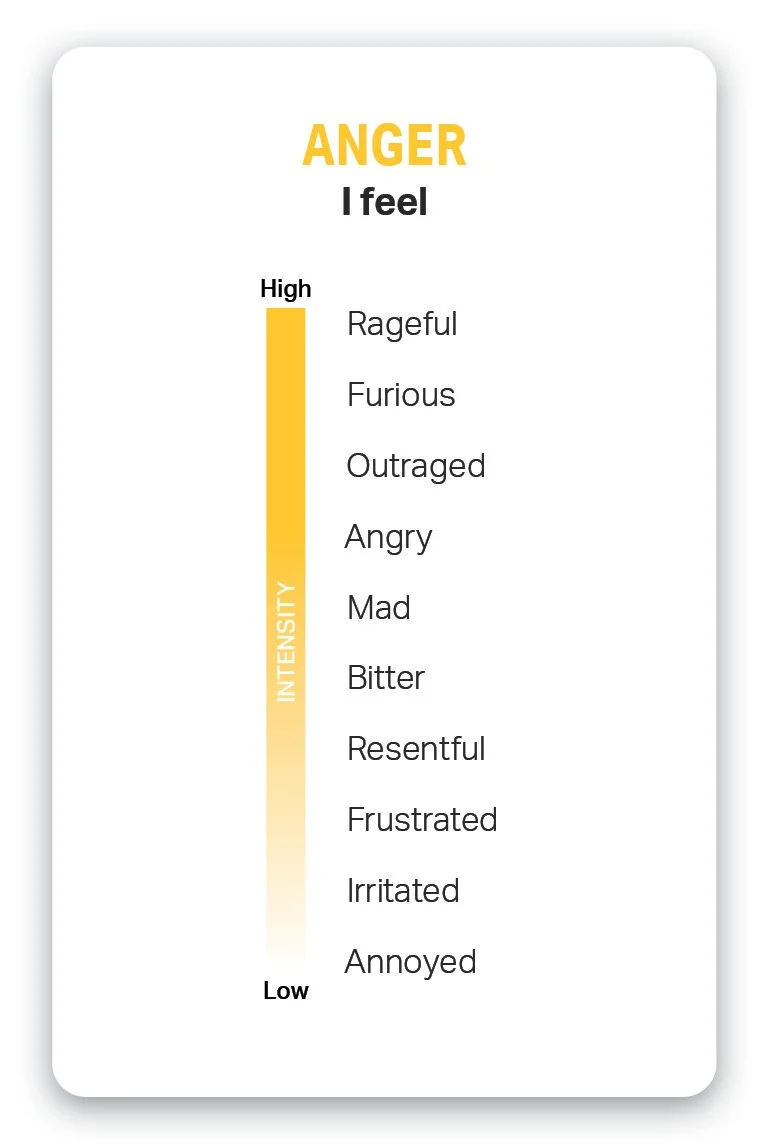
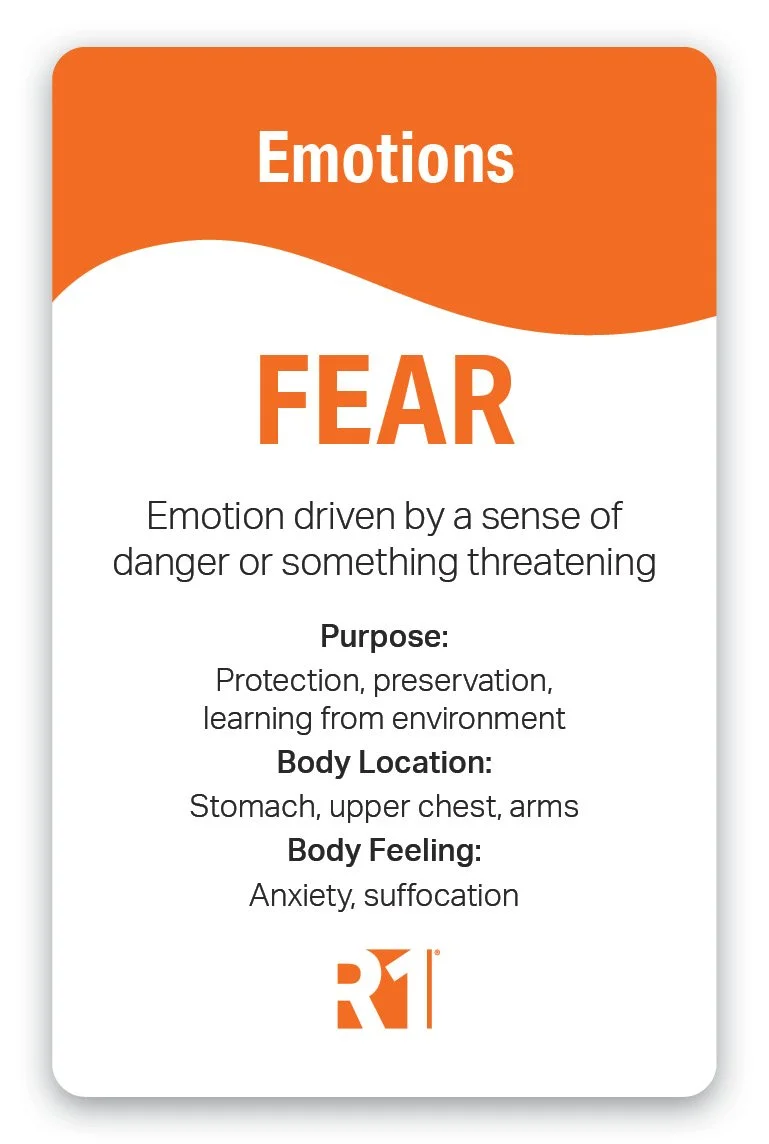
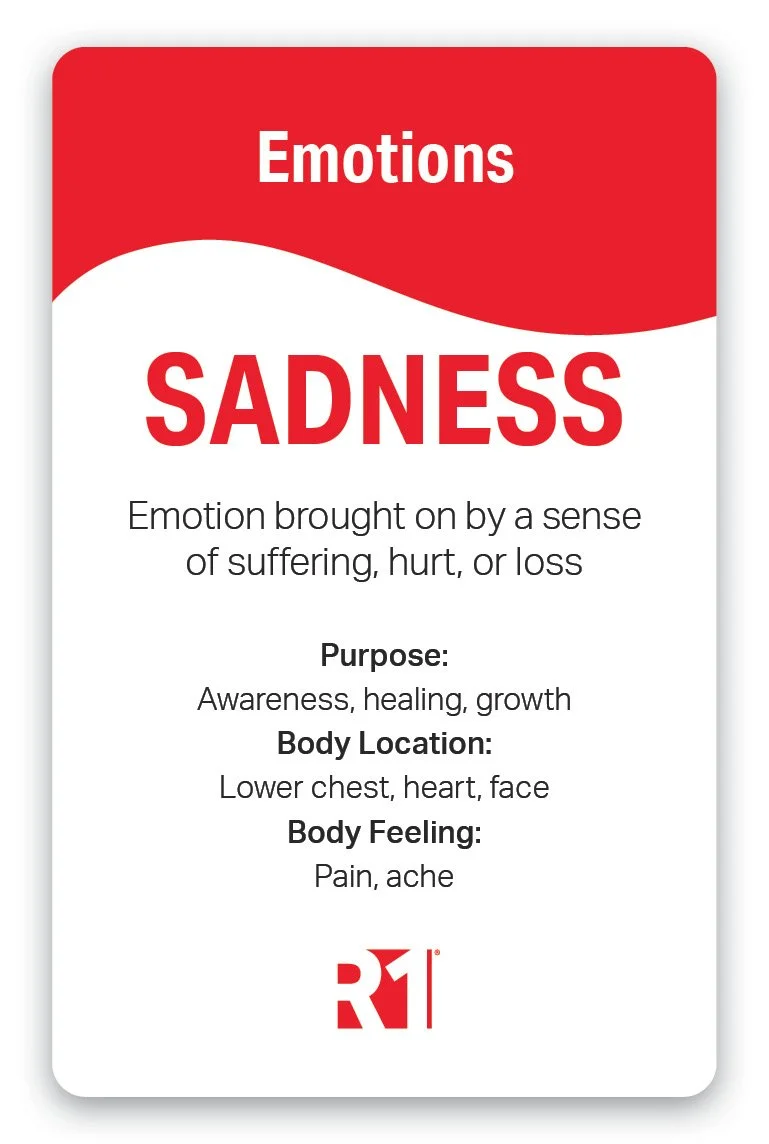
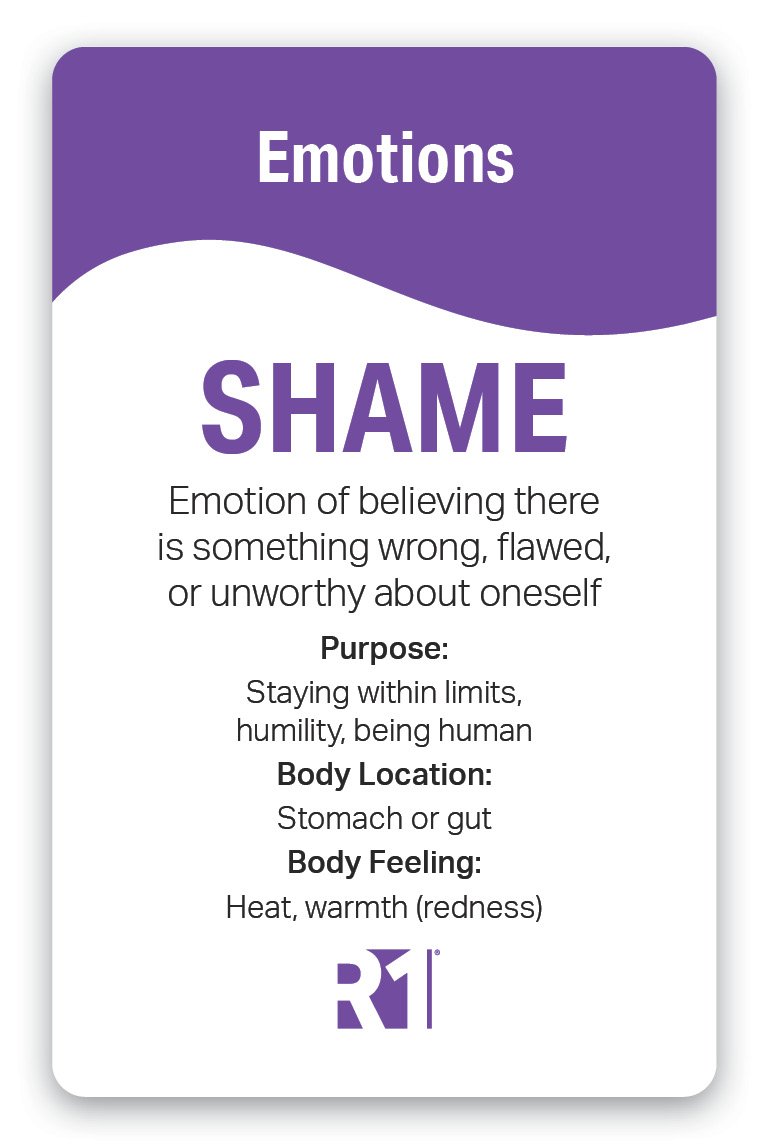
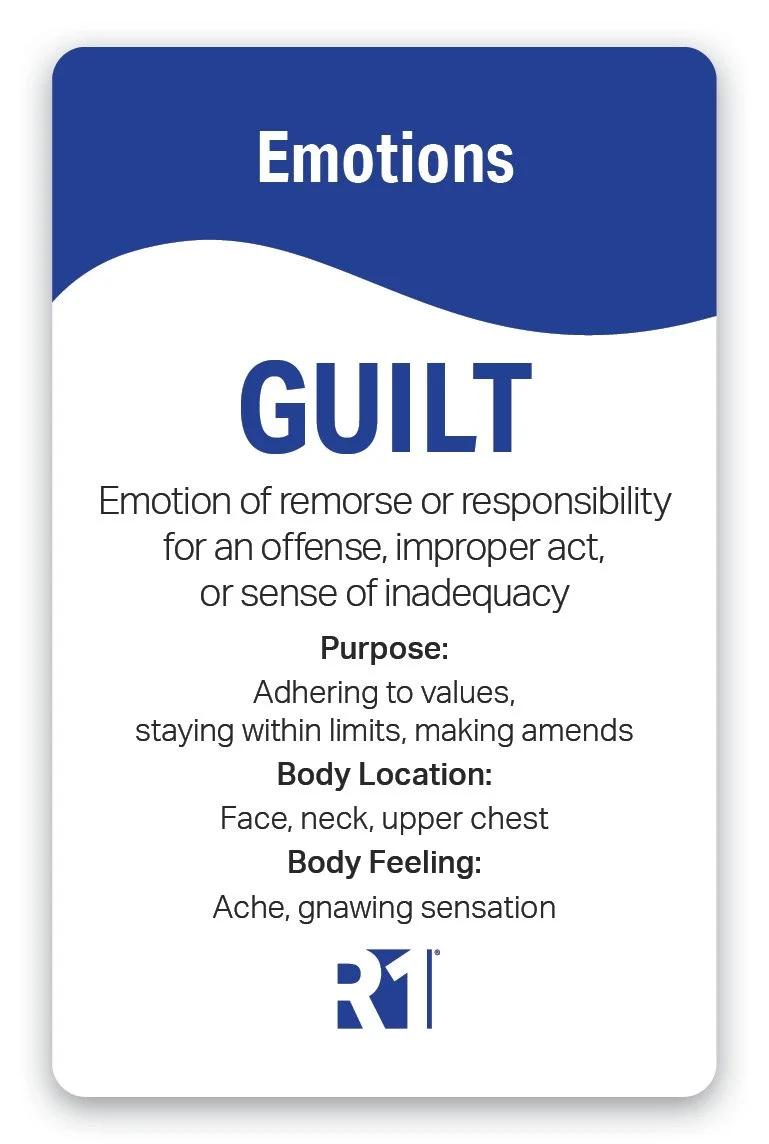
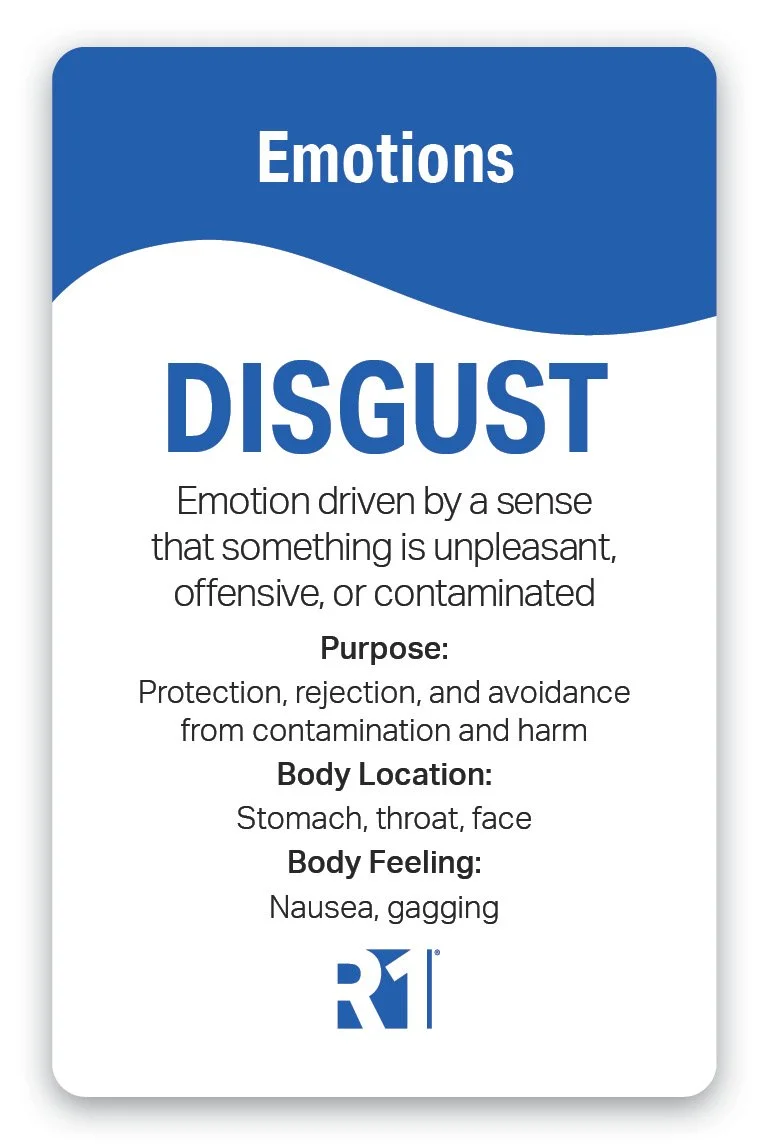
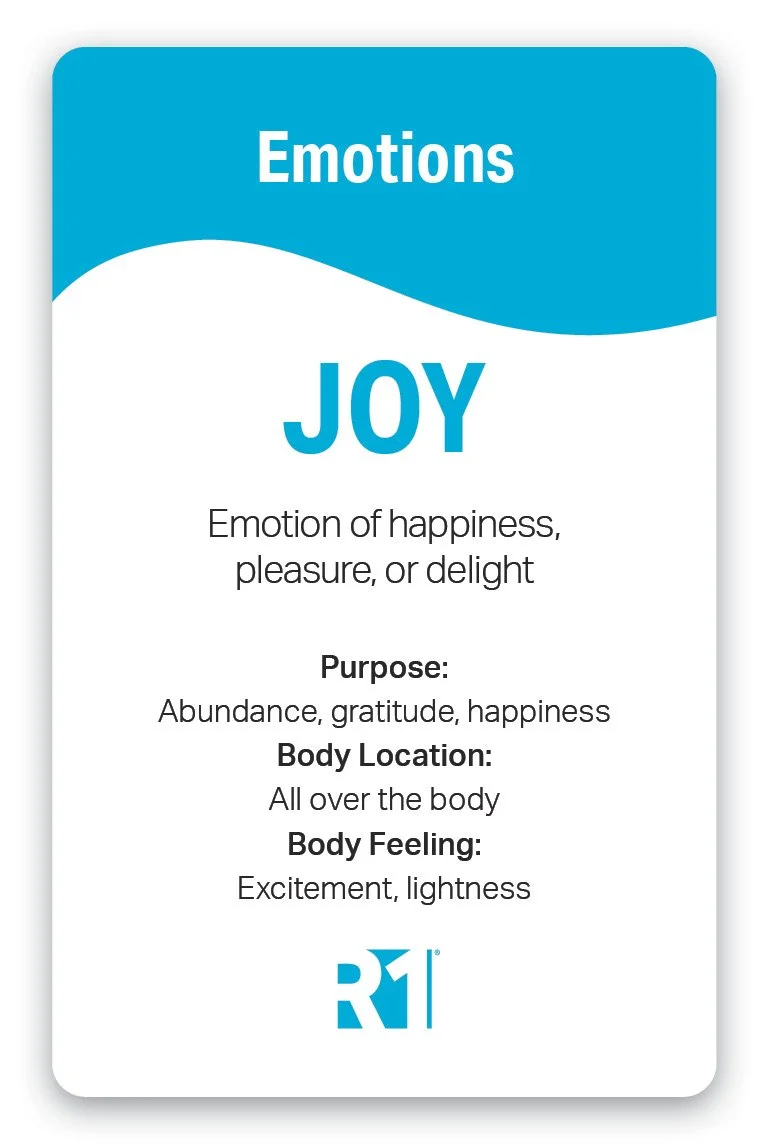
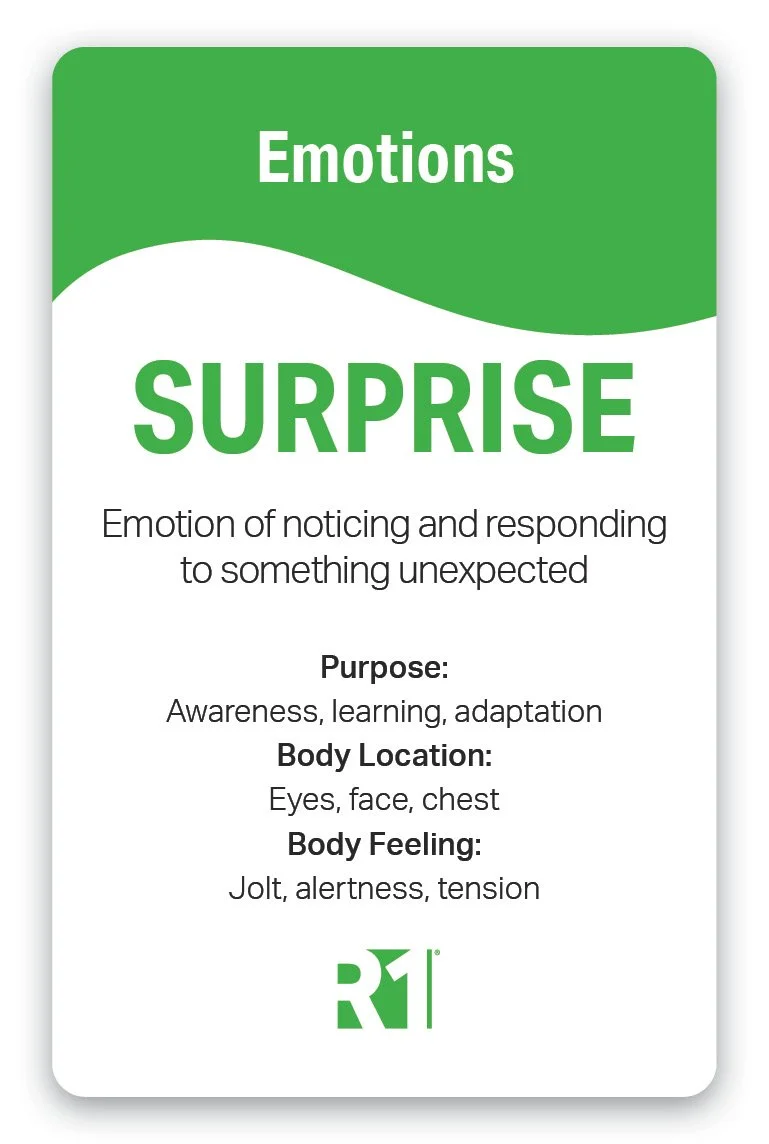
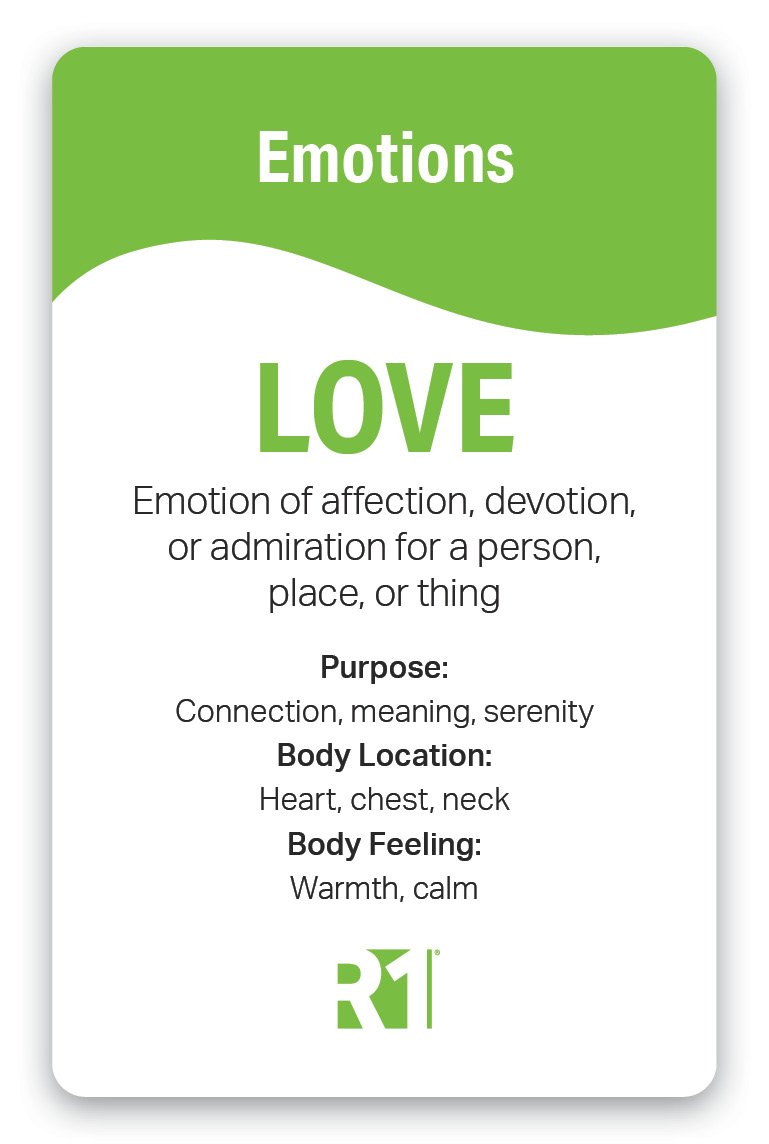
Each emotion includes examples of related feelings, a brief description of its purpose, common physical sensations, and an emotional intensity scale to help individuals better recognize and understand their emotional experiences. Rather than providing an exhaustive list of every emotion described in the behavioral health literature, this model offers practical vocabulary for organizing emotional experiences, building self-awareness, communicating emotions more effectively, and developing the skills needed to respond in healthy, constructive ways.
References
Barrett, L. F. (2017). How emotions are made: The secret life of the brain. Houghton Mifflin Harcourt.
Ekman, P. (1992). An argument for basic emotions. Cognition & Emotion, 6(3–4), 169–200. https://doi.org/10.1080/02699939208411068
Fredrickson, B. L. (2001). The role of positive emotions in positive psychology: The broaden-and-build theory of positive emotions. American Psychologist, 56(3), 218–226. https://doi.org/10.1037/0003-066X.56.3.218
Gross, J. J. (Ed.). (2015). Handbook of emotion regulation (2nd ed.). Guilford Press.
Lazarus, R. S. (1991). Emotion and adaptation. Oxford University Press.
Plutchik, R. (2001). The nature of emotions. American Scientist, 89(4), 344–350. https://www.americanscientist.org/article/the-nature-of-emotions
Emotional Regulation Practices — How do I regulate my emotions?
Managing emotions effectively is an essential life skill that supports emotional well-being, healthy relationships, sound decision-making, and resilience. While individuals cannot always control the situations they encounter, they can learn to recognize their emotional responses and choose healthy ways to manage them. Emotional regulation is the ability to recognize, understand, and respond to emotions intentionally rather than react impulsively, especially during stressful, challenging, or emotionally intense situations.
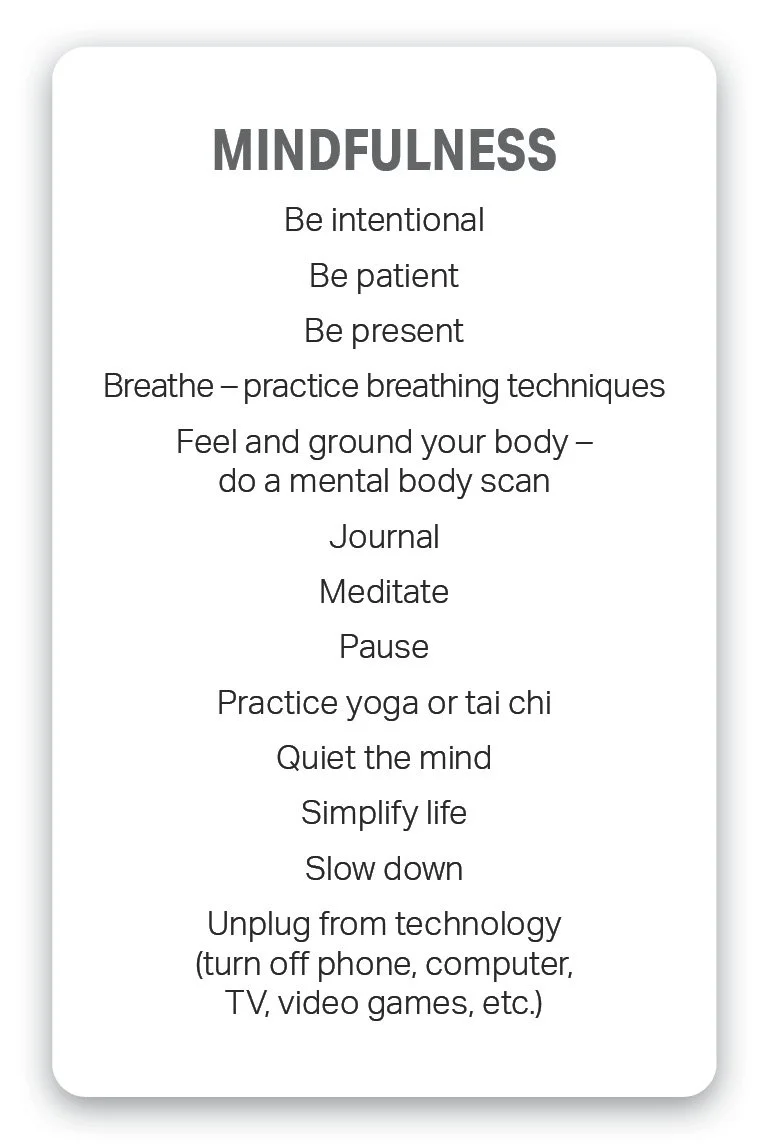
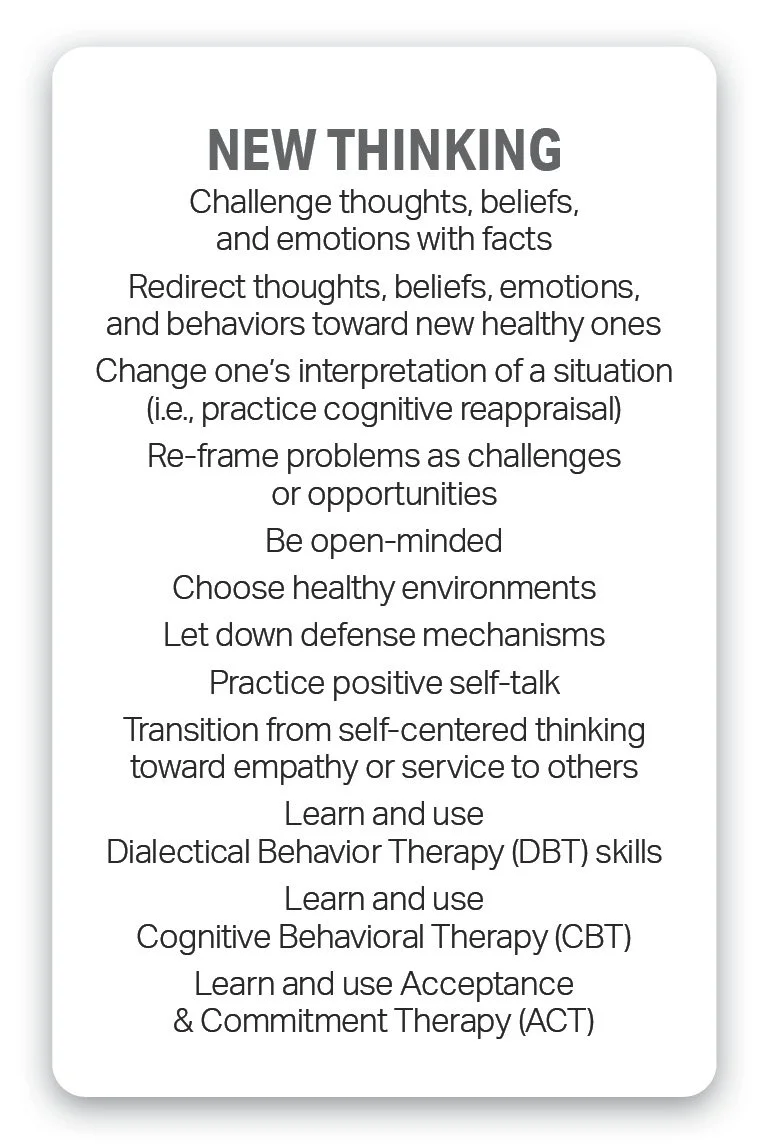
The 10 Emotional Regulation Practices are broad categories of coping skills commonly found throughout the behavioral health literature and evidence-based interventions. Each practice includes a variety of strategies and techniques (15-20 on the front sides of each of the Discovery Cards below) designed to help individuals recognize, understand, express, and respond to emotions in healthy and constructive ways. Because no single coping skill is effective in every situation, developing skills across multiple practice areas provides greater flexibility to respond effectively to life's many challenges. The practices highlighted below are intended to serve as a practical starting point rather than a comprehensive list of every emotional regulation strategy.
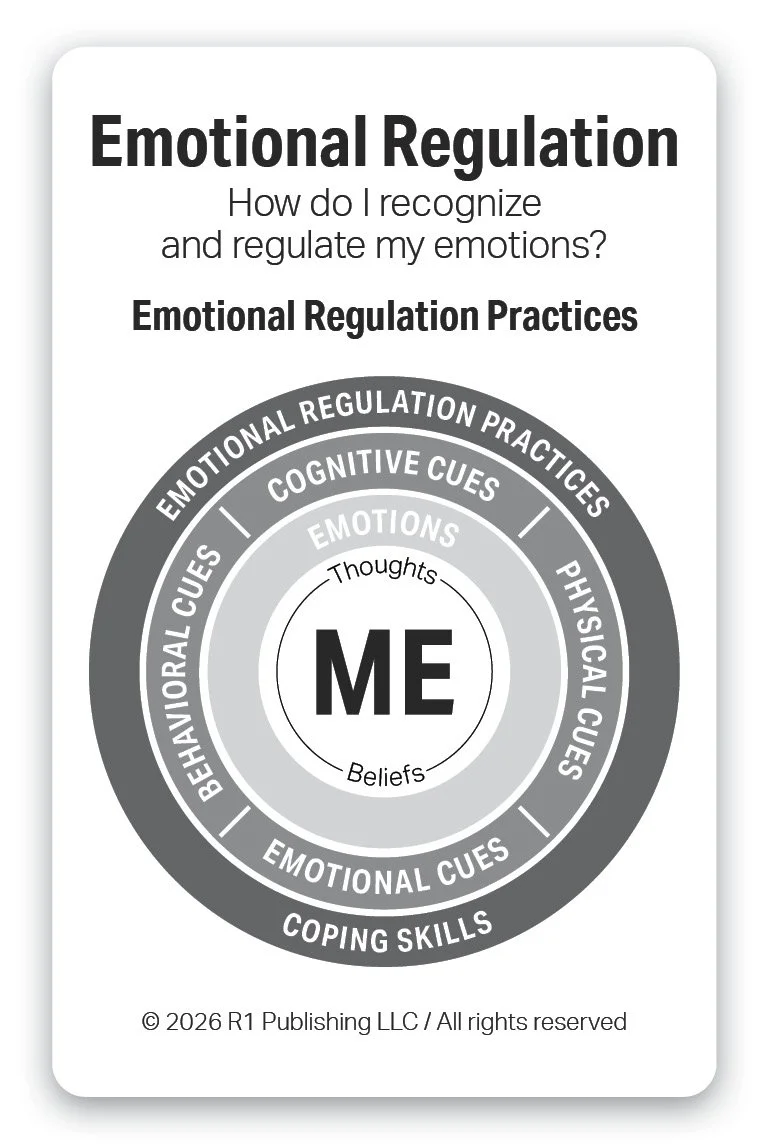
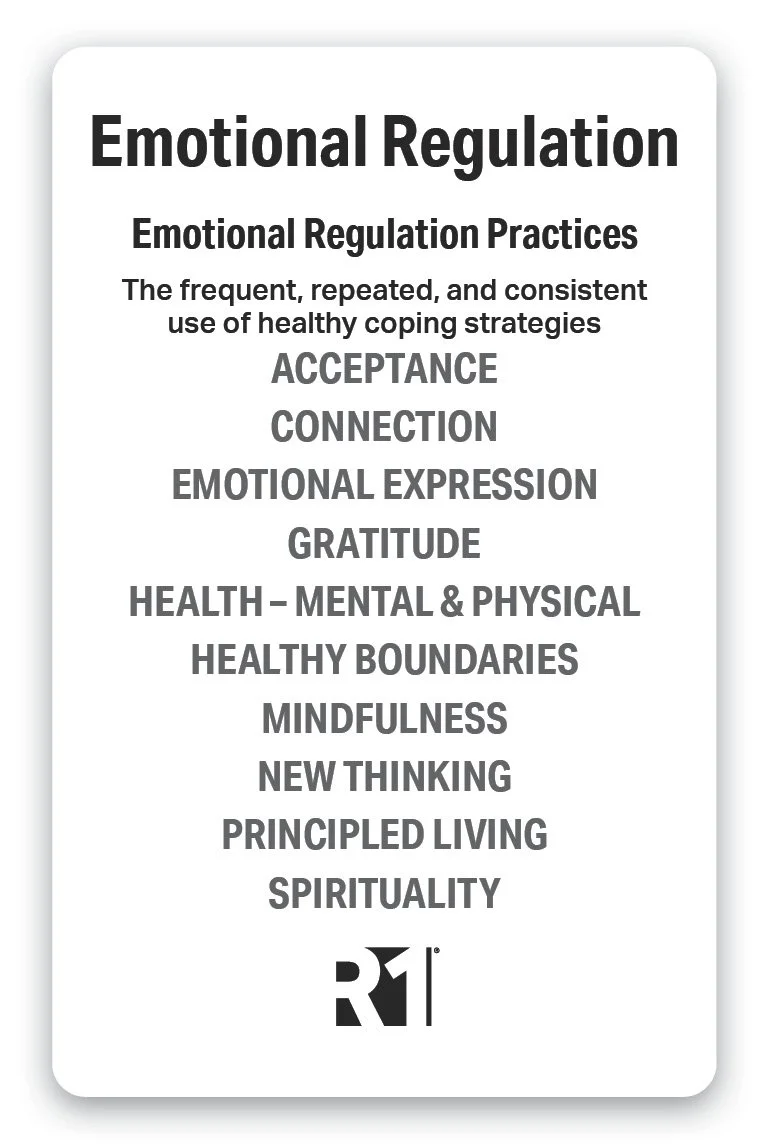
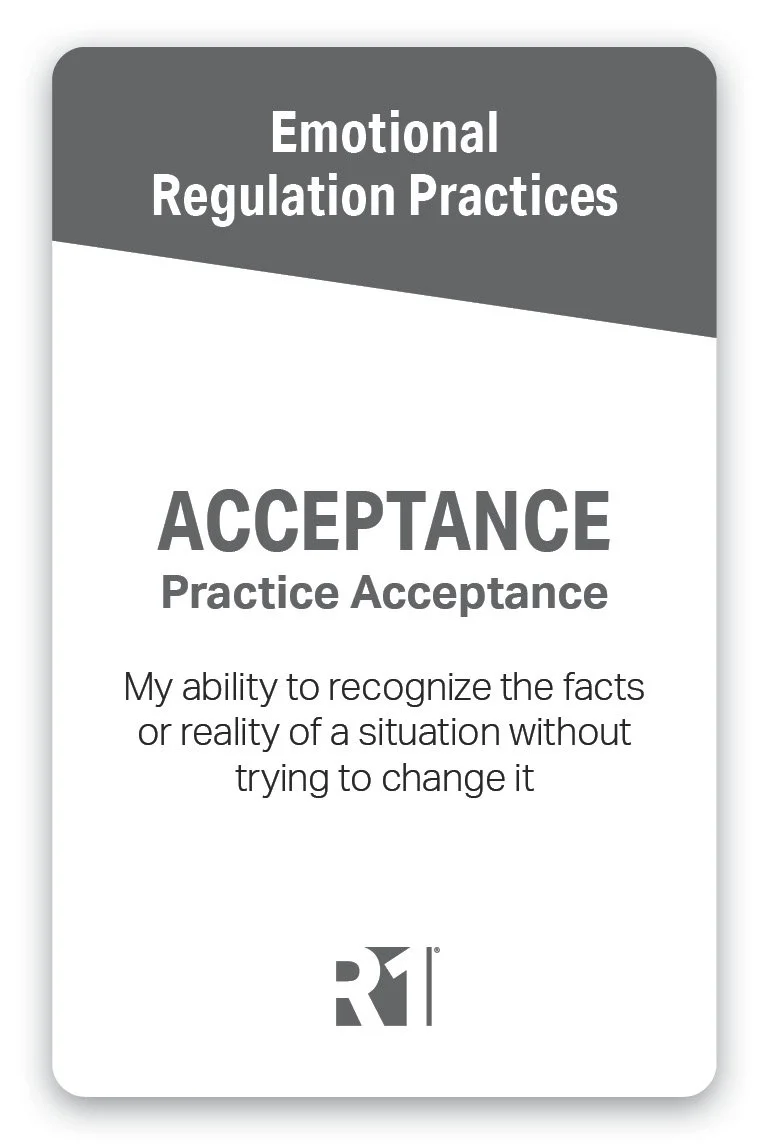
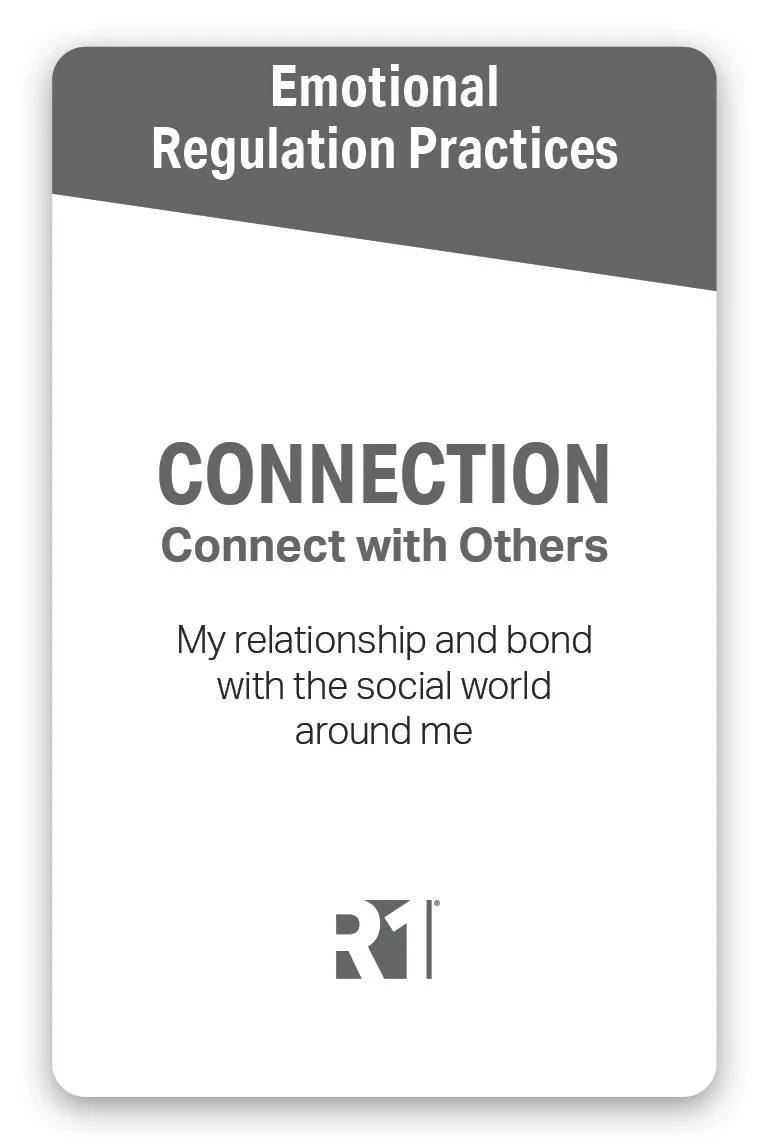
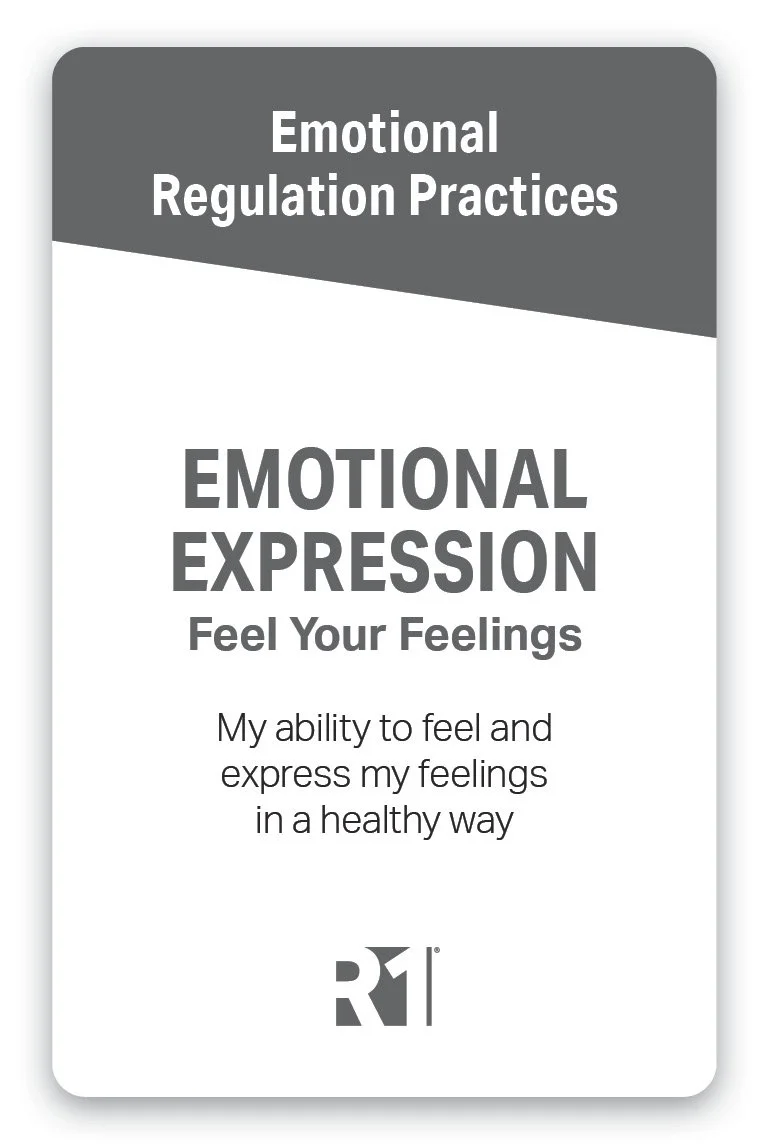
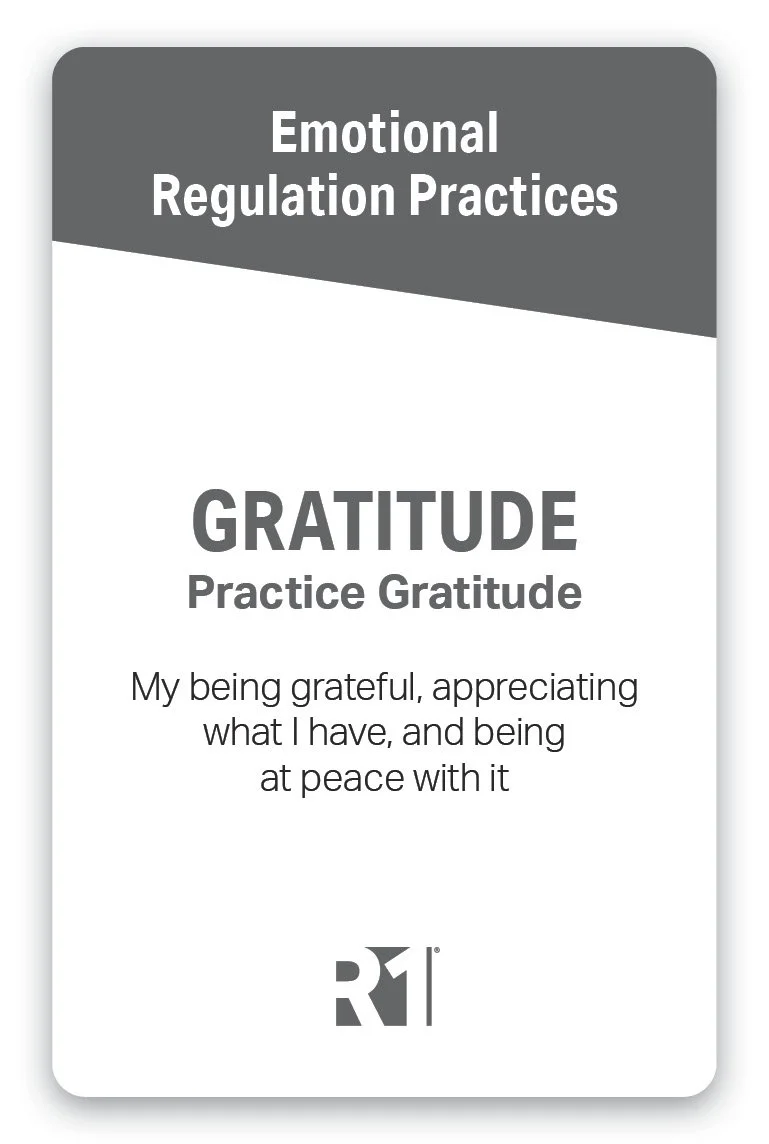
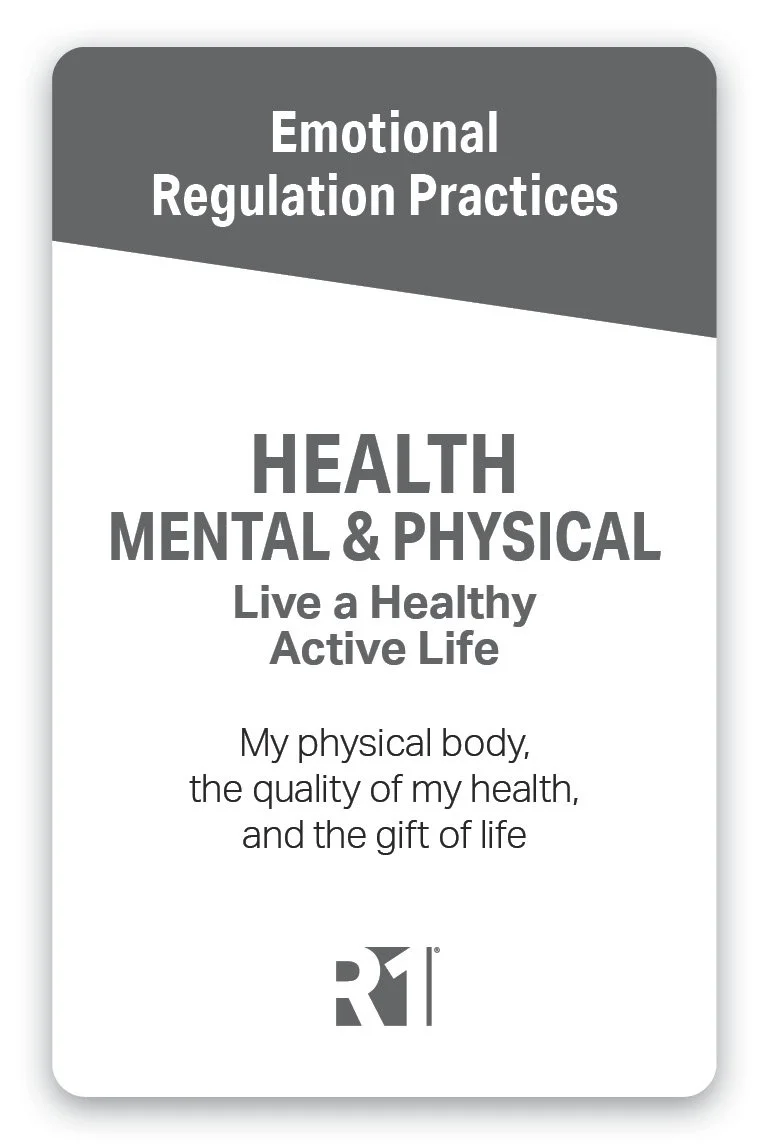
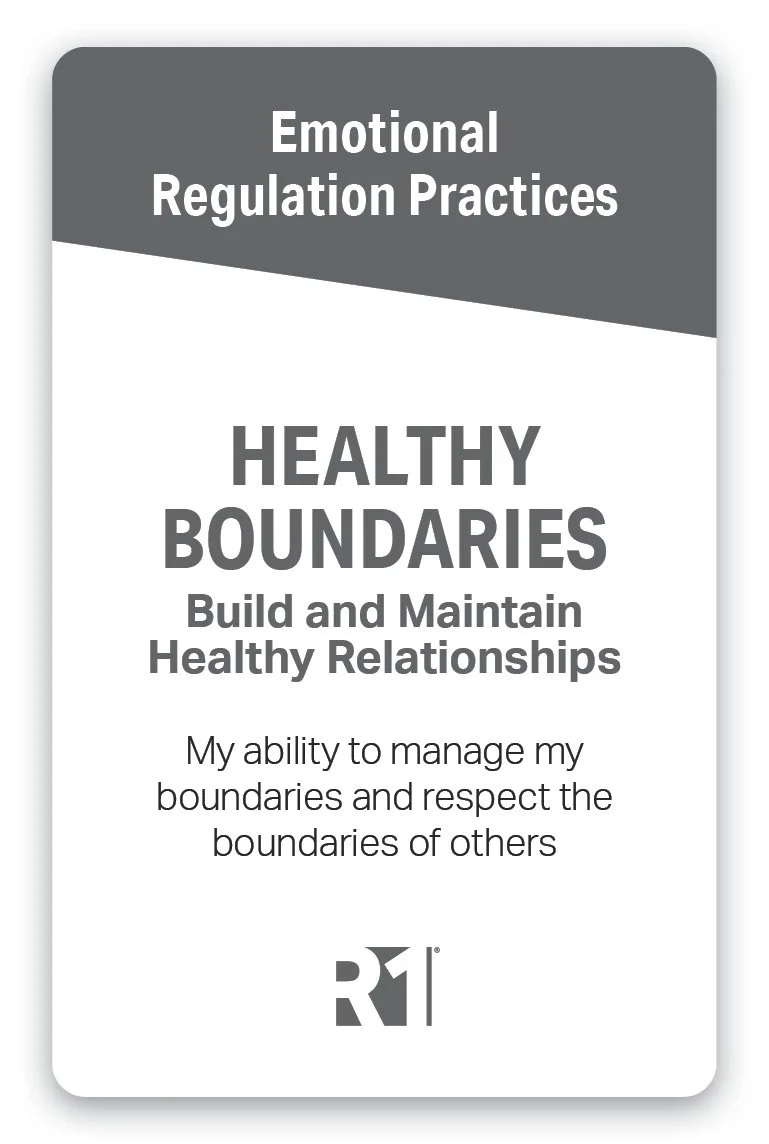
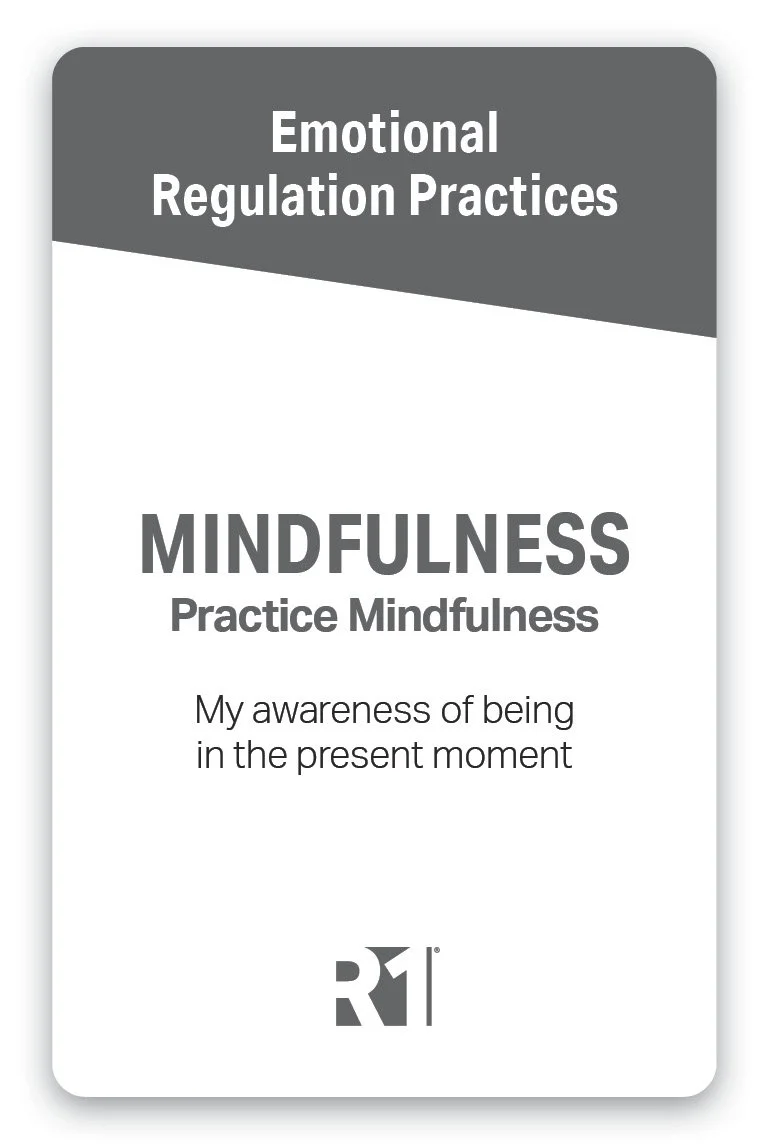
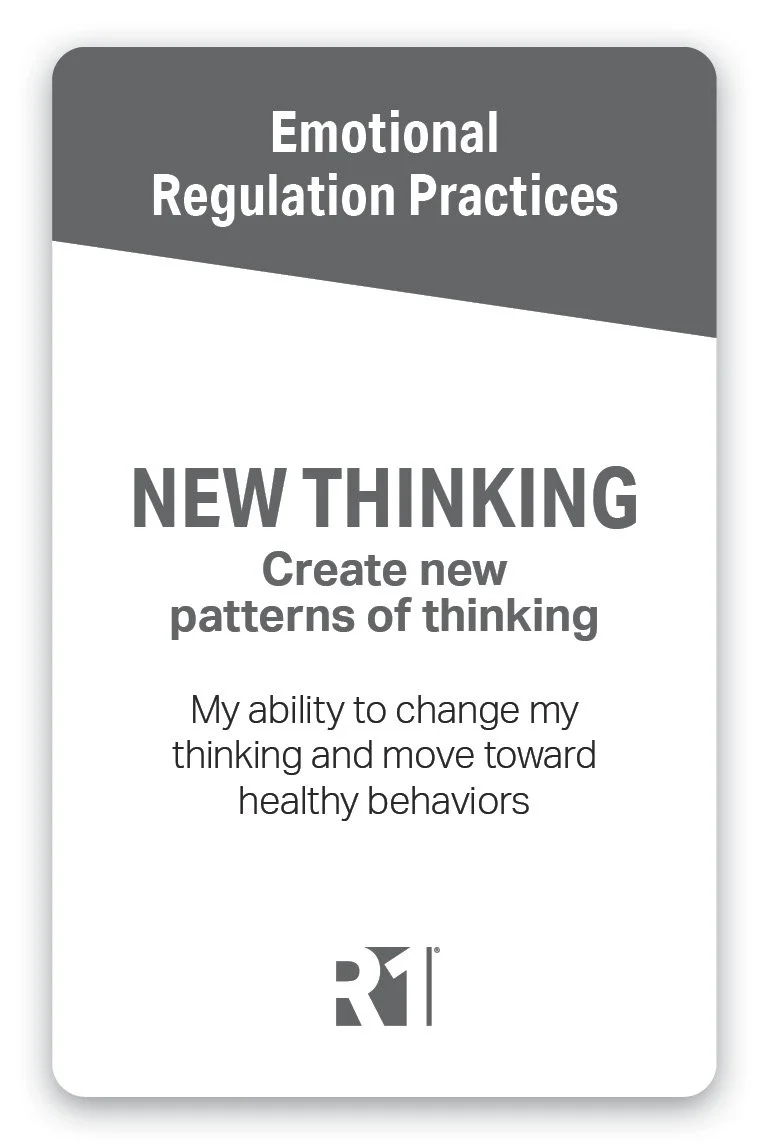
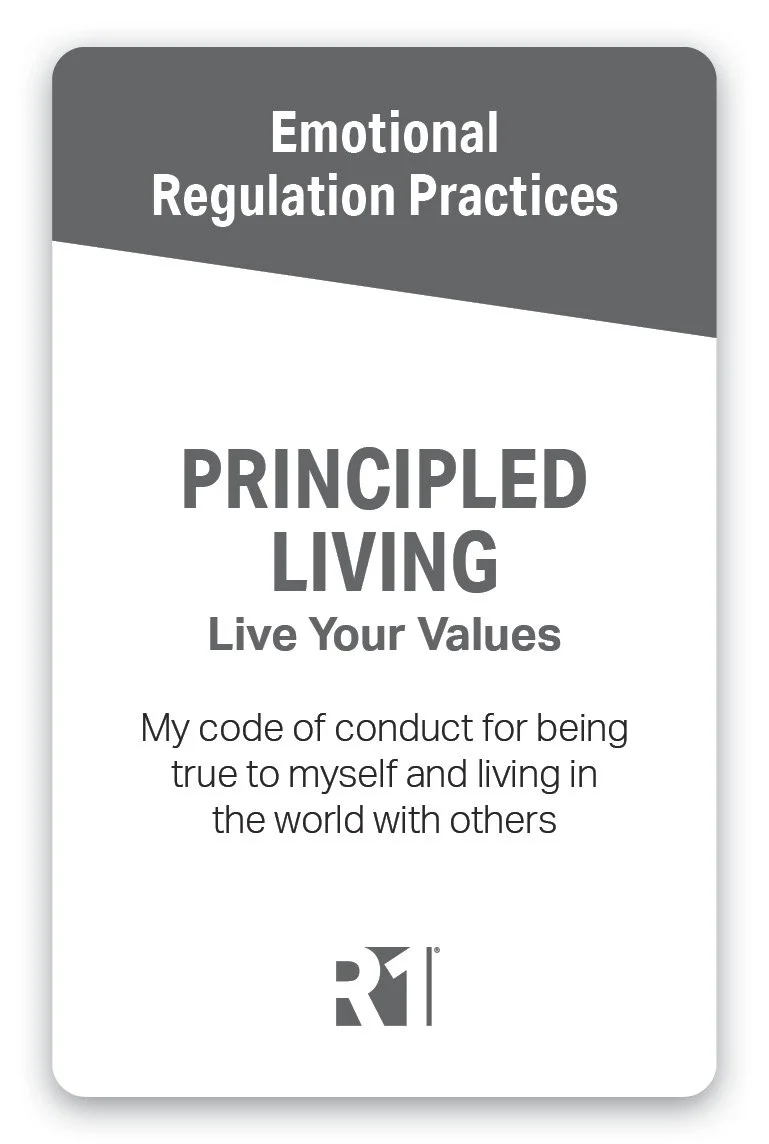
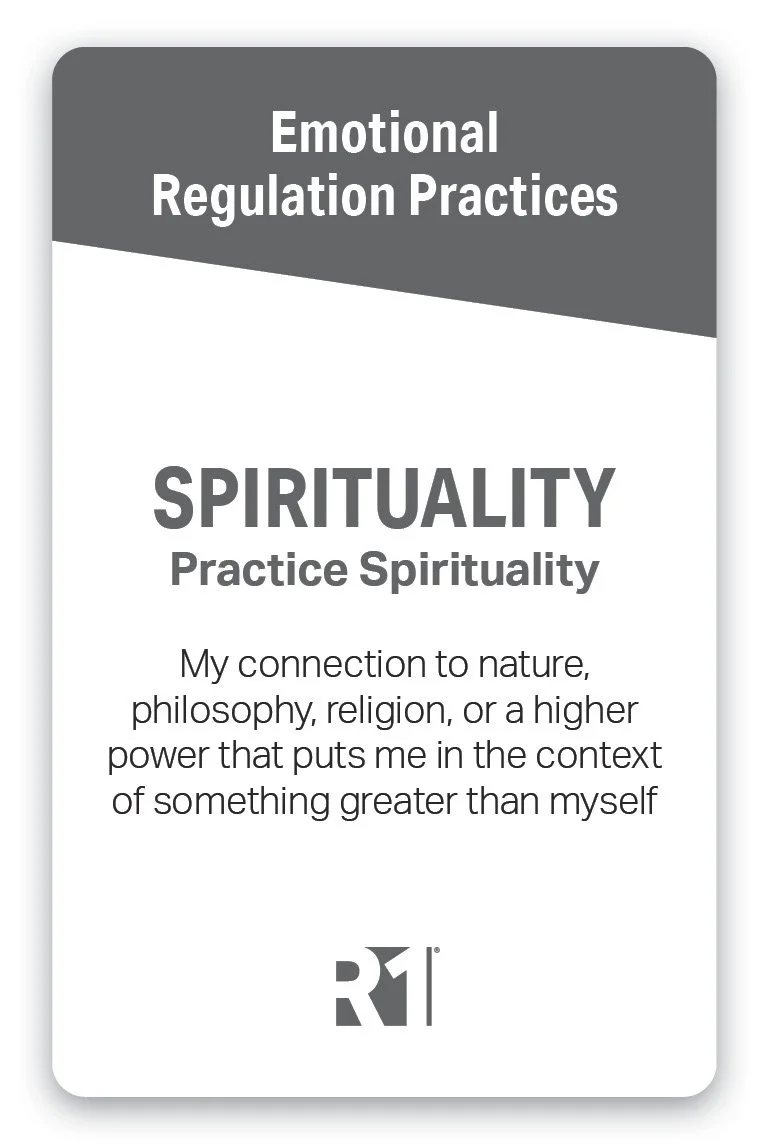
As individuals continue to learn, practice, and reflect on what works best for them, they develop a personalized set of emotional regulation skills that strengthens resilience, supports healthier relationships, improves decision-making, and promotes greater emotional balance and long-term well-being.
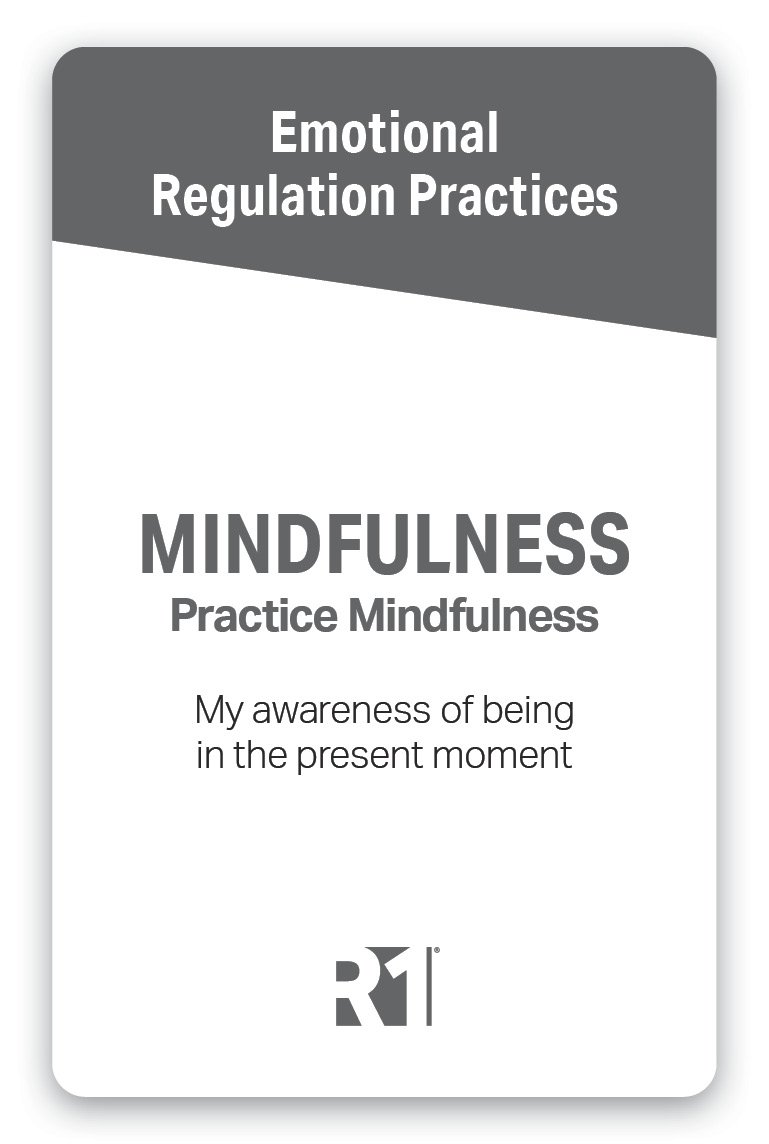
Examples of coping strategies and skills can be found on the fronts of each of the Emotional Regulation Practices Discovery Cards (See examples below):
References
References for each of the 10 Emotional Regulation Practices is locate in the R1 Facilitator Guide at the bottom of pages 20-23.
Questions to Explore
Answer the following questions for yourself or with your team:
What do you find helpful about the Emotional Regulation models and the information presented?
How will the Emotional Regulation Models and different Discovery Cards be most useful for you and your team? Explain.
How does providing definitions and vocabulary for 9 Emotions help you to better engage and increase the emotional literacy of the individuals you serve?
How can you and your team use this information to engage and support individuals in your program?
What are some areas in your program where you can incorporate Emotional Regulation activities?
What will be the benefit for you and others as you use this tool?
What is your major learning or takeaway from this post? Explain.
Thank you for reading this post and participating in this activity. Contact us if you would like to learn more about our Emotional Regulation tools and the R1 Learning System. We look forward to hearing from you.
Copyright 2026 R1 Publishing LLC / All Rights Reserved. Use of this article for any purpose is prohibited without permission.
Engagement Tools
Integrating Discovery Card activities into your groups and one-on-ones will allow individuals to think concretely, increase self-awareness, build vocabulary, express themselves more effectively, and put insights into action. Visit the R1 Store to learn more about these evidence-based topics and models.

Here are a few ideas to help you learn more about R1 and engage others on this topic:
Share this blog post with others. (Thank you!)
Start a conversation with your team. Bring this information to your next team meeting or share it with your supervisor. Change starts in conversations. Good luck! Let us know how it goes.
Visit www.R1LEARNING.com to learn more about R1, the Discovery Cards, and how we’re creating engaging learning experiences through self-discovery.